The front of my house looked like it was trying too hard for years. Plants that didn’t belong there, mulch that washed away every heavy rain, weeds that came back faster than I could pull them. Every spring I’d stand at the window with my coffee and feel tired before the day even started. Something about the yard fighting against itself made the whole house feel like it was fighting too.
River rock appeared in our driveway one afternoon because my neighbor mentioned it almost offhandedly. She said it lasted, that she barely touched her front beds anymore. When I finally cleared my front beds and laid the rock myself, something shifted. The weeds were easier to spot and pull from stone than from mulch. The rain didn’t wash it away. In summer, it held heat and reflected light back at the house in a way that made the space feel alive instead of desperate.
I learned that the front yard doesn’t have to be a project that never finishes. It can just be something you live with, something that looks the same in July as it does in March. The rock gave me that quiet. It gave me mornings where I could look out and not immediately see what needed fixing.
Create Modern Pathways With River Rock
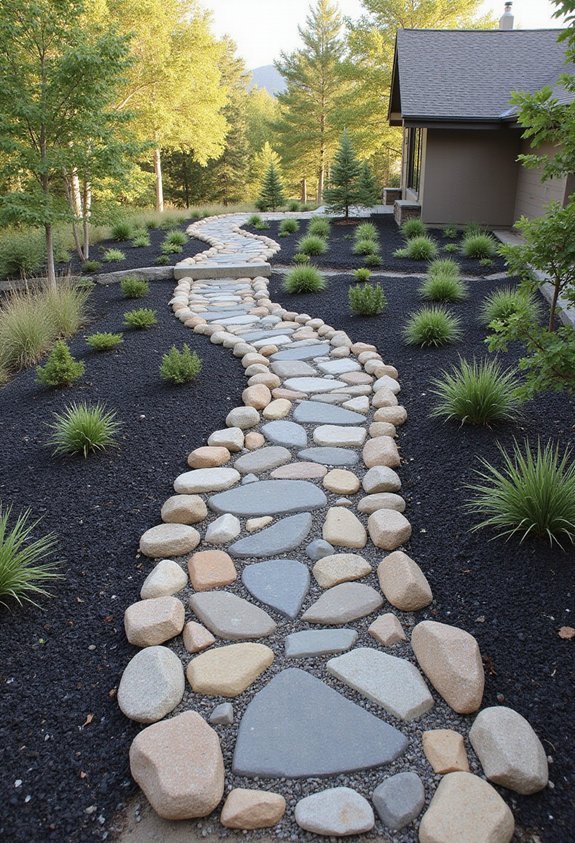
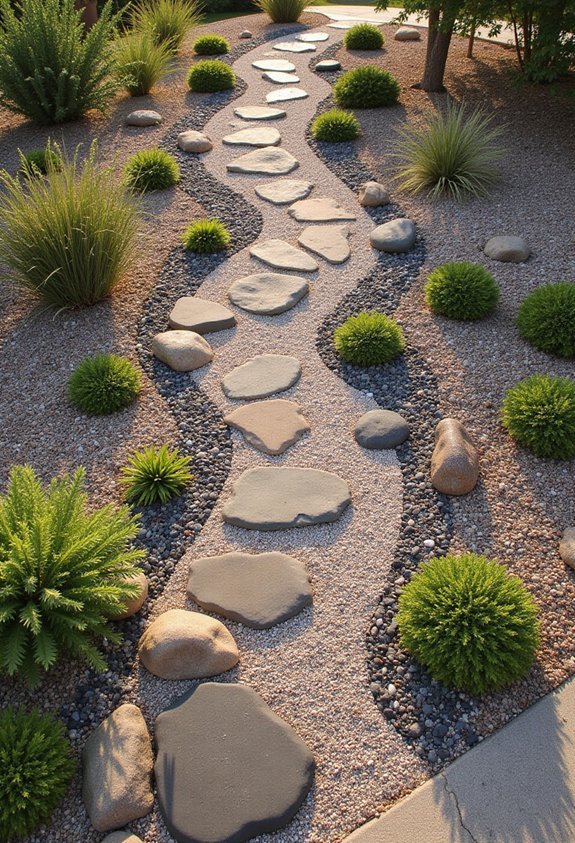
When you’re designing your front yard landscape, river rock pathways offer a sleek, contemporary aesthetic that’ll enhance your home’s curb appeal. These smooth stones create clean lines and modern shifts between garden beds and your home’s entrance.
You’ll start by defining your pathway’s edges with landscape edging to keep rocks contained. Lay down landscape fabric to prevent weeds from emerging through the stones. Then spread your river rocks evenly, choosing sizes that complement your home’s architecture.
River rock pathways require minimal maintenance compared to traditional mulch or wood chips. They won’t decompose, so you’ll avoid frequent replacements. The stones also allow water drainage while suppressing weed growth.
Consider mixing rock sizes for visual interest, or select uniform stones for a minimalist look that perfectly suits contemporary homes.
Define Garden Beds and Borders
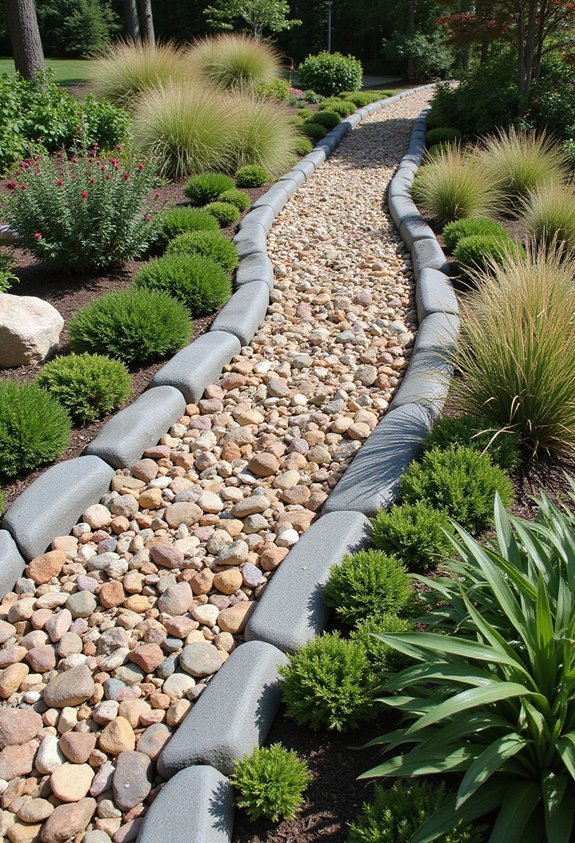
Because river rocks naturally complement plant displays, they’re ideal for creating distinct garden bed edges that frame your landscaping design. You can arrange smooth stones along flower beds to establish clean, professional borders that separate plantings from lawn areas. This method prevents soil erosion while adding visual structure to your yard.
When defining borders, you’ll want to select river rocks in consistent sizes for a unified appearance. Layer them two or three stones deep for durability and stability. You can create curved pathways around planting areas or straight lines for contemporary designs.
River rock borders also reduce maintenance by creating barriers that keep mulch contained within beds. They’re functional and attractive, giving your front yard a polished, intentional look that enhances overall curb appeal.
Build a River Rock Dry Creek Bed
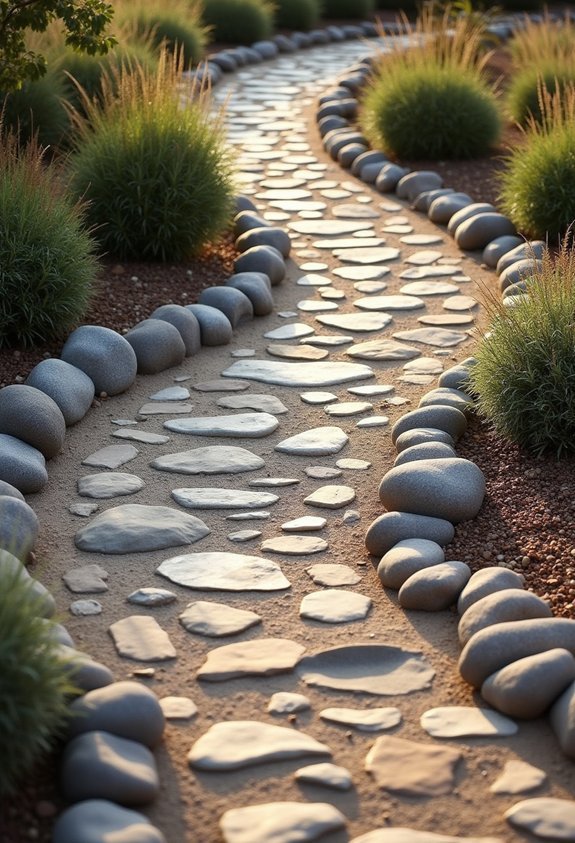
If you’re looking for a striking focal point that adds movement and visual interest to your front yard, a dry creek bed made from river rocks is an excellent choice. You’ll start by outlining your desired path with landscape edging, then excavate a shallow trench roughly six inches deep. Layer landscape fabric along the bottom to prevent weed growth while allowing drainage. Arrange larger river rocks along the banks for definition, then fill the creek bed with smaller, smooth stones in varying sizes and colors. Position the rocks to suggest water flow, directing viewers’ eyes through your landscape. This functional design element helps manage water runoff while creating an attractive, naturalistic feature that requires minimal maintenance and complements virtually any front yard aesthetic.
Design a Decorative Rock Garden Around Trees

By surrounding your trees with a well-planned rock garden, you’ll create an attractive landscape feature that reduces maintenance while enhancing your yard’s visual appeal. Start by clearing away grass and weeds around the tree’s base, extending outward about two to three feet. Layer landscape fabric to prevent weed growth, then spread river rocks evenly across the area. Choose rocks in complementary colors—warm earth tones or cool grays work well with most tree varieties. Consider adding shade-tolerant plants like hostas or ferns between rocks for added texture and interest. This approach eliminates mowing around trees, decreases watering needs, and creates definition in your landscape. The rock garden also helps regulate soil temperature and moisture, promoting healthier tree growth.
Install River Rock Around Your Mailbox
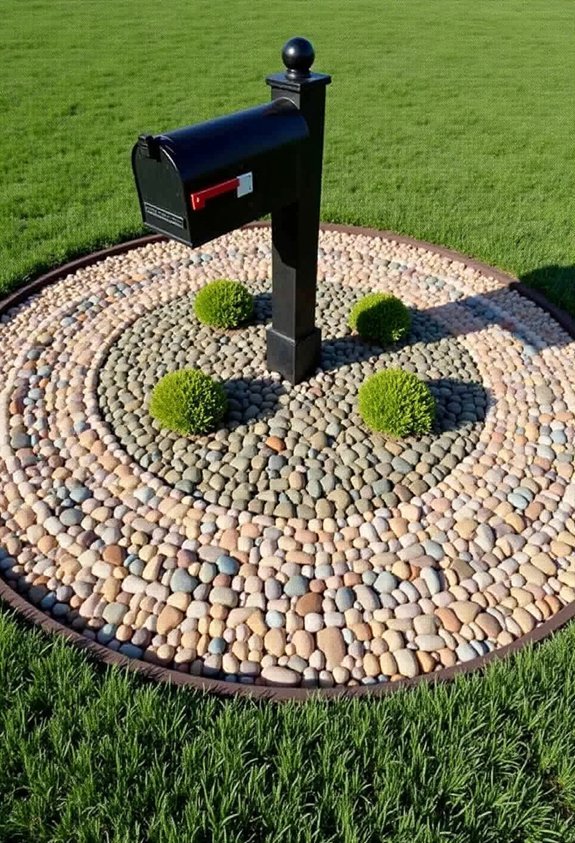
While decorative rock gardens work beautifully around trees, you can apply the same design principles to other focal points in your yard—particularly your mailbox. Start by clearing the area around your mailbox’s base, removing weeds and old mulch. Install landscape fabric to prevent weed growth, then arrange river rocks in a circular or rectangular pattern around the post. Choose rocks in complementary colors—whites, grays, and earth tones blend seamlessly with most homes. Layer rocks at varying heights for visual interest. You might add low-growing plants like sedums or ornamental grasses to soften the hardscape. This simple upgrade frames your mailbox beautifully, requires minimal maintenance, and enhances your home’s curb appeal while tying together your overall landscaping scheme.
Craft a Zen-Inspired Meditation Space
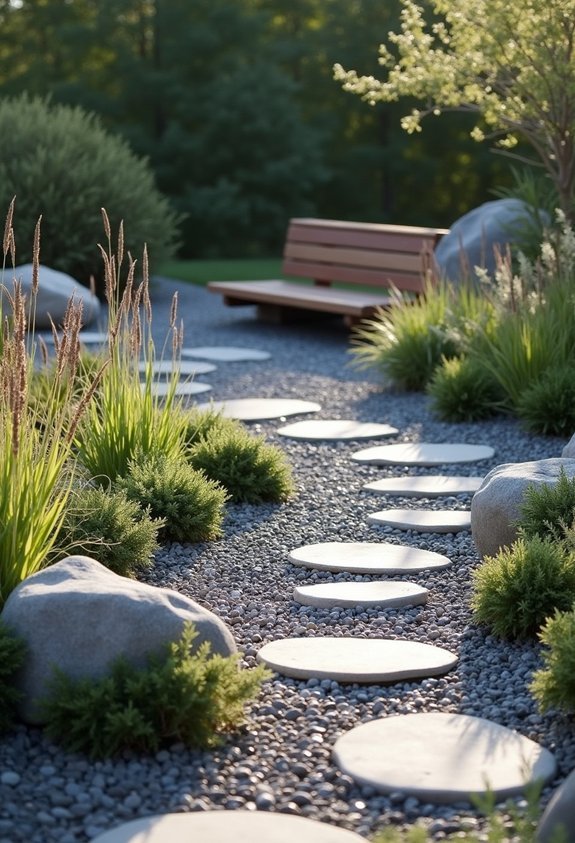
Creating a tranquil retreat in your front yard doesn’t require extensive space or complicated design—river rock is your ideal foundation for this purpose. You’ll want to establish a designated meditation area by laying smooth river stones in a circular or rectangular pattern. This creates natural boundaries without harsh edges.
Add a simple wooden bench or stone seat at the center, surrounded by river rock. The natural texture and muted colors promote calmness and focus. Incorporate drought-resistant plants like bamboo or ornamental grasses between the rocks for added serenity. Consider arranging stones in mindful patterns—spirals or lines—that encourage contemplation.
The gentle sound of water features complements your space perfectly. A small fountain nestled among river rocks amplifies the meditative atmosphere. Your zen sanctuary becomes a personal wellness destination you’ll visit daily.
Frame Your Front Entrance With River Rock
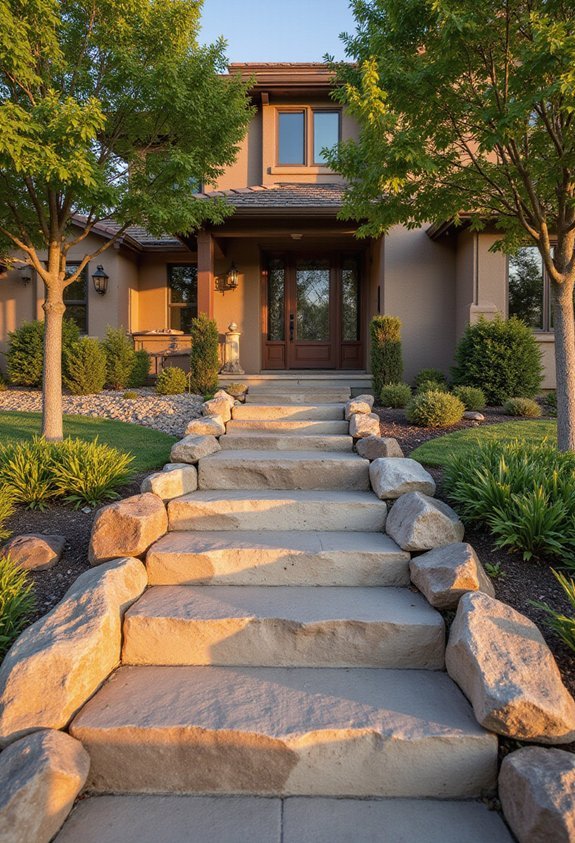
Your front entrance sets the tone for your entire home, and river rock offers an elegant way to define this essential space. You can create a stunning border around your doorway by arranging smooth stones in complementary colors along the foundation. Consider layering different stone sizes for visual depth and interest.
You’ll want to edge your pathway with river rock to guide visitors naturally toward your entrance. This creates a polished, intentional appearance that enhances curb appeal. Install edging stones vertically or at angles for a modern aesthetic, or arrange them horizontally for a traditional look.
Incorporate native plants between the stones to soften the hardscape. Add outdoor lighting to highlight your river rock arrangement at night, making your entrance both welcoming and secure.
Combine River Rock With Flowering Plants
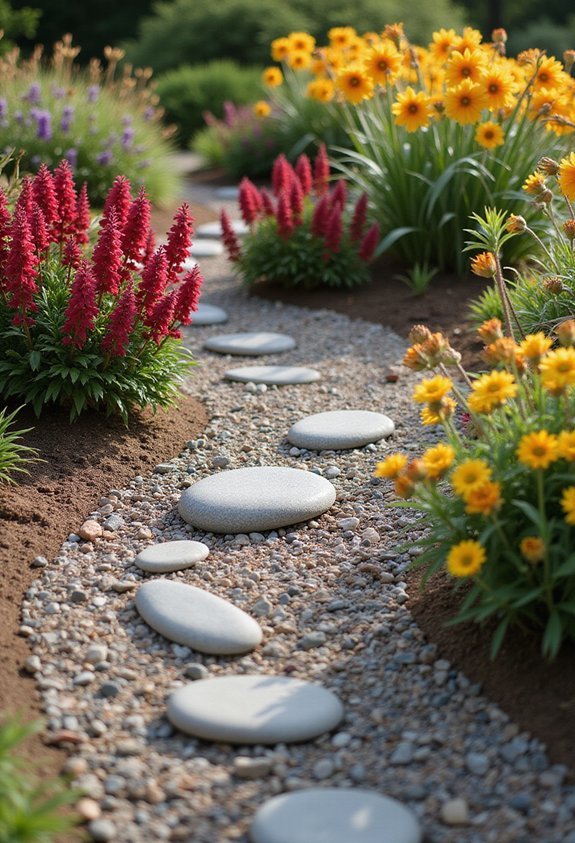
River rock’s neutral palette becomes the perfect canvas for adding color and life to your front yard. You can strategically place flowering plants around river rock beds to create striking visual contrasts. Consider pairing colorful perennials like coneflowers, salvia, or daylilies with gray and white river stones. The rocks’ll retain soil moisture, keeping your plants hydrated during dry spells while reducing your watering frequency.
You’ll also benefit from improved drainage, preventing root rot in heavy rainfall. Plant flowering shrubs such as dwarf butterfly bush or knockout roses among the rocks for year-round interest and structure. The river rock acts as natural mulch, regulating soil temperature and suppressing weeds. This combination transforms your front entrance into a low-maintenance landscape that showcases seasonal blooms against a timeless stone backdrop.
Design a Low-Maintenance Xeriscaping Landscape
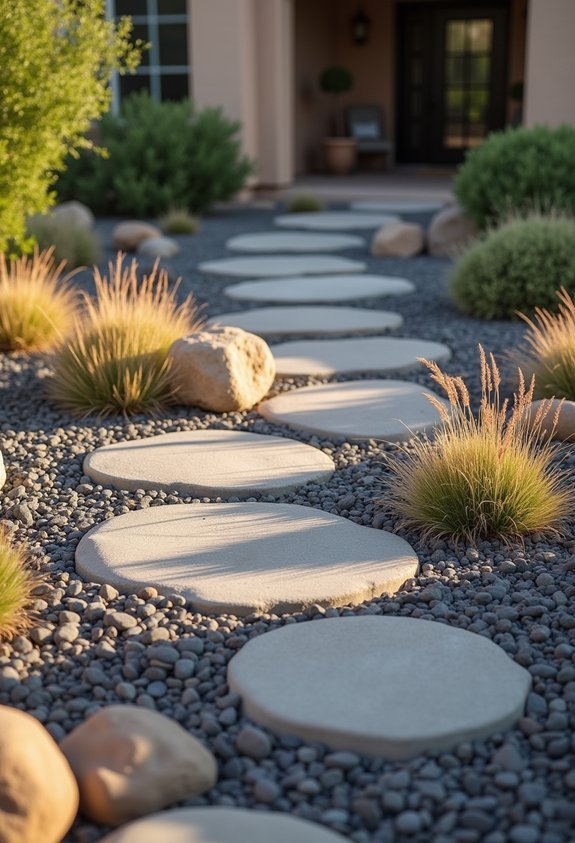
Xeriscaping—the practice of landscaping with minimal water needs—pairs beautifully with river rock to create a sustainable, drought-resistant front yard. You’ll reduce your water consumption dramatically while maintaining visual appeal.
River rock serves as excellent mulch, retaining soil moisture and regulating temperature around your plants. Layer it around drought-tolerant species like sedums, ornamental grasses, and native shrubs to create natural groupings.
You can design distinct zones using different river rock sizes and colors to add depth and texture. Incorporate hardscape elements like gravel pathways or decorative borders to minimize planted areas without sacrificing aesthetics.
This approach eliminates constant watering, fertilizing, and mowing. Your front yard becomes virtually self-sufficient, requiring only occasional weeding and minimal maintenance while delivering year-round visual interest.
Add River Rock to Sloped Terrain for Erosion Control
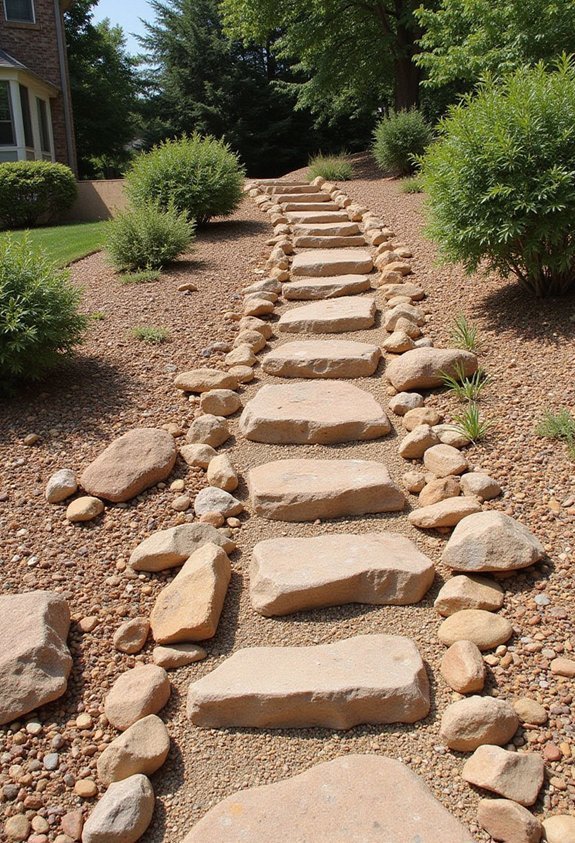
When you’re dealing with a sloped front yard, water runoff and soil erosion can quickly damage your landscaping investment. River rock offers an excellent solution for stabilizing these challenging areas.
Strategically place river rocks along slopes to create natural barriers that slow water flow and trap sediment. Layer them in staggered patterns rather than straight lines for maximum effectiveness. You can combine larger anchor stones with smaller river rocks to create terraced sections that redirect runoff safely.
The weight and size variation of river rocks prevent them from shifting during heavy rainfall. They’re also permeable, allowing water to drain while preventing soil displacement. This approach protects your underlying landscape while requiring minimal maintenance.
Your sloped yard becomes both erosion-resistant and visually appealing with this practical design strategy.
Create Contrast With Mixed Rock Sizes and Colors
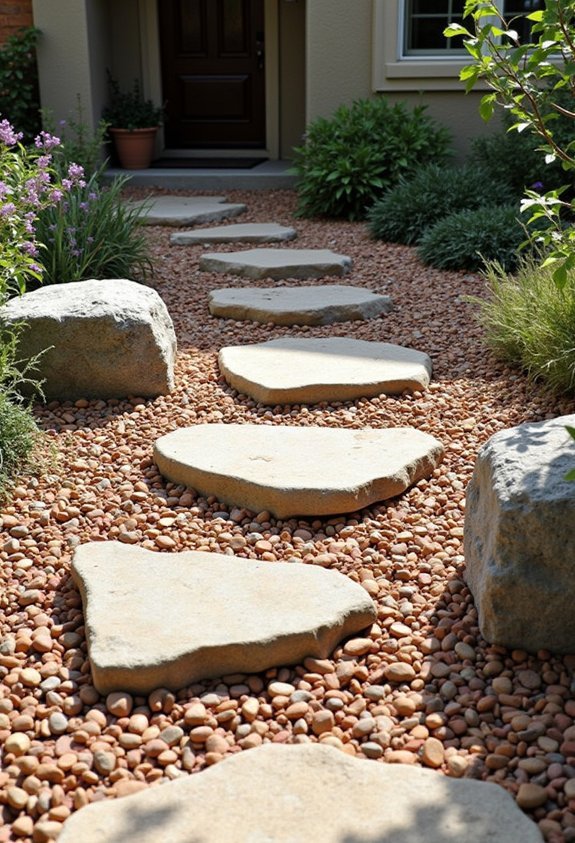
Mixing different river rock sizes and colors transforms your front yard from monotonous to visually dynamic. You’ll create visual interest by combining large boulders with smaller pebbles, establishing depth and dimension throughout your landscape.
Select rocks in contrasting hues—pair dark charcoal stones with lighter cream or tan varieties. This color variation draws the eye across your yard and highlights specific garden features or pathways.
Arrange larger rocks as focal points or anchors, then fill surrounding areas with medium and small stones. This layering technique creates texture and prevents a flat appearance.
You can also use different rock types together, mixing smooth river rocks with rougher granite or quartz. The variety keeps your landscape engaging while maintaining cohesion through intentional placement and color harmony.
Build Decorative Borders Along Your Driveway
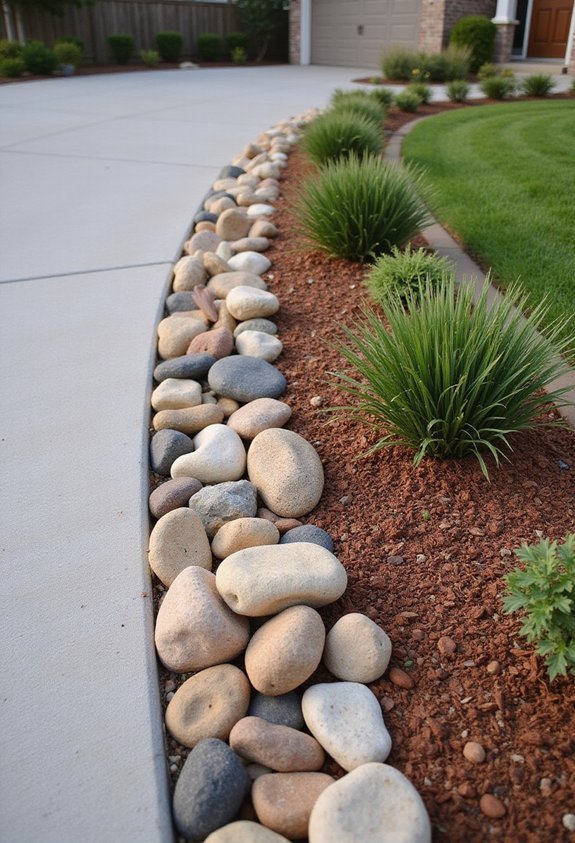
River rock borders define your driveway’s edges while adding curb appeal and practical benefits. You’ll create a polished, finished look that frames your home’s entrance beautifully.
Install borders by edging your driveway with medium-sized river rocks. Choose uniform colors for a cohesive appearance, or mix warm and cool tones for visual interest. You can arrange rocks in single or double rows, depending on your preferred thickness.
River rock borders serve functional purposes too. They prevent grass and soil from encroaching onto your asphalt or concrete, reducing maintenance work. The stones also improve drainage around your driveway’s perimeter, protecting it from water damage and erosion.
For installation, you’ll need landscape edging material or a shallow trench to keep rocks in place. This investment enhances your property’s appearance while protecting your driveway’s longevity.
Incorporate River Rock Into Hardscape Features
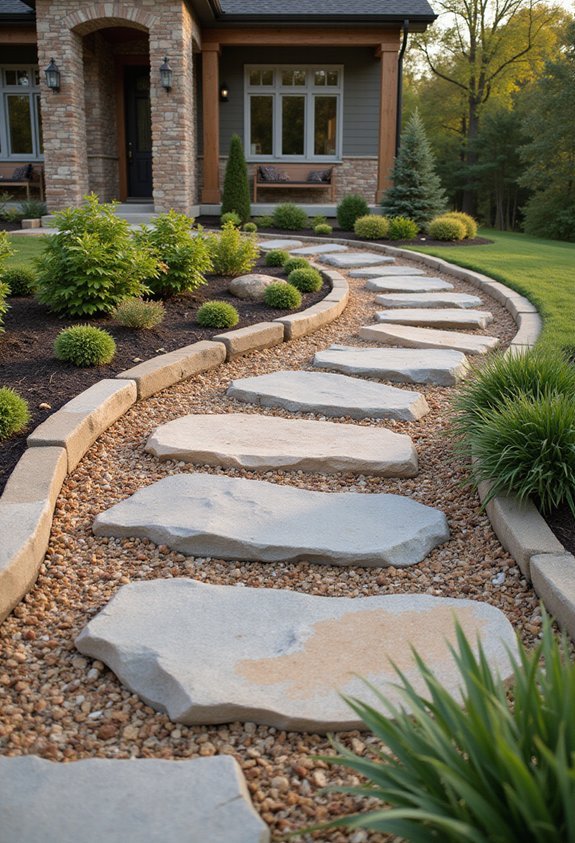
Because hardscape features form the structural foundation of your landscape design, incorporating river rock elevates both functionality and aesthetics. You can integrate river rock into pathways, creating natural-looking walkways that guide visitors through your front yard while improving drainage. Consider using river rock around your mailbox base or patio edges for clean, defined lines. You’ll also find that river rock works beautifully in retaining walls, where it adds visual interest while managing soil erosion. For water features, river rock frames fountains and pond edges authentically. You can even fill planting beds with river rock to reduce maintenance and suppress weeds. These hardscape applications transform your front yard into a cohesive, professional-looking space that combines practicality with natural beauty.
Mix River Rock With Native Ground Covers for Texture
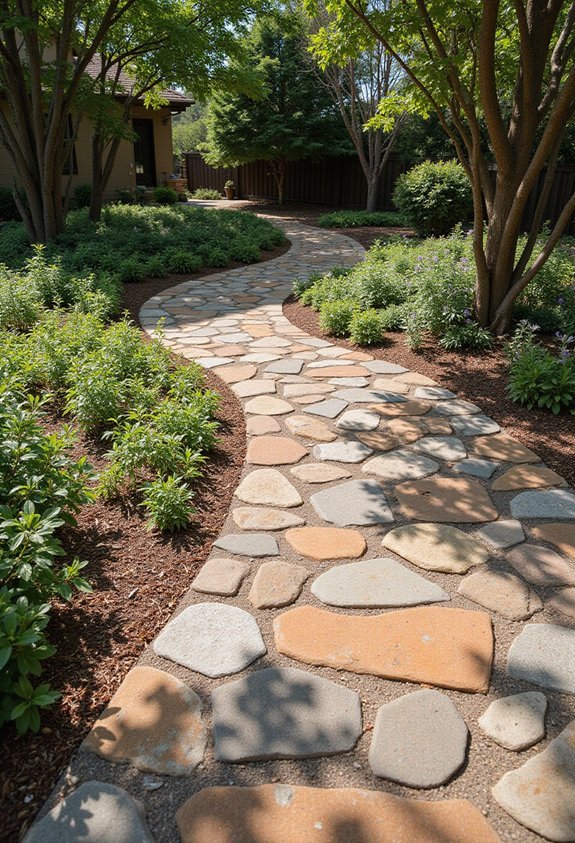
While river rock provides clean lines and practical benefits, pairing it with native ground covers creates visual depth and natural appeal. You’ll achieve a balanced landscape by combining hardscape elements with living plants that thrive in your region.
Consider low-growing natives like creeping juniper, sedums, or ornamental grasses that complement river rock’s neutral tones. These plants soften the rock’s stark appearance while reducing maintenance demands. Position ground covers strategically between rock groupings to create interesting shifts and prevent a monotonous look.
This mixed approach offers practical advantages too. Native plants require less water and care than traditional landscaping, while river rock improves drainage and suppresses weeds around them. You’ll develop a cohesive, sustainable front yard that showcases both textural variety and environmental responsibility.
Conclusion
You’ve got plenty of ways to transform your front yard with river rock. Whether you’re building pathways, defining beds, or creating dry creek beds, these versatile stones’ll give your landscape texture and visual appeal. You can mix different sizes and colors, combine them with native plants, or use them around trees and mailboxes. Start with one project, then you’ll naturally want to expand your river rock features throughout your entire outdoor space.