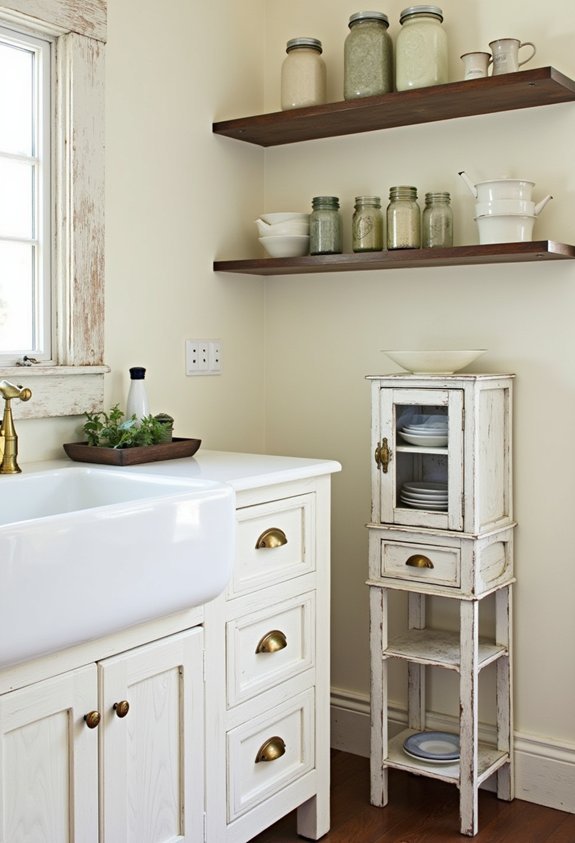
My farmhouse kitchen had old cabinets that didn’t match, and I spent months looking at small farmhouse kitchen cabinets ideas online before I realized I was overthinking it. The cabinets themselves were solid. What they needed wasn’t replacement. They needed attention. One morning I painted them a soft cream color, the kind that looks almost white in certain light but holds warmth when the sun hits it differently. The kitchen transformed without me gutting anything.
What I learned is that small changes matter more than big overhauls. New hardware made the doors feel different under my hands. A fresh coat of paint made the whole space breathe. The cabinets stopped being something I apologized for and became part of how the kitchen actually worked. Sometimes you don’t need new. You just need to see what you already have differently.
1. Open Shelving With Rustic Charm
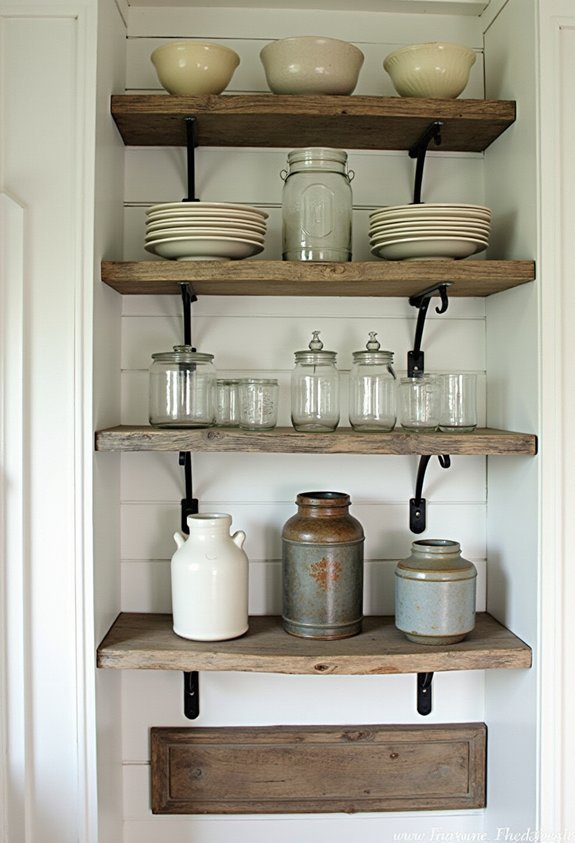
Open shelving won’t just maximize your storage in a compact kitchen—it’ll also showcase your farmhouse aesthetic beautifully. I’ve found that displaying mason jars, vintage dishware, and galvanized metal containers creates authentic charm while keeping essentials within arm’s reach.
When I install open shelves, I prioritize sturdy wood with visible grain and weathered finishes. This approach eliminates bulky cabinet doors that consume precious square footage. I arrange items thoughtfully: heavier pieces on lower shelves, lighter items higher up.
The key is strategic styling. Group similar items together and leave breathing room between displays. I rotate seasonal decor to maintain visual interest without clutter.
Open shelving demands organization, but it rewards you with an airier, more inviting space that perfectly captures farmhouse character while functioning practically for small kitchens.
Also read: 16 Simple Thanksgiving Activities to Entertain Kids
2. Vertical Storage Solutions to Maximize Height
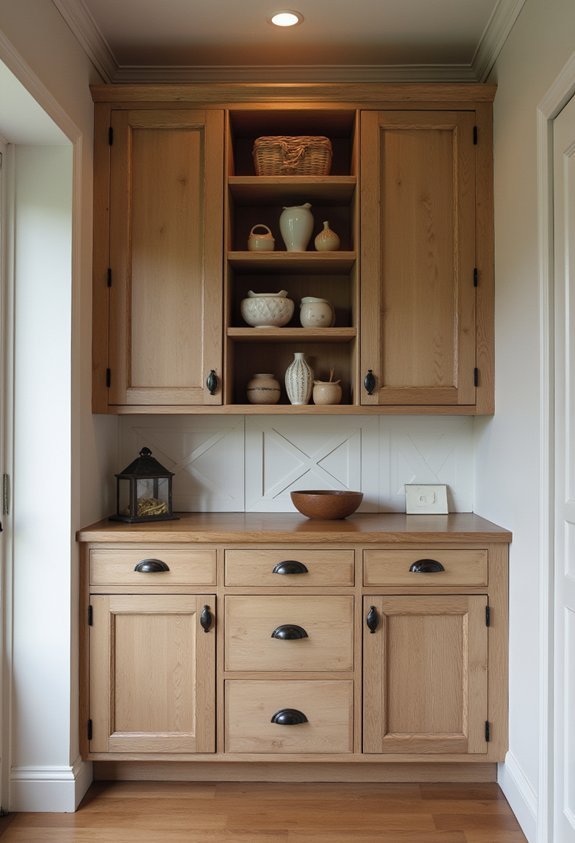
While open shelving draws the eye horizontally, I’ve discovered that going vertical transforms how you utilize small kitchens. By installing cabinets that stretch floor-to-ceiling, you’re reclaiming wasted wall space and dramatically increasing storage capacity.
I’ve found that tall, narrow cabinets work best in cramped layouts. They don’t demand floor space yet hold substantial items. Incorporating pull-out shelves inside these vertical units makes accessing upper contents effortless—no more stretching or struggling.
Consider adding a slim pantry cabinet along an unused wall. It’s a game-changer for storing dry goods and small appliances. Paired with proper lighting, vertical cabinetry doesn’t feel imposing; it feels intentional.
This approach keeps your countertops clear while preserving the farmhouse aesthetic through wood finishes and vintage hardware.
3. Corner Cabinets That Make Every Inch Count
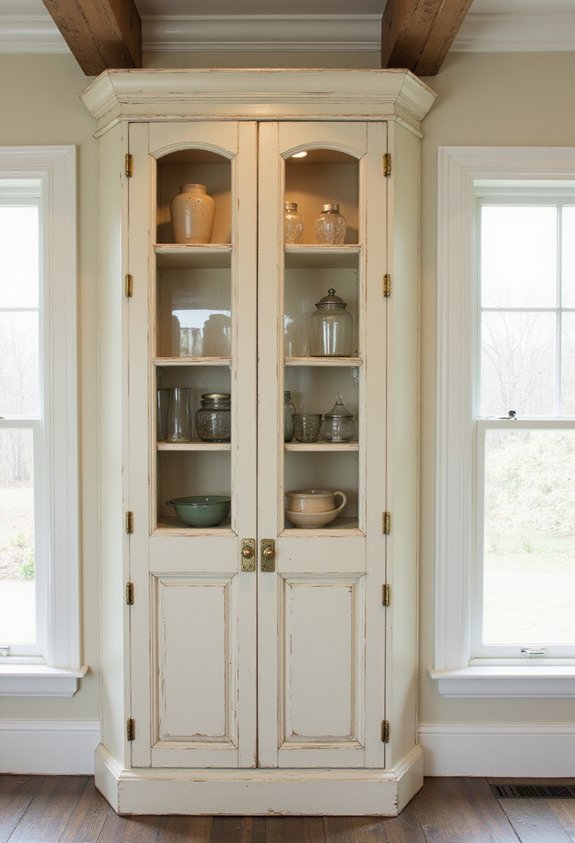
Since corner spaces often go underutilized in small kitchens, I’ve found that strategic cabinetry here can reveal surprising storage potential. Corner cabinets with lazy Susan turntables let you access items that’d otherwise remain hidden and unreachable. L-shaped corner units maximize two walls simultaneously, doubling your storage without consuming additional floor space.
I recommend diagonal corner cabinets for a modern farmhouse aesthetic. They’re particularly effective for storing bulk items, small appliances, or seasonal dishware. Pull-out corner drawers work brilliantly too—they eliminate the dead space that traditional corner cabinets create.
When selecting corner solutions, measure your space precisely. Consider your kitchen’s traffic flow and guarantee cabinet doors won’t obstruct movement. The right corner cabinetry transforms wasted space into functional storage, proving that every square inch counts in small kitchens.
4. Glass-Front Cabinets for Display and Light
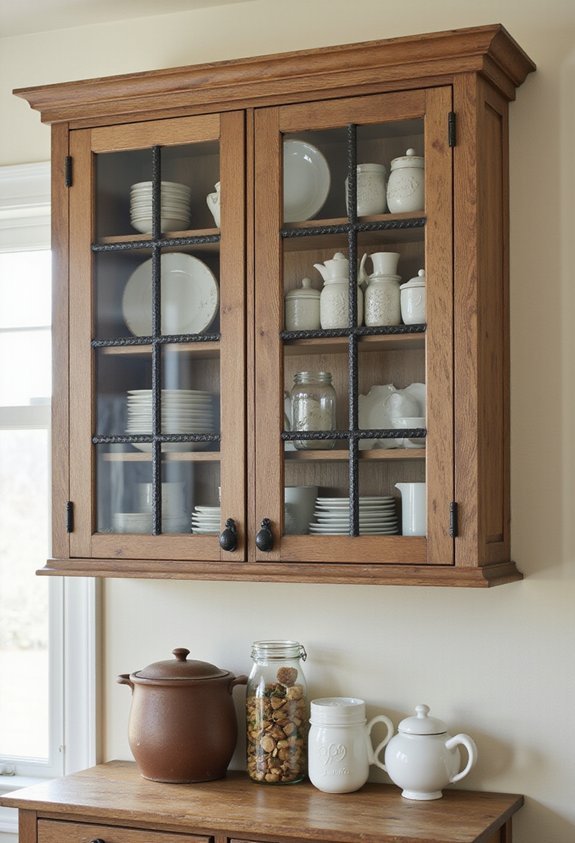
Glass-front cabinets don’t just store your items—they brighten your kitchen and showcase what you’ve got. I’ve found they’re perfect for small spaces because they create an illusion of openness while letting light bounce around your kitchen.
You can display your favorite dishes, vintage glassware, or farmhouse accessories without taking up extra wall space. The transparency makes your kitchen feel less cramped and more inviting.
I recommend keeping the interior organized and intentional. Stack plates neatly, group similar items together, and add a small vase or pitcher for visual interest. This approach transforms storage into decoration.
The key is balancing function with aesthetics. Glass-front cabinets work harder in tight quarters, serving dual purposes as both practical storage and design elements that amplify natural and artificial light throughout your space.
5. Under-Sink Organization Systems
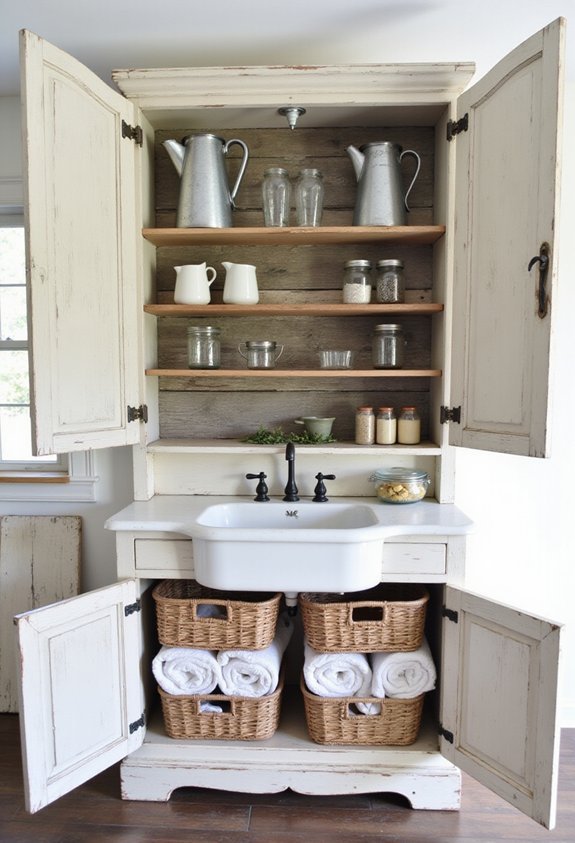
The space beneath your sink is too valuable to waste on clutter. I’ve found that pull-out drawers and tiered shelving maximize every inch while keeping essentials accessible. Install a tension rod to hang spray bottles, freeing up shelf space for cleaning supplies and extra linens.
I recommend using stackable bins to corral smaller items like sponges, brushes, and dish towels. Label everything clearly so you’ll find what you need instantly. A simple wooden caddy holds frequently used products within arm’s reach.
Don’t overlook the cabinet doors—adhesive hooks work perfectly for hanging cloth towels or small baskets. This farmhouse-friendly approach keeps your under-sink area functional and organized without compromising the aesthetic appeal of your small kitchen space.
6. Drawer Dividers and Pull-Out Baskets
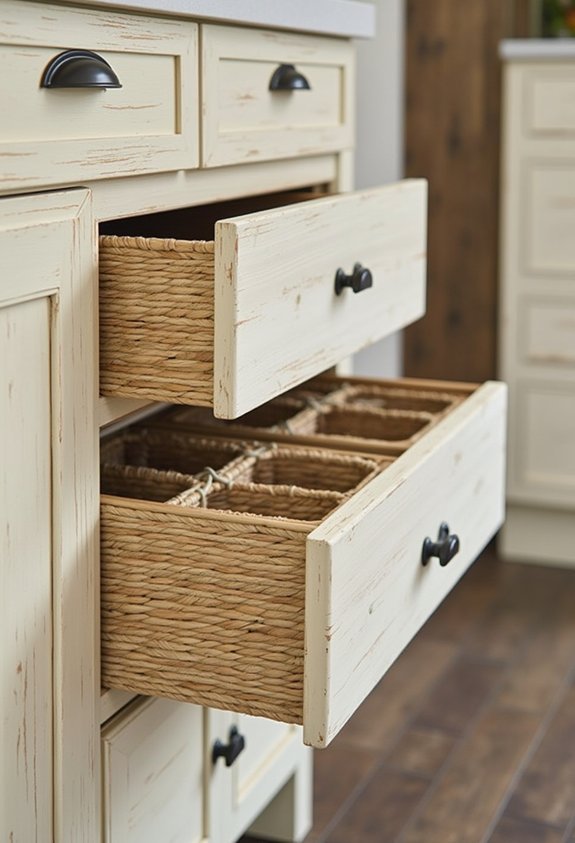
Two simple additions—drawer dividers and pull-out baskets—can transform how you access and store kitchen essentials. I’ve found that drawer dividers prevent clutter by creating designated spaces for utensils, linens, and gadgets. They’re especially valuable in farmhouse kitchens where vintage charm meets functionality.
Pull-out baskets maximize vertical space while keeping items visible and accessible. I install them in deep cabinets to prevent things from getting lost in the back. Woven baskets align perfectly with farmhouse aesthetics while organizing everything from pantry staples to table linens.
These additions work together seamlessly. Dividers keep drawers neat, while baskets corral larger items. The result? Your small kitchen feels more organized and spacious. Both solutions are affordable, easy to install, and immediately improve your daily kitchen workflow.
7. Wall-Mounted Spice Racks and Herb Storage
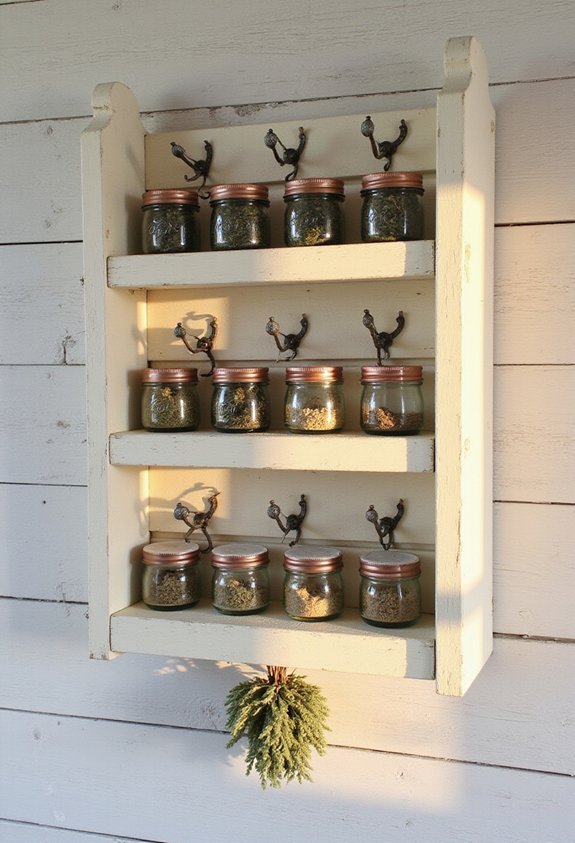
While drawer space often feels precious in small kitchens, your walls offer untapped storage potential for spices and herbs. I’ve found that wall-mounted spice racks maximize vertical space without consuming cabinet real estate. Tiered designs let you display multiple jars at once, making ingredients visible and accessible during cooking.
For fresh herbs, I recommend floating shelves paired with small potted plants. They’re both decorative and functional. Alternatively, magnetic strips work brilliantly for metal containers, keeping dried herbs organized and within arm’s reach.
Consider your kitchen’s style when selecting racks. Rustic wood frames complement farmhouse aesthetics, while industrial metal options suit modern farmhouse designs. Label everything clearly to prevent confusion and waste. These solutions transform wasted wall space into practical storage that keeps your cooking essentials organized and your cabinets uncluttered.
8. Sliding Barn Doors on Cabinet Fronts
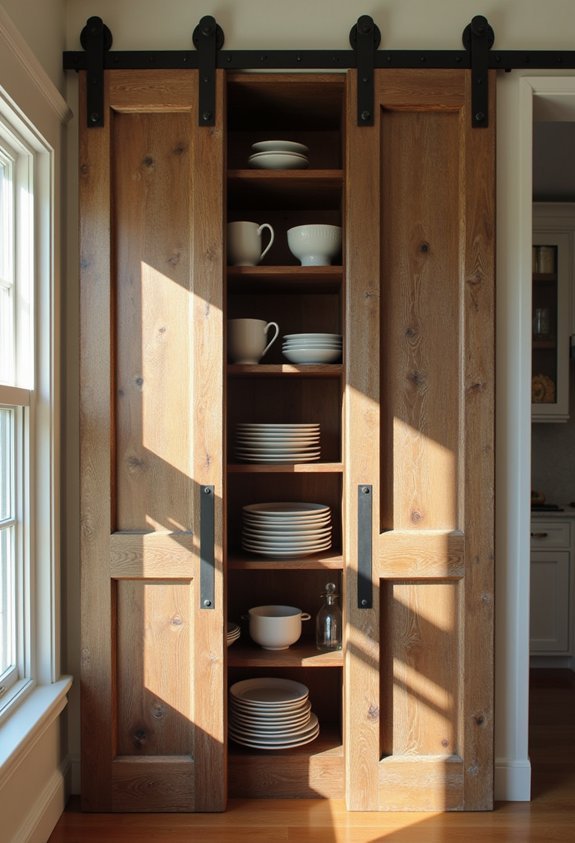
One of my favorite farmhouse upgrades you can make is installing sliding barn doors on your cabinet fronts. They’re practical and visually striking, adding authentic rustic charm while maximizing your limited space. Unlike traditional swing doors that require clearance, barn doors slide horizontally along a track, freeing up valuable floor area in compact kitchens.
You’ll find barn door hardware kits readily available online and at home improvement stores. Installation’s straightforward—mount the track above your cabinet, hang the door, and adjust the rollers. I’d recommend choosing reclaimed wood or quality reproductions for genuine farmhouse appeal.
These doors also hide clutter effectively, keeping your kitchen looking organized. Whether you’re concealing pantry items or kitchen essentials, sliding barn doors deliver both function and style. They’re an investment that transforms small spaces beautifully.
9. Overhead Cabinet Lighting for Ambiance
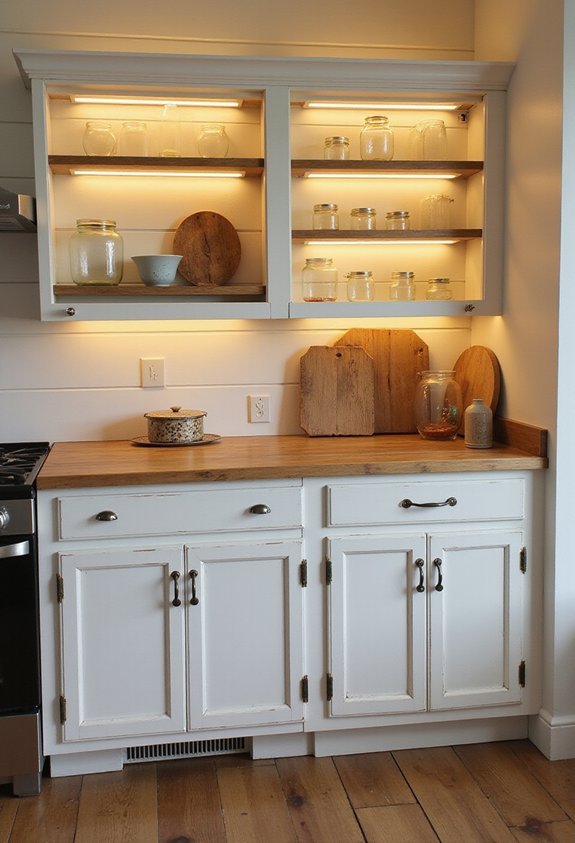
Beyond the visual appeal of sliding barn doors, strategic lighting elevates your farmhouse kitchen’s entire atmosphere. I’ve found that overhead cabinet lighting transforms how your small space feels and functions.
Installing LED strips beneath upper cabinets illuminates your countertops without consuming precious overhead space. Warm-toned bulbs create that cozy farmhouse aesthetic you’re after, while brighter options enhance functionality for meal prep.
Consider puck lights for focused illumination on display shelves, or linear strips for seamless, continuous lighting. These options won’t clutter your ceiling and work perfectly in tight kitchens.
The beauty? You’ll reduce shadows, highlight architectural details, and make your small space feel larger and more inviting. Strategic overhead lighting ties your farmhouse design together effortlessly.
10. Repurposed Vintage Pieces as Storage
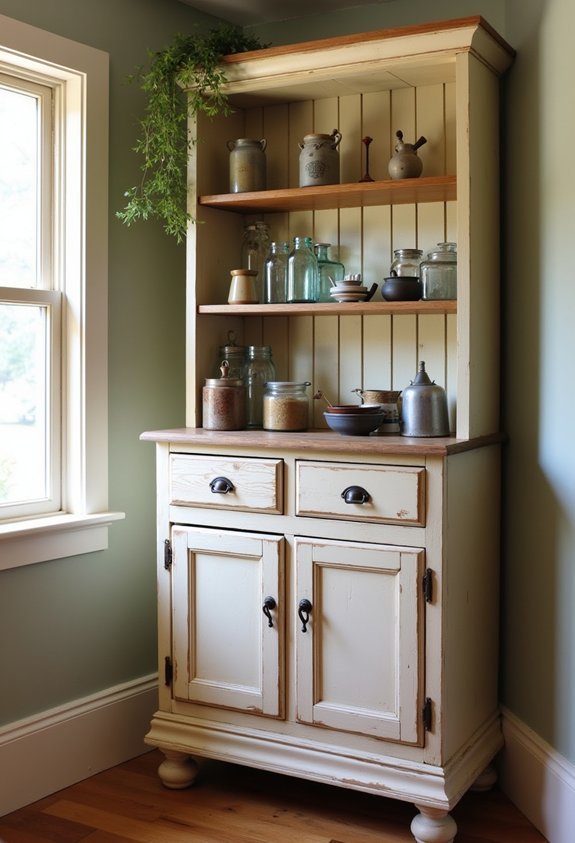
Vintage pieces offer surprising storage solutions that add character to your small farmhouse kitchen. I’ve found that repurposed items like old apothecary cabinets, wooden crates, and antique hutches maximize storage while embracing farmhouse aesthetics. You can transform a vintage ladder into open shelving or use reclaimed barn doors as cabinet fronts. These pieces aren’t just functional—they’re conversation starters that inject personality into compact spaces. When you source from local antique shops or estate sales, you’ll discover one-of-a-kind treasures that fit your budget and style. I recommend measuring your space carefully before purchasing to guarantee pieces fit properly. Mixing vintage storage with modern organization systems creates an efficient, charming kitchen that doesn’t feel cramped or cluttered.
11. Compact Island Cabinets With Built-In Functionality
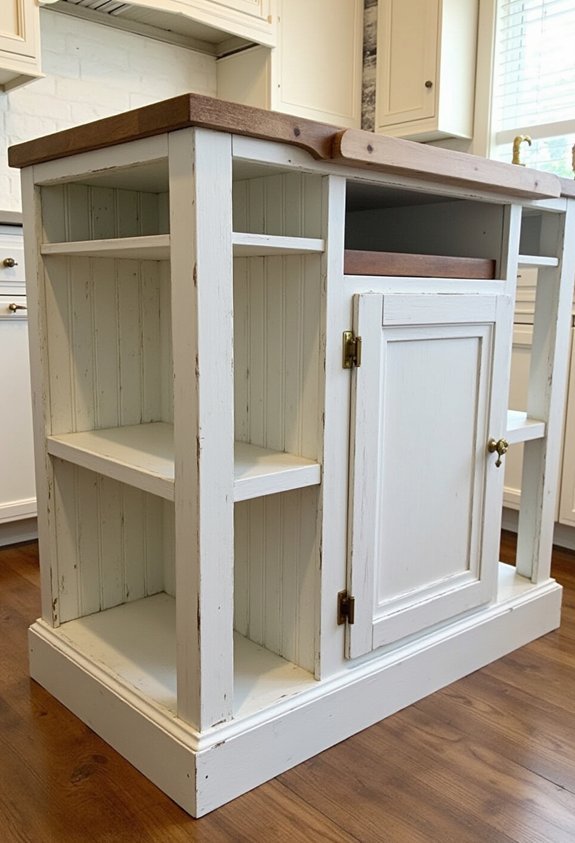
While repurposed pieces bring charm to your farmhouse kitchen, a compact island with built-in functionality transforms how you use your small space. I’ve found that a well-designed island maximizes every square inch by combining storage, countertop workspace, and seating in one strategic piece.
You’ll want to evaluate islands featuring open shelving for cookbooks, closed cabinets for concealed storage, and drawers for utensils. Some designs incorporate wine racks, cutting boards, or spice organizers that eliminate the need for separate furniture.
The key is selecting dimensions that don’t overwhelm your layout—typically 24 to 30 inches deep and 3 to 4 feet long works well. You’ll gain functional workspace while maintaining traffic flow through your kitchen, making cooking and entertaining genuinely easier in tight quarters.
Frequently Asked Questions
What’s the Best Way to Measure Cabinet Dimensions Before Purchasing for Small Kitchens?
I’d recommend measuring your wall space from corner to corner, noting the height from floor to ceiling and depth from wall to counter edge. Then I’ll verify these measurements twice before ordering to guarantee cabinets fit perfectly in your compact kitchen layout.
How Much Does It Typically Cost to Install Farmhouse Cabinets in a Small Space?
I’d estimate you’ll spend $3,000 to $8,000 for farmhouse cabinet installation in a small kitchen, depending on materials and labor costs in your area. I recommend getting multiple quotes from local contractors to find the best deal for your budget.
Which Materials Are Most Durable and Budget-Friendly for Farmhouse-Style Cabinet Construction?
I’d recommend pine or birch wood for your farmhouse cabinets—they’re affordable and durable. You’ll find they’re easy to refinish and weather beautifully over time. I’ve seen them hold up wonderfully in small kitchens when you seal them properly.
Can I Install These Cabinet Solutions Myself, or Do I Need Professional Help?
I’d say you can definitely install basic farmhouse cabinets yourself if you’re handy with tools. However, I’d recommend getting professional help for complex layouts, plumbing adjustments, or electrical work to guarantee everything’s done safely and correctly.
How Do I Maintain and Clean Rustic Farmhouse Cabinets to Prevent Damage Long-Term?
I’d recommend wiping your cabinets weekly with a damp cloth and mild soap. You’ll want to avoid excessive moisture and harsh chemicals that damage the finish. I suggest applying furniture polish quarterly to maintain that rustic charm and protect the wood long-term.
Conclusion
You’ll find that farmhouse cabinets transform your small kitchen into a functional, charming space. By combining open shelving, vertical storage, and smart corner solutions, you’ll maximize every inch while maintaining that rustic aesthetic you’re after. Glass-front displays and vintage touches add character, while practical elements like pull-out drawers keep everything organized. With these ideas, you’re creating a kitchen that’s both beautiful and brilliantly efficient.