The wooden slat divider sat in my garage for two weeks before I found the courage to actually install it. My bedroom had become a place where everything was visible at once. The reading corner sat next to the closet sat next to the dresser, all competing for attention in a single glance. The room felt fractured, like it couldn’t decide what it wanted to be. A visual boundary might help organize the chaos, might give each area permission to exist separately instead of demanding I process everything simultaneously.
When we installed it, the room transformed in a way I hadn’t anticipated. It wasn’t a wall, so light still moved through the slats, but the space suddenly felt purposeful. I could sit in the reading corner without seeing the unmade bed reflected in the mirror. The bedroom split into zones that made sense, each one serving a different part of my day. The divider wasn’t hiding anything. It was just giving the space rhythm and structure.
What surprised me was how the slats created their own kind of beauty as the light changed. Morning sun cast thin shadows across the wood that shifted throughout the day. In the evening, when I had the lamp on behind the divider, the backlit slats became something almost sculptural. The divider wasn’t just functional. It was changing the visual experience of the entire room depending on the time of day.
The bedroom became quieter after that. Not acoustically exactly, but mentally. By breaking the space into sections, I’d given my eyes and mind something to rest on instead of everything at once. That subtle division made the room feel larger even though nothing had actually changed except how I could perceive it. Sometimes what a space needs isn’t more, but just a way to breathe differently.
1. Modern Minimalist Slat Dividers
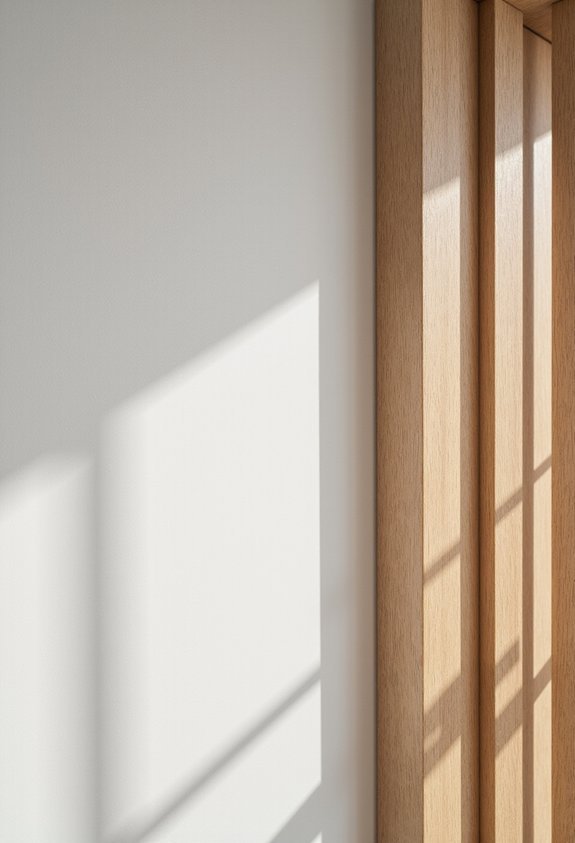
You’ll find that contemporary minimalist slat dividers strip away unnecessary ornamentation, focusing instead on clean lines and functional elegance. I’ve discovered that these designs work beautifully in modern homes because they provide privacy without overwhelming a space. The slats—typically evenly spaced and uniform in width—create visual interest while maintaining simplicity. I prefer natural wood finishes that highlight the material’s grain, though you can also choose painted options for a sleeker appearance. What makes these dividers particularly effective is their versatility; they complement various interior styles and adapt to different room sizes. I recommend installing them to allow light penetration, which keeps your space feeling open despite the partition. You’ll appreciate how they transform any room while preserving the airy, uncluttered aesthetic modern minimalism demands.
2. Rustic Farmhouse Room Separators
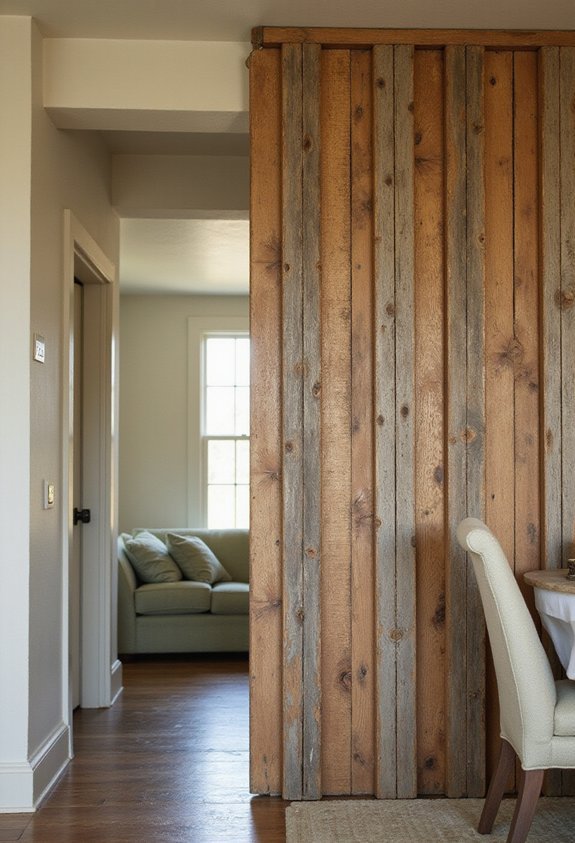
While minimalist dividers emphasize clean geometry and restraint, rustic farmhouse separators celebrate texture, warmth, and character. I find these dividers perfect for creating cozy, inviting spaces that feel lived-in and authentic.
You’ll love the distressed finishes and weathered wood tones that define this style. I recommend incorporating wider slats with visible knots and grain patterns. Mixing different wood species adds visual interest and depth to your room layout.
These separators work beautifully in open-concept homes where you need flexible boundaries. I’ve seen them pair wonderfully with vintage hardware, wrought iron accents, and natural fabric panels. They’re substantial enough to genuinely divide spaces while maintaining an approachable, homey aesthetic.
Consider pairing your farmhouse divider with reclaimed wood elements throughout your home for cohesive design.
3. Mid-Century Modern Wooden Screens
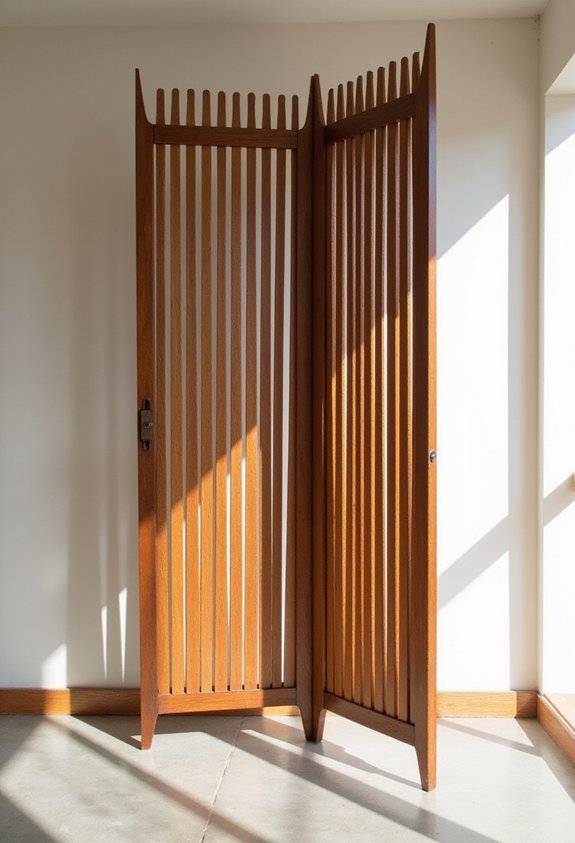
Sleek lines and functional elegance define mid-century modern wooden screens, a style that strips away ornament to reveal pure design. I find these dividers perfect for creating visual interest without overwhelming your space.
What makes them stand out is their minimalist aesthetic combined with quality craftsmanship. You’ll often see geometric patterns, tapered legs, and natural wood finishes that complement contemporary interiors beautifully. The screens typically feature open slat designs rather than solid panels, allowing light to filter through while still establishing distinct zones.
I appreciate how versatile they are. Whether you’re separating a bedroom corner or defining a workspace, mid-century modern screens work seamlessly with existing décor. They’re functional art pieces that elevate your home’s design while maintaining the clean, purposeful style that defines the era.
4. Industrial Metal and Wood Combinations
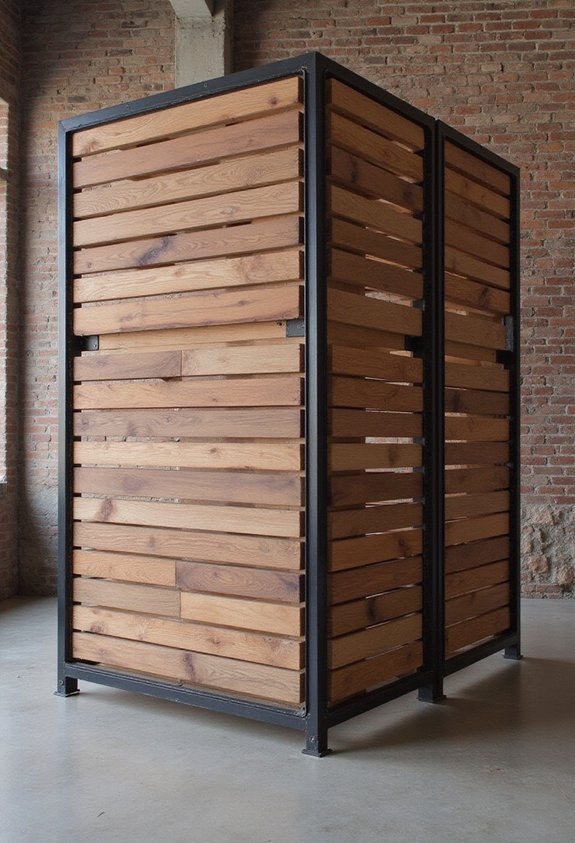
Industrial metal and wood combinations bring raw, edgy character to room dividers that mid-century modern screens simply can’t achieve. I’ve found that pairing reclaimed wooden slats with steel frames creates a striking visual contrast. You’ll appreciate how metal pipes or iron brackets reinforce the divider’s structure while adding authentic industrial flair.
What makes this style work is the balance between materials. I recommend combining weathered wood with matte black or brushed steel elements. The combination feels contemporary yet timeless, fitting seamlessly into loft spaces, modern apartments, or transitional homes.
Consider incorporating metal mesh panels or perforated steel sheets alongside wood slats. This approach allows light penetration while maintaining privacy. The durability of metal paired with wood’s warmth creates a functional, visually compelling room divider that handles high-traffic areas effectively.
5. Herringbone Pattern Dividers
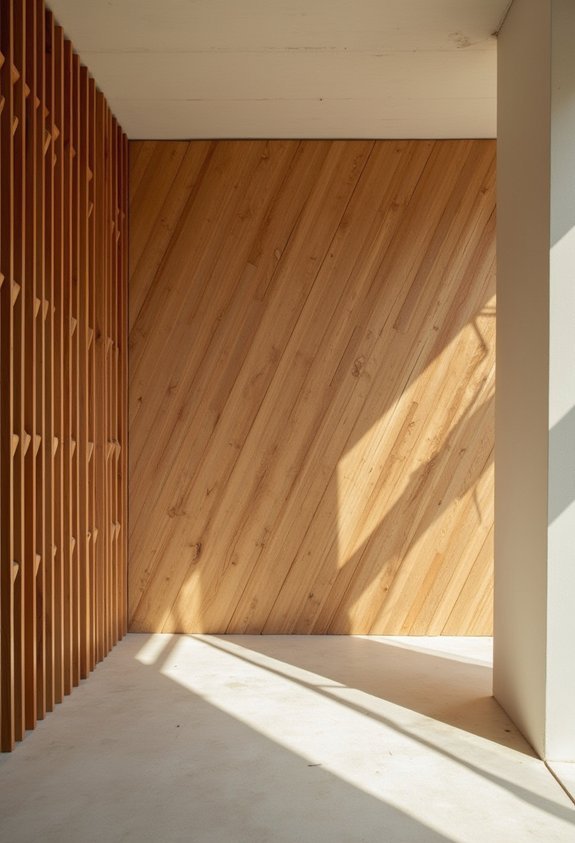
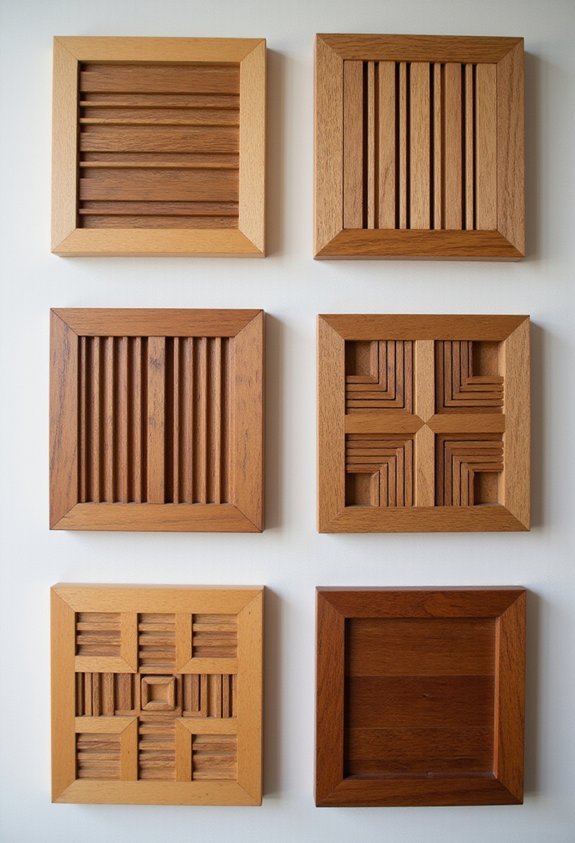
Herringbone patterns elevate wooden slat dividers from simple room separators to striking architectural features. I’ve found that this classic zigzag design adds visual depth and sophistication to any space. The alternating wood angles create movement that draws the eye, making rooms feel more dynamic and intentional.
You’ll appreciate how herringbone dividers work in various settings. They’re particularly effective in open-concept homes where you need defined zones without closing off natural light. I recommend choosing contrasting wood tones to enhance the pattern’s impact, or go subtle with matching finishes for a refined aesthetic.
Installation requires precise angles and careful planning, but the result justifies the effort. You can customize spacing between slats to control transparency and privacy levels. This pattern transforms functional dividers into genuine design statements.
6. Vertical Slat Wall Partitions

While herringbone patterns create movement through angles, vertical slat partitions offer clean lines that elongate spaces and draw the eye upward. I’ve found that this design works exceptionally well in rooms with lower ceilings, as the vertical orientation creates an illusion of height.
You can customize the spacing between slats to control privacy and light flow. Wider gaps let more light through while maintaining openness, whereas closer spacing provides greater seclusion. I prefer spacing slats 2-4 inches apart for ideal balance.
These partitions pair beautifully with modern and minimalist interiors. They’re also easier to install than herringbone patterns since you’re working with straightforward vertical alignment. Whether you’re dividing a studio apartment or creating a home office nook, vertical slat partitions deliver both functionality and sophisticated aesthetics.
7. Horizontal Slat Room Screens
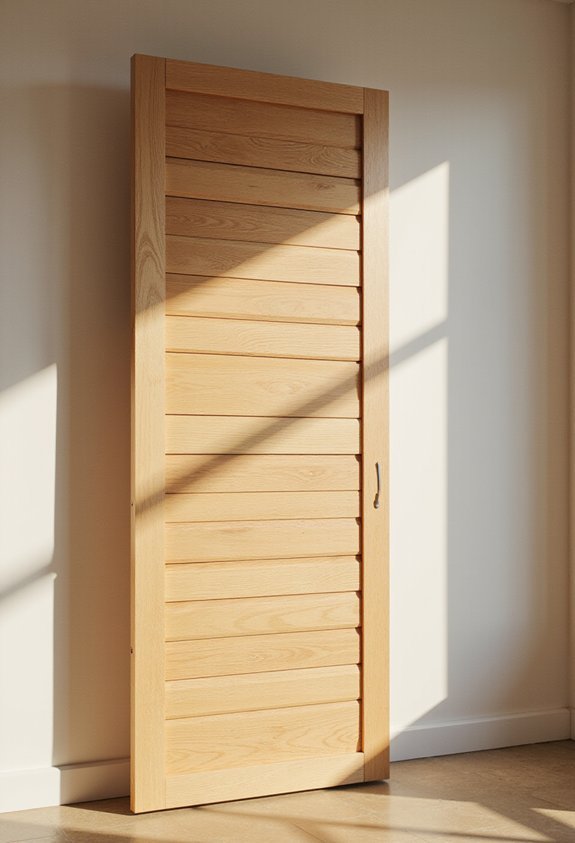
If you’re seeking a design approach that emphasizes spaciousness and draws the eye across a room, horizontal slat screens deliver exactly that. I’ve found they create a sophisticated aesthetic while maintaining visual flow throughout your space.
Unlike vertical partitions, horizontal screens encourage the eye to travel sideways, making rooms feel wider and more open. They work particularly well in modern and contemporary interiors where clean lines matter.
You’ll appreciate how these screens provide privacy without complete enclosure. The gaps between slats allow light and air circulation, preventing that cramped feeling solid walls create. I’d recommend spacing slats two to four inches apart for ideal balance between openness and separation.
Horizontal screens pair beautifully with minimalist décor and work wonderfully in living areas, bedrooms, and offices where you need flexible spatial division.
8. Angled Wooden Slat Designs
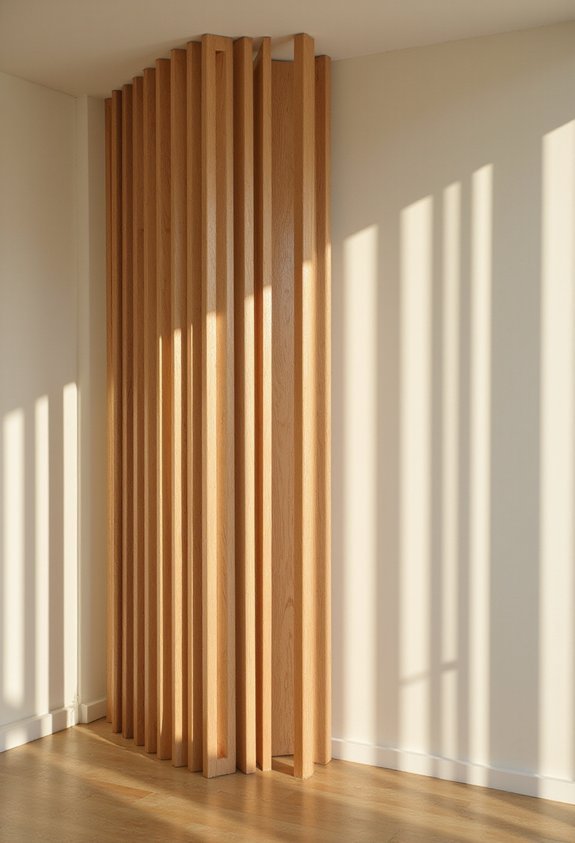
For a room divider that commands visual interest and adds dynamic movement to your space, angled wooden slat designs deliver sophisticated impact. I’ve found that tilting slats at 45-degree angles creates visual depth while maintaining partial transparency, allowing light to filter through beautifully.
You’ll appreciate how angled designs serve dual purposes: they define separate zones without completely blocking sightlines, and they draw the eye upward, making rooms feel more spacious. The geometric patterns created by angled wood naturally guide traffic flow and add contemporary flair to any interior.
I recommend experimenting with varying angles and wood species to customize the aesthetic. Darker woods create bold statements, while lighter finishes feel airy. Angled slat dividers work particularly well in open-concept homes where you need flexibility without permanent walls.
9. Stained Glass and Wood Panel Dividers
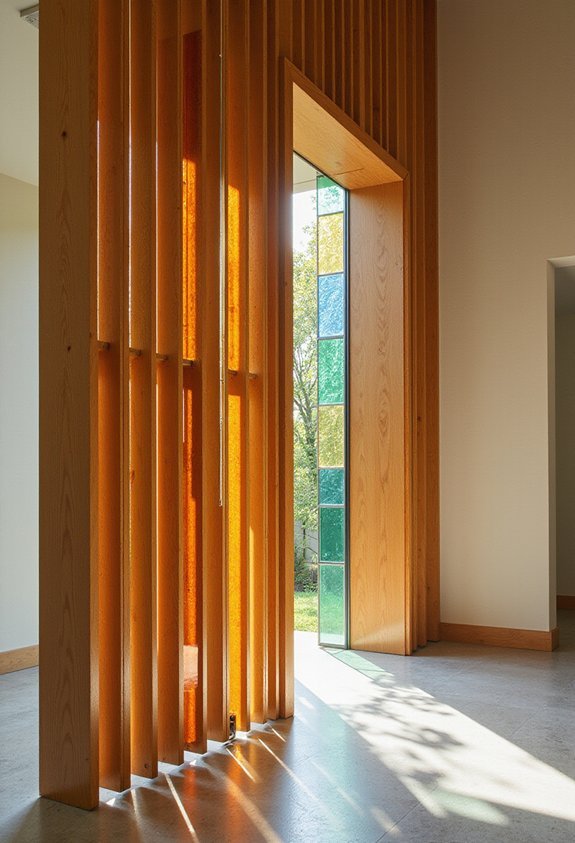
When you want to elevate a room divider beyond geometric minimalism, combining stained glass with wooden panels creates stunning visual drama. I’ve found that this hybrid approach lets you merge craftsmanship with artistic expression in ways purely wooden designs can’t achieve.
The stained glass elements introduce color, light, and movement to your space. You can position them strategically within wooden frames to catch sunlight and cast colorful shadows throughout the room. This combination works particularly well in living rooms, bedrooms, or studios where you want to partition space without sacrificing aesthetics.
You’ll appreciate how the wood provides structural stability while the glass adds sophistication. The contrast between solid wood and transparent, luminous glass creates visual interest from both sides. This approach transforms a functional divider into a legitimate focal point that enhances your interior design.
10. Whitewashed Coastal Room Separators

Whitewashed wooden slats evoke the breezy, sun-bleached aesthetic of seaside living—and they’re one of my favorite ways to partition a space with understated elegance. I’ve found that this style works beautifully in bedrooms, living rooms, and bathrooms where you want soft, diffused light filtering through gaps between slats.
The whitewash finish creates a weathered patina that feels both relaxed and sophisticated. You can achieve this look by applying diluted white paint or commercial whitewash products to natural wood slats, allowing the grain to show through subtly.
I pair these dividers with natural textures—jute, linen, and rattan—to enhance the coastal vibe. They’re perfect for creating open-concept spaces while maintaining visual interest and architectural appeal without overwhelming your décor.
11. Dark Walnut Luxury Partitions
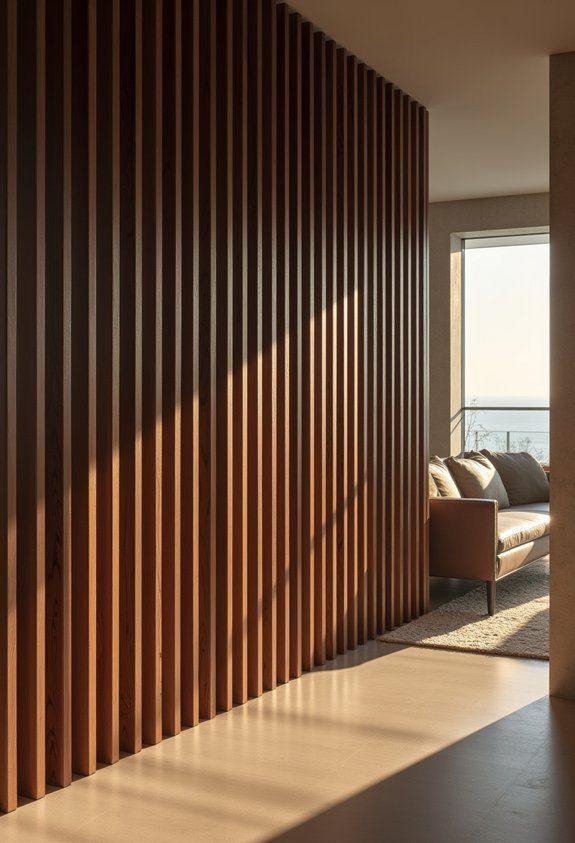
Dark walnut slats bring an entirely different energy to room dividing—one that’s rich, grounded, and unmistakably elegant. I’ve found that these deeper tones create sophisticated spaces that feel intentionally curated rather than hastily decorated.
What I appreciate most is how walnut partitions ground a room’s aesthetic. They’re versatile enough to complement modern minimalism or traditional décor, yet they command attention without overwhelming the space. The natural grain patterns in walnut add depth and visual interest that lighter woods simply can’t match.
When you’re considering dark walnut dividers, think about your lighting. These partitions work beautifully in well-lit rooms where their richness can shine. I’d recommend using them in libraries, home offices, or master bedrooms where you want to establish a luxurious, contemplative atmosphere.
12. Geometric Pattern Slat Dividers

If you’re ready to inject visual dynamism into your space, geometric pattern slat dividers offer a striking alternative to solid wood designs. I’ve found that these dividers transform rooms through strategic visual patterns rather than solid barriers.
You can choose from various geometric arrangements—chevron, herringbone, or lattice patterns—that create depth and movement. The angles and intersecting lines draw the eye while maintaining partial visibility, which I appreciate for open-concept spaces needing subtle separation.
These dividers work exceptionally well in modern and contemporary interiors. I recommend selecting patterns that complement your existing décor without overwhelming the space. The interplay of light and shadow through geometric cutouts adds dimension throughout the day, making them functional art pieces that elevate your interior design considerably.
13. Sliding Barn Door Style Screens
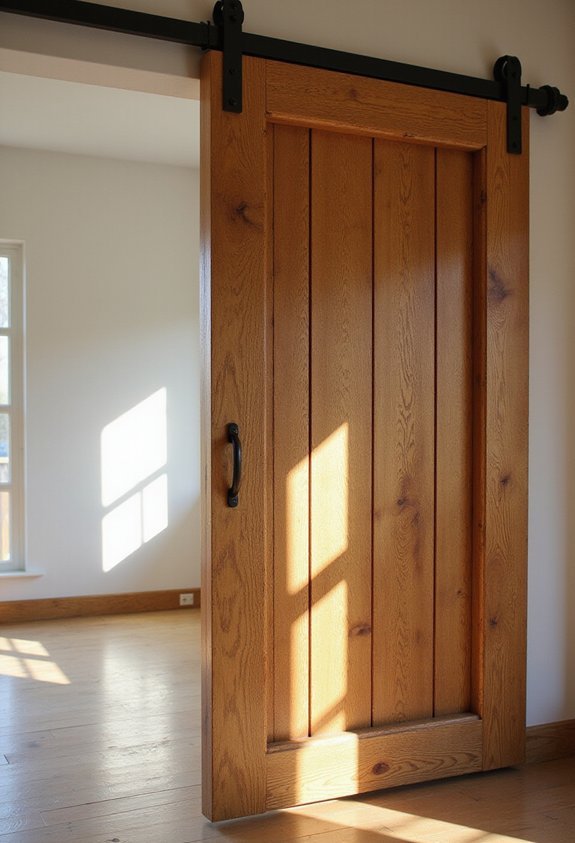
Three key elements make sliding barn door style screens a compelling choice for modern interiors: rustic charm, functional flexibility, and visual impact. I’ve found that these dividers seamlessly blend farmhouse aesthetics with contemporary functionality.
You’ll appreciate how the barn door mechanism allows smooth operation without consuming floor space like traditional swinging doors. The horizontal slat design creates visual interest while maintaining partial sightlines, making rooms feel connected yet defined.
I recommend selecting reclaimed wood for authentic character or painting slats in bold colors for statement-making appeal. The sliding track hardware becomes a design feature itself, adding industrial elegance.
These screens work exceptionally well in open-concept spaces, bedrooms, and home offices. They’re sturdy, long-lasting, and adaptable to various décor styles. Whether you prefer minimalist or maximalist design, sliding barn door screens deliver both practicality and aesthetic sophistication.
14. Curved Wooden Slat Room Dividers
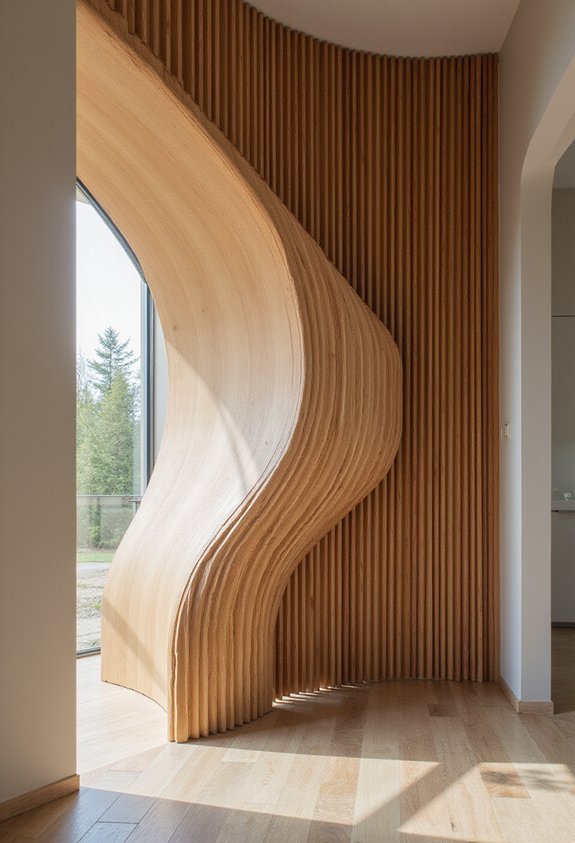
While straight-slat designs dominate the room divider market, curved wooden screens offer a sophisticated alternative that softens spatial boundaries and adds organic elegance to any room. I’ve found that curved dividers create visual interest through their flowing lines, making spaces feel more dynamic and less institutional than rigid partitions.
You’ll notice these screens work exceptionally well in modern and contemporary interiors, where they complement minimalist aesthetics beautifully. The gentle arcs reduce visual harshness while maintaining functionality. I recommend choosing woods with interesting grain patterns to enhance the curves’ natural beauty.
Installation requires more precision than standard designs, but the payoff’s worth it. Curved wooden slat dividers don’t just separate spaces—they create focal points that draw the eye and encourage movement throughout your home.
15. Boho Macramé and Wood Combinations
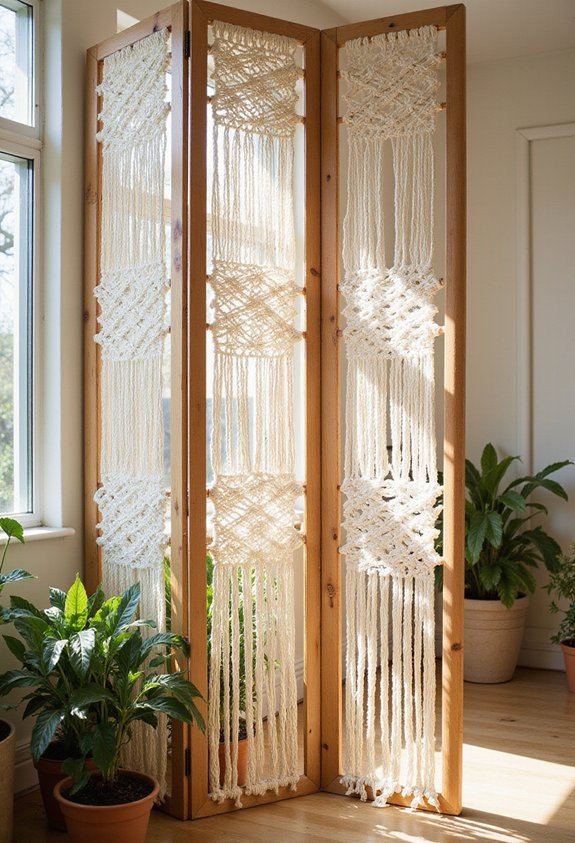
As bohemian style continues gaining popularity, I’ve seen macramé paired with wooden slats create distinctly textured dividers that balance structure with soft, artisanal appeal. This combination works beautifully because the rigid geometry of wood contrasts wonderfully with macramé’s flowing, organic knots.
I’d recommend installing macramé panels between wooden frames or weaving them through horizontal slats for visual interest. Natural cotton or jute macramé complements light wood finishes, while darker stains pair well with cream-colored rope. The layered textures create depth without overwhelming your space.
These dividers aren’t merely functional—they’re statement pieces that inject personality into any room. They’re particularly effective in bedrooms, meditation spaces, or bohemian-styled living areas where you want to establish distinct zones while maintaining an open, airy feel.
16. Reclaimed Wood Statement Partitions
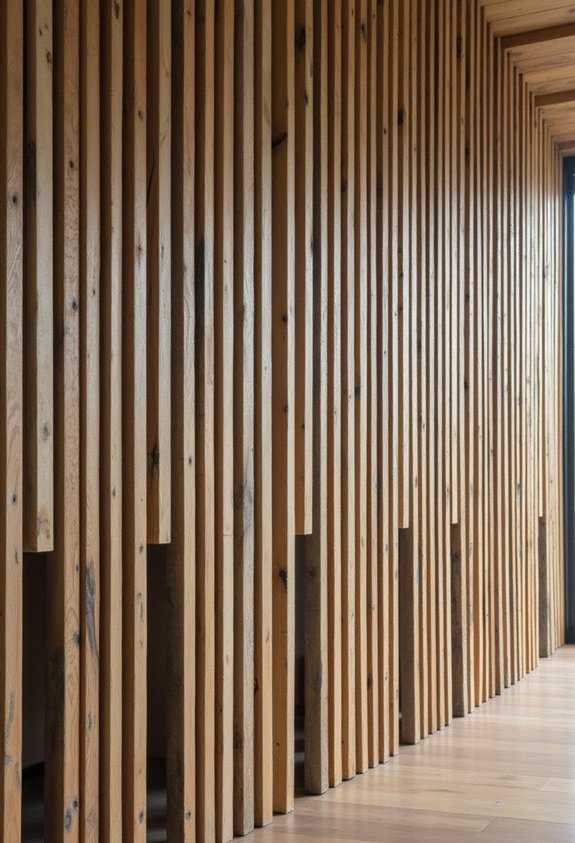
Because reclaimed wood carries genuine history and character that new materials simply can’t replicate, it’s become my go-to choice for clients wanting room dividers with authentic appeal. These statement partitions work brilliantly in modern, rustic, and eclectic interiors alike.
I’ve found that weathered barn wood and salvaged beams create striking visual focal points. The natural patina, nail holes, and color variations tell stories that mass-produced options never will. You can arrange reclaimed slats vertically, horizontally, or in mixed patterns for dynamic designs.
What makes these partitions particularly effective is their ability to blend sustainability with style. You’re repurposing materials while adding warmth and texture to your space. I recommend pairing reclaimed wood dividers with minimalist décor to let the wood’s character shine. The investment pays off through durability and timeless appeal.
Frequently Asked Questions
How Do I Properly Install Wooden Slat Room Dividers Without Damaging Walls?
I’ll help you install wooden slat dividers safely. I recommend using adhesive hooks, tension rods, or freestanding frames that don’t require wall mounting. If you must anchor them, I’d use picture rails or damage-free strips rather than nails or screws.
What Is the Average Cost of a Quality Wooden Room Divider for Homes?
I’d say you’re looking at spending $150 to $500 for a quality wooden slat room divider. The price varies based on size, wood type, and craftsmanship. I’ve found that investing in a sturdy divider pays off long-term through durability and aesthetics.
How Do I Clean and Maintain Wooden Slat Dividers to Prevent Dust Buildup?
I’d recommend dusting your wooden slat dividers weekly with a soft cloth to prevent buildup. You can also use a vacuum’s brush attachment monthly. I suggest applying furniture polish quarterly to keep the wood protected and looking fresh.
Can Wooden Room Dividers Soundproof Spaces or Reduce Noise Between Rooms?
I’ll tell you that wooden slat dividers offer minimal soundproofing since sound travels through gaps between slats. You’d need dense materials like fiberglass or mass-loaded vinyl behind them if you’re serious about reducing noise between rooms effectively.
What Are the Best Dimensions for Room Dividers in Small Apartment Spaces?
I’d recommend dividers between 5-6 feet tall and 3-4 feet wide for small apartments—they’ll fit doorways and don’t overwhelm your space. I’ve found these dimensions give you privacy without making rooms feel cramped or blocking natural light flow.
Conclusion
You’ll find that wooden slat dividers are incredibly adaptable to your home’s unique style. Whether you’re drawn to sleek minimalist designs or textured rustic elements, these partitions offer both function and beauty. They let you carve out distinct spaces while maintaining flow and light throughout your home. By choosing the right style—from herringbone patterns to industrial blends—you’re investing in a solution that transforms your space without feeling permanent or restrictive.