My desk at work felt like a temporary holding space for months. Gray walls, empty surface, nothing that suggested I spent eight hours there every day. Then one morning I brought in a small plant from home, and something shifted. The corner didn’t feel so hollow anymore. Over the next few weeks I added a mug I actually liked, a photograph, a blanket I could drape over my chair when the office got cold. Nothing dramatic. Just small things that made the space feel like it belonged to me.
These weren’t decorations. They were anchors. They made the hours feel less like time passing and more like time spent somewhere that mattered. A space that acknowledged I was actually there, working, existing in it.
1. Maximize Vertical Storage With Wall-Mounted Shelves
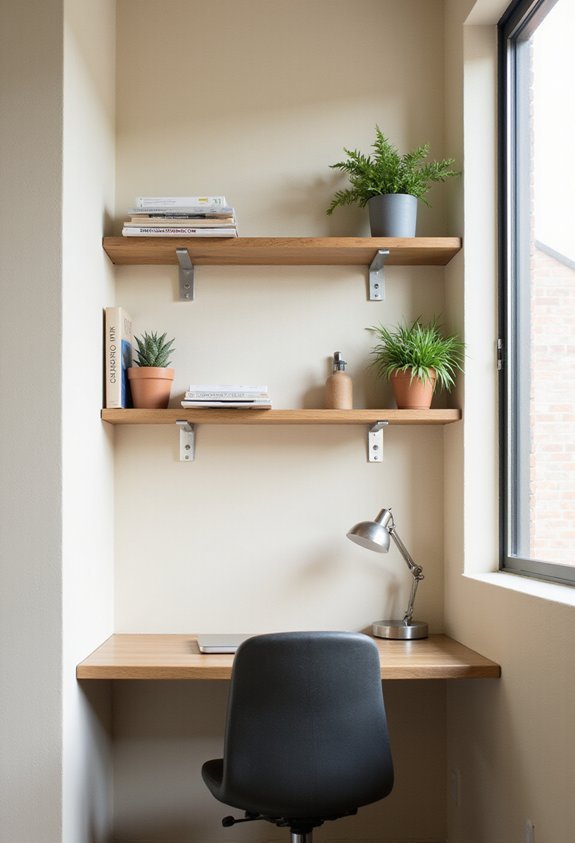
Wall space—it’s your cubicle’s most underutilized asset. I’ve discovered that wall-mounted shelves transform cramped spaces into organized, functional areas. By installing shelves above your desk or along empty walls, you’ll free up valuable surface real estate while keeping essentials within arm’s reach.
I recommend starting with floating shelves that won’t overwhelm your cubicle visually. They’re perfect for storing reference books, decorative items, and office supplies. The key is strategic placement: position shelves at eye level for frequently accessed items and higher up for occasional-use materials.
Don’t overcrowd your shelves. I’ve learned that leaving breathing room prevents your cubicle from feeling cluttered. Quality wall anchors secure your shelves, and I suggest using matching shelf colors to maintain a cohesive aesthetic that maximizes both function and visual appeal.
Also read: 16 Bedroom Rug Ideas for Small and Large Rooms
2. Choose a Color Palette That Energizes You
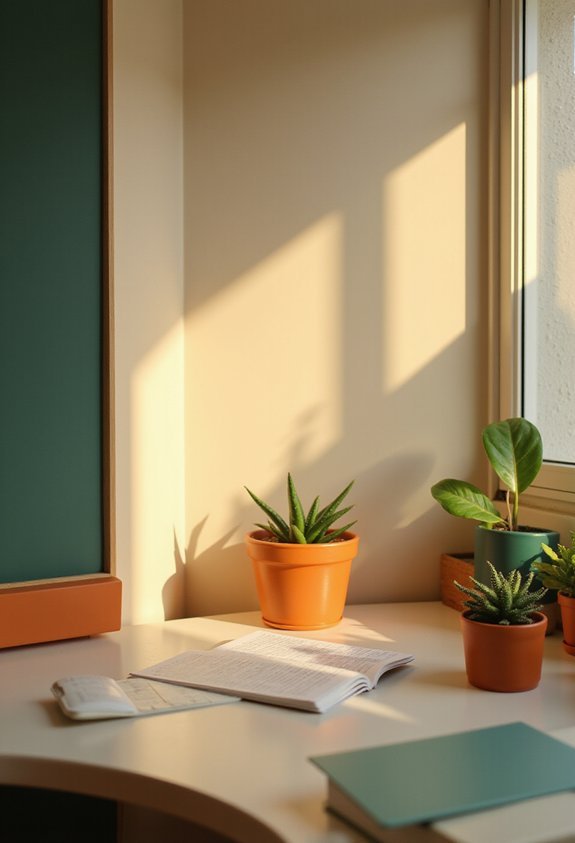
Color’s what sets your cubicle apart from the sea of beige surrounding you. I’ve found that choosing the right palette dramatically impacts my mood and productivity throughout the day.
Consider what energizes you. If you’re naturally calm, soft blues and greens work wonders. For those seeking motivation, I’d recommend warm oranges, reds, or yellows. You don’t need to paint walls—that’s often against office policy anyway.
Instead, I incorporate color through desk accessories, a small area rug, or artwork. A vibrant desk lamp, colorful file organizers, or a plants in bright planters inject personality without overwhelming the space.
Test colors before committing. Live with them for a few days. Your cubicle should feel like your own sanctuary, not someone else’s vision.
3. Bring in Natural Light or Upgrade Your Lighting
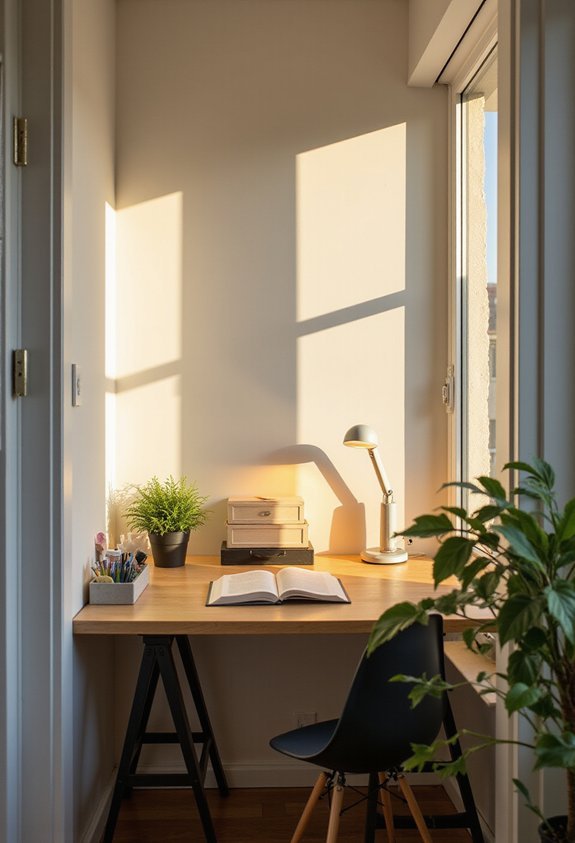
Lighting can make or break your cubicle experience. I’ve found that natural light dramatically improves my mood and productivity throughout the day. If you’re positioned near a window, you’re lucky—position your desk to maximize that exposure. For those of us without window access, I recommend upgrading to LED bulbs that mimic daylight. They’re energy-efficient and reduce eye strain considerably.
Consider adding a desk lamp with adjustable brightness so you can control the intensity based on your tasks. I’ve also invested in a small light therapy lamp, which combats afternoon fatigue. Layering different light sources—overhead, task, and ambient—creates a well-lit space that feels less institutional and more inviting. Proper lighting transforms your cubicle into a space where you’ll actually want to spend your workday.
4. Add Plants to Improve Air Quality and Mood
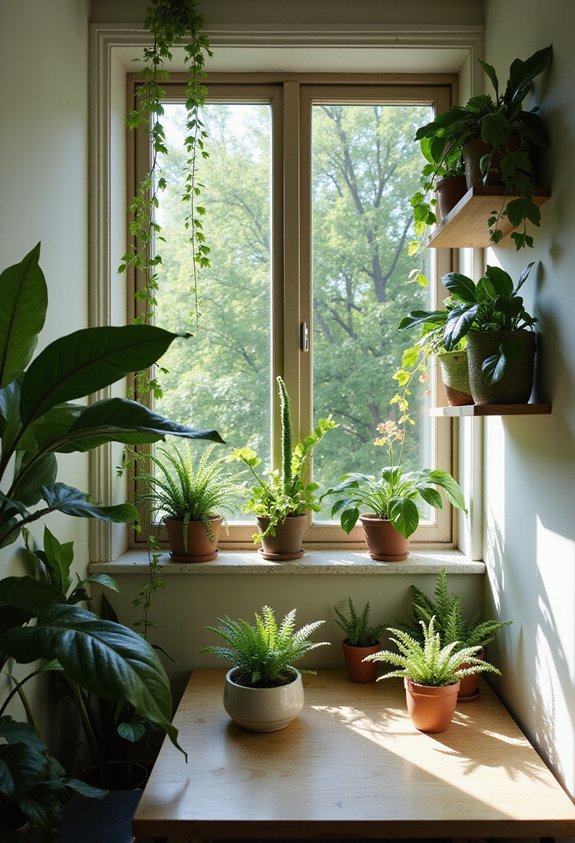
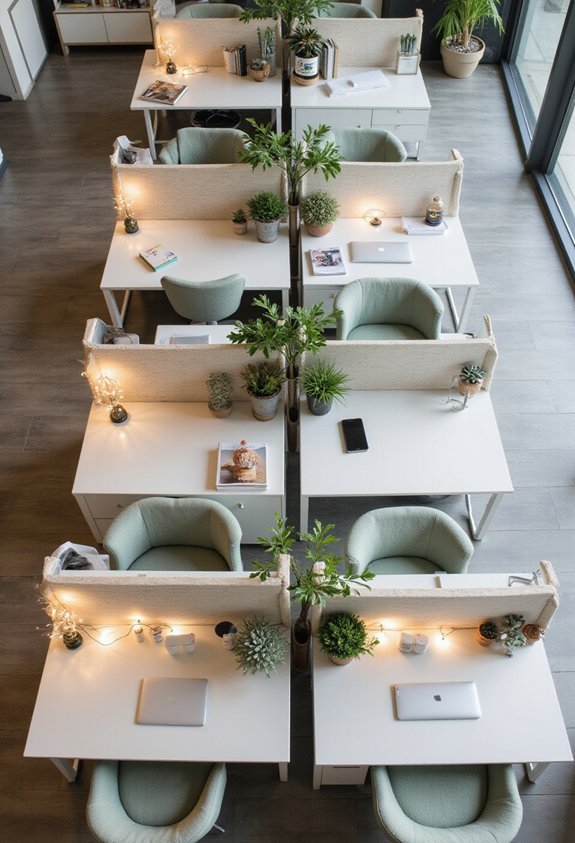
Plants can transform your cubicle into a healthier, more vibrant workspace. I’ve found that adding greenery genuinely improves both air quality and my mood during long workdays. Low-maintenance options like pothos, snake plants, and succulents thrive in cubicles with minimal natural light and infrequent watering.
Beyond aesthetics, plants absorb carbon dioxide and release oxygen, creating a fresher environment around your desk. You’ll notice improved focus and reduced stress when you’re surrounded by living greenery.
I recommend starting with one or two plants and expanding from there. Place them where you can see them easily—on your desk corner or a small shelf. Even a single plant makes a noticeable difference in how I feel about my workspace.
5. Use Desk Organizers to Eliminate Clutter
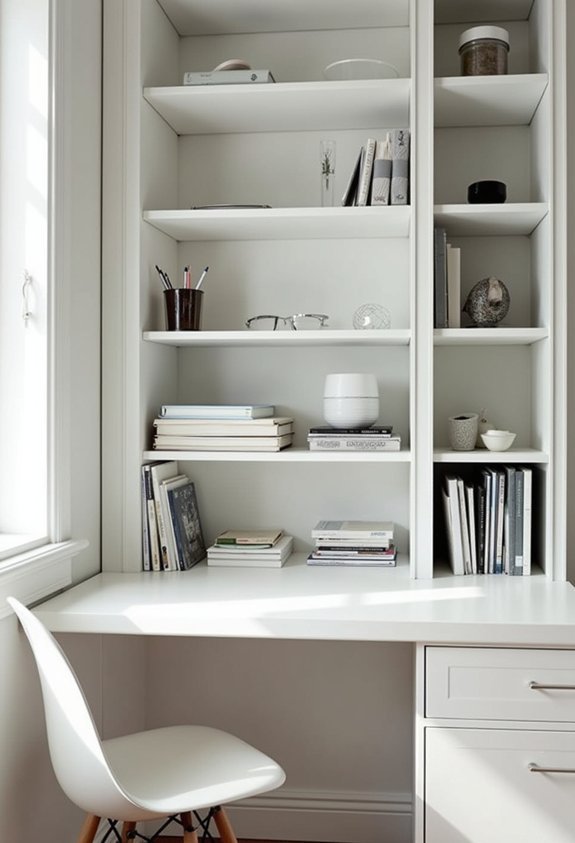
While plants brighten your workspace, a cluttered desk undermines that positive effect. I’ve found that desk organizers transform my productivity and peace of mind. Drawer dividers keep supplies sorted, so I’m not hunting for pens or sticky notes. Vertical file holders prevent paper from spreading across my surface. A small caddy corrals writing instruments, tape, and scissors within arm’s reach. Cable management boxes hide charging cords that’d otherwise tangle. I use stackable trays for active projects, keeping completed work separate. These simple additions create visual calm and functional efficiency. When everything has a designated spot, I work faster and feel less stressed. You’ll notice immediately how organizing your desk directly impacts your focus and mood.
6. Incorporate Inspirational Wall Art and Quotes
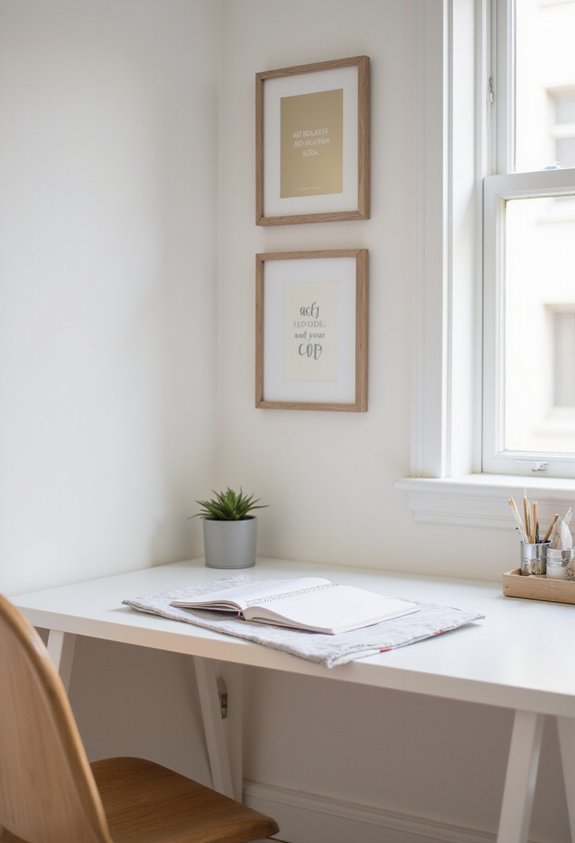
Once you’ve organized your desk’s physical elements, you’re ready to feed your mind. I’ve found that inspirational wall art transforms my cubicle into a motivational space. You don’t need much—a single powerful quote or minimalist print can anchor your environment.
I recommend choosing artwork that resonates with your values and goals. Whether it’s a motivational phrase, an abstract design, or a nature photograph, guarantee it genuinely inspires you rather than feeling generic. Avoid oversaturating your walls; too many pieces create visual noise that undermines the calming effect you’ve established through organization.
Position your art at eye level where you’ll naturally see it throughout your day. This consistent visual reminder keeps you focused and energized during challenging moments, making your cubicle a personal sanctuary that supports your productivity and well-being.
7. Create a Comfortable Seating Setup
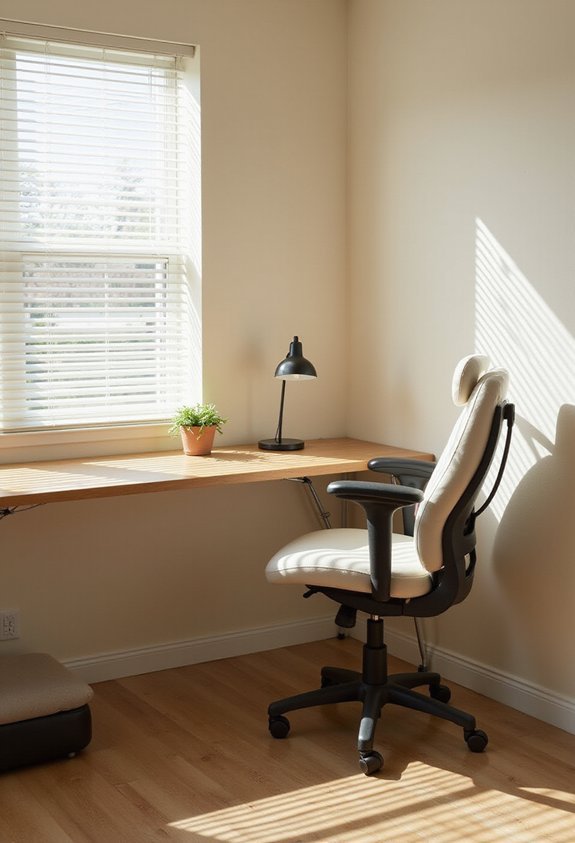
Your chair is the foundation of cubicle comfort, and I can’t stress this enough—it directly impacts your productivity and health. I recommend investing in an ergonomic chair that supports your lower back and promotes proper spinal alignment. Adjust the seat height so your feet rest flat on the floor and your knees form a 90-degree angle.
Don’t overlook cushioning. A quality seat cushion reduces pressure on your tailbone during long workdays. Position your monitor at eye level to prevent neck strain, and keep your keyboard and mouse within arm’s reach.
Consider adding a small footrest if your feet don’t touch the ground comfortably. These adjustments transform your cubicle into a supportive workspace where you’ll feel energized rather than exhausted by day’s end.
8. Install a Small Bulletin Board for Important Items
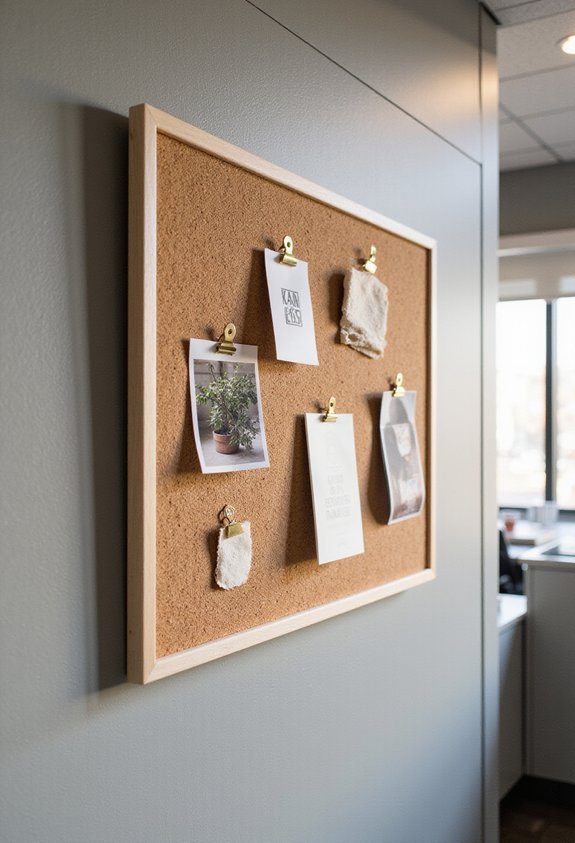
After you’ve perfected your seating setup, I’d recommend tackling organization with a small bulletin board. It’s a game-changer for your cubicle’s functionality and aesthetics.
A bulletin board keeps your essential items visible and accessible. Pin your important deadlines, project notes, and reminders directly in your line of sight. This prevents information from getting lost in desk clutter or digital folders.
Choose a cork or felt board that fits your cubicle dimensions—typically 18×24 inches works well for most spaces. Mount it at eye level for easy reference throughout your workday.
Use color-coded pins and sticky notes to categorize information by priority or project. This visual system helps you stay organized without overwhelming your workspace. Your bulletin board becomes your personal command center, keeping you focused and efficient.
9. Add a Personal Photo Display
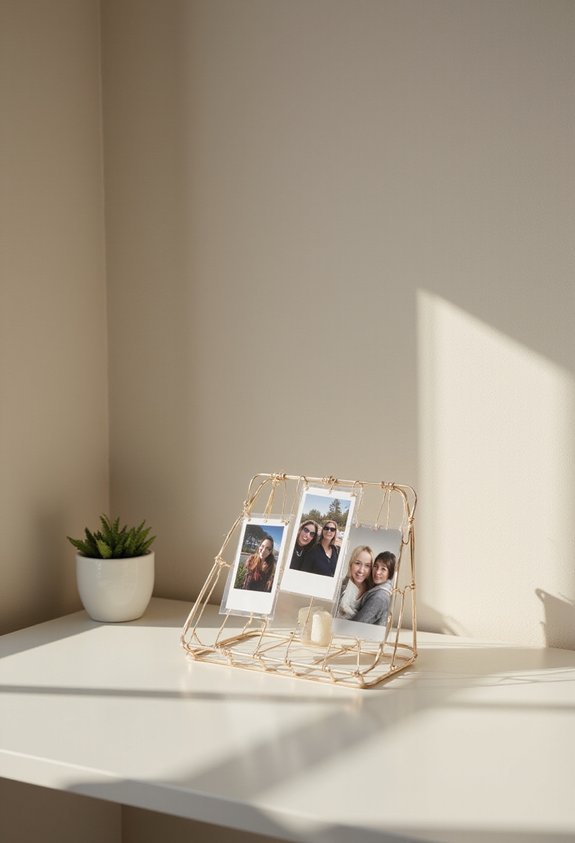
While your bulletin board handles the practical side of organization, I’ve found that adding personal photos brings warmth and humanity to an otherwise sterile workspace. I recommend displaying a few carefully selected images—family, friends, or meaningful moments—on your desk or cubicle wall. A small frame or two suffices without overwhelming your limited space. These photos serve multiple purposes: they personalize your environment, provide mental breaks during stressful workdays, and remind you of what matters most. When colleagues pass by, they’ll notice these glimpses into your life, fostering genuine connection and conversation. I’ve noticed that this simple addition transforms my cubicle from impersonal to inviting, making those eight hours feel less isolating and more like a genuine extension of home.
10. Use Mirrors to Create the Illusion of Space
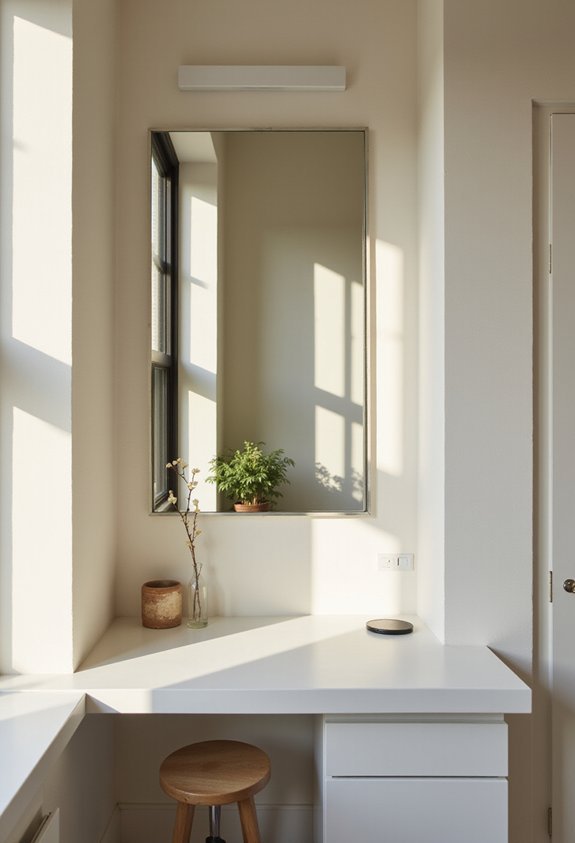
Because cubicles tend to feel cramped and confined, I’ve discovered that strategically placing mirrors can dramatically expand the perceived size of your workspace. I’ve placed a mirror on the wall opposite my desk, and it immediately reflects light and makes the area feel twice as large. The key is positioning it to bounce natural light throughout the cubicle. I’ve also found that smaller mirrors work well on shelves or filing cabinets, creating depth without overwhelming the space. Avoid placing mirrors directly behind you, as they can be distracting during work. Instead, angle them to maximize light reflection and visual openness. This simple addition has genuinely transformed how my cubicle feels, making it more open and less suffocating.
11. Invest in Ergonomic Desk Accessories
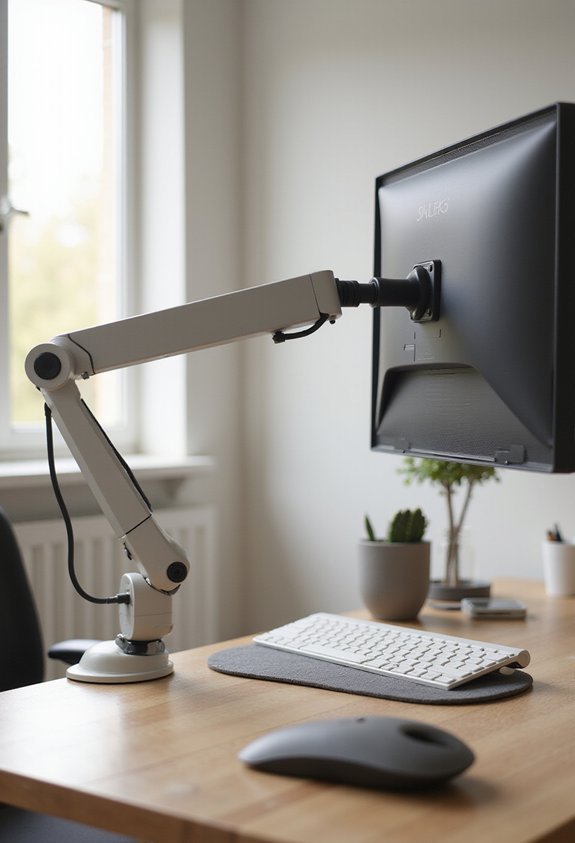
While your cubicle’s visual appeal matters, what you’re actually sitting on and working with has an even bigger impact on your daily experience. I’ve discovered that ergonomic accessories transform how I feel at work. A supportive chair prevents back pain, while a keyboard tray positions my wrists correctly. I’ve added a monitor stand to reduce neck strain and a footrest for proper posture alignment.
These investments aren’t luxuries—they’re necessities. When you’re comfortable, you’re more productive and experience fewer headaches and muscle tensions. An ergonomic mouse reduces repetitive strain, and a desk pad protects your wrists during long work sessions.
You’ll spend significant hours in your cubicle, so prioritize your physical health. Quality ergonomic accessories pay dividends through increased comfort, better focus, and reduced fatigue throughout your workday.
12. Incorporate Soft Textures With Rugs or Mats
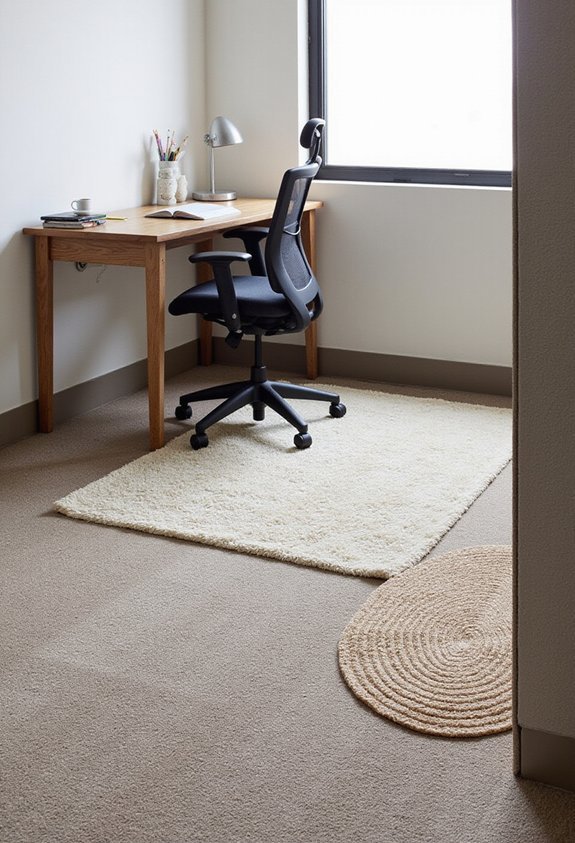
How much time do you spend standing or walking around your cubicle? If you’re like most office workers, you’re probably on your feet frequently. That’s why I’d recommend adding a soft rug or mat to your workspace.
A quality mat cushions your feet and reduces strain on your joints, making those long workdays more comfortable. Beyond functionality, it adds warmth and texture to your cubicle, making the space feel less sterile and more inviting.
I suggest choosing a mat in neutral tones that complements your existing décor. Consider placement near your desk or in high-traffic areas where you stand most often. This simple addition transforms your cubicle into a cozier environment while providing genuine physical benefits you’ll notice immediately.
13. Keep a Small Desk Plant for Freshness
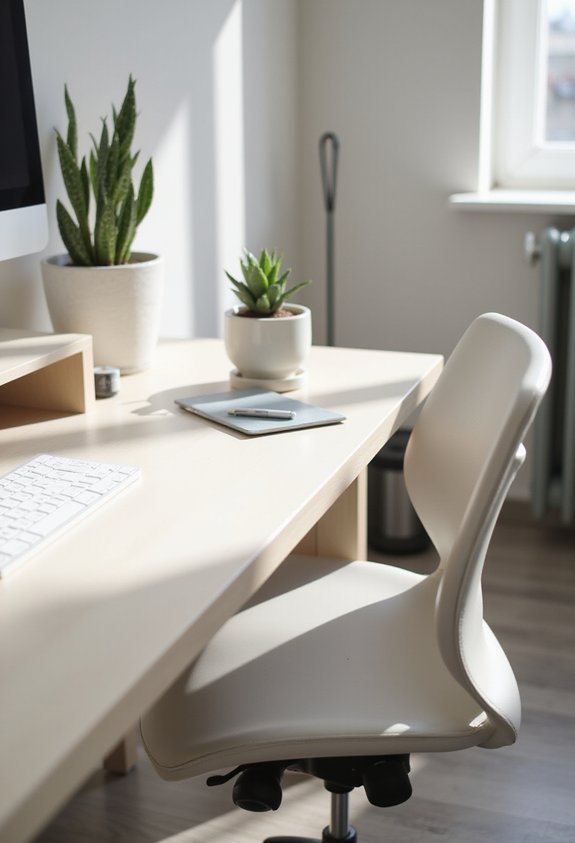
Now that you’ve created a comfortable physical environment with soft textures underfoot, it’s time to bring life to your space—literally. I’ve found that keeping a small desk plant transforms my cubicle instantly. A pothos or snake plant requires minimal care while purifying the air around me. These hardy varieties thrive in low light and tolerate irregular watering—perfect for busy workdays.
I position mine where I can see it during breaks, which gives my eyes relief from screen time. The subtle presence of greenery reduces my stress and boosts my mood throughout the day. Plus, tending to a plant provides a small sense of accomplishment and purpose.
Even in a confined workspace, a single plant makes a noticeable difference in freshness and atmosphere.
14. Organize Cables and Cords Efficiently
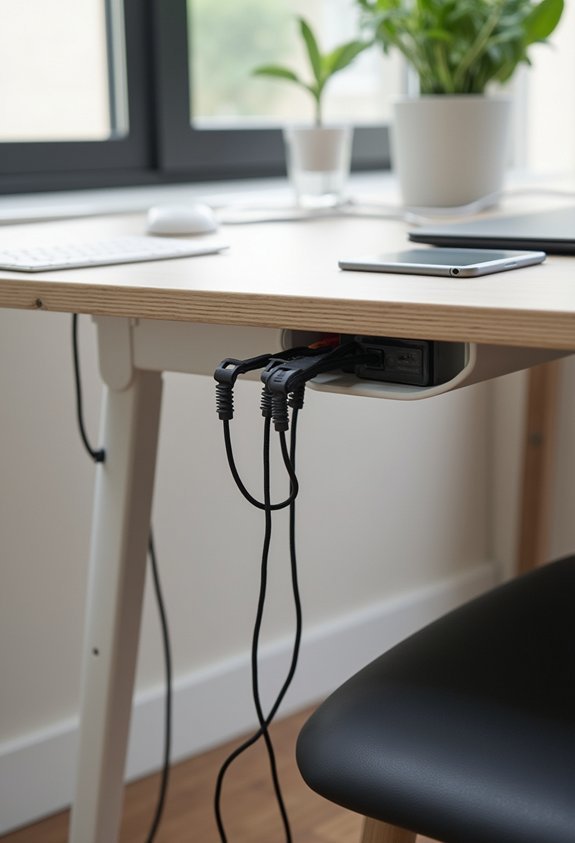
Cable clutter sneaks up on you in a cubicle, creating both visual chaos and a genuine safety hazard. I’ve found that investing in cable organizers transforms your workspace dramatically.
Start by identifying which cords you actually need. I use velcro cable ties to bundle similar cables together, labeling each group so I know what’s what. Under-desk cable trays keep wires off the floor and away from foot traffic.
Consider wireless alternatives where possible—I switched to a wireless keyboard and mouse, eliminating two major culprits. For remaining cables, I route them behind monitors using adhesive clips.
A small cable box tucked beside your desk hides power strips and excess cord length. This simple system keeps your cubicle neat, safer, and far more professional-looking.
15. Add a Desk Lamp With Adjustable Features
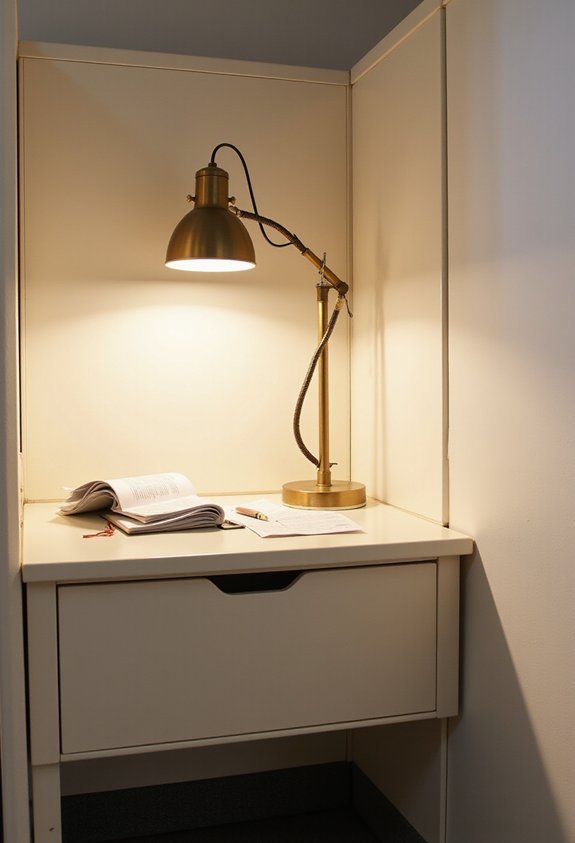
Proper lighting dramatically impacts your productivity and comfort in a cubicle, yet many people rely solely on overhead fluorescents. I’ve found that adding a desk lamp with adjustable features transforms my workspace entirely.
I prefer lamps that offer brightness control and directional positioning. These features let me eliminate glare on my monitor and reduce eye strain during long work sessions. I can angle the light exactly where I need it—whether that’s illuminating my desk surface or brightening a dark corner.
Look for lamps with flexible arms, dimming capabilities, and warm-to-cool color temperature options. Some models include USB ports for charging devices, which maximizes your limited cubicle real estate. Investing in quality task lighting isn’t just about visibility; it’s about creating an environment where I actually want to work.
16. Personalize Your Space With Meaningful Décor
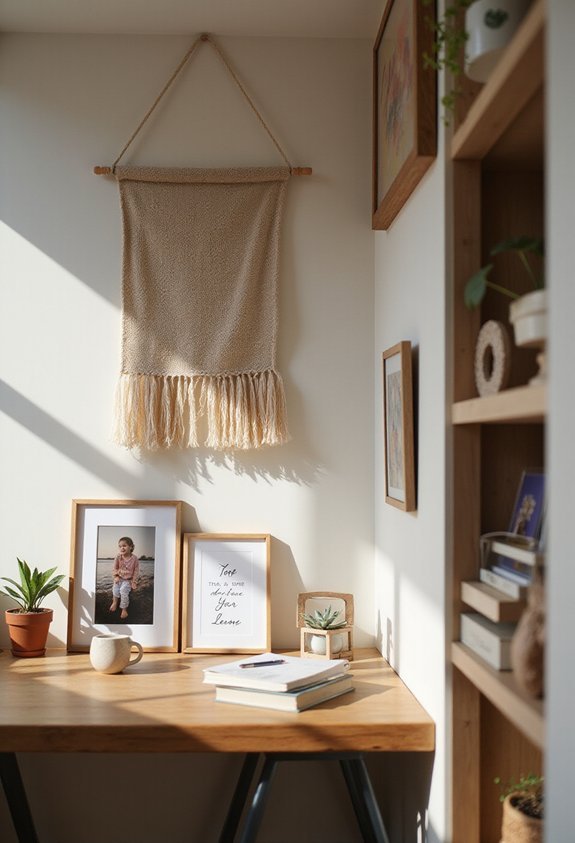
While functional elements like lighting set the stage for productivity, it’s the personal touches that make your cubicle feel like yours. I’ve found that meaningful décor transforms my workspace into a reflection of what matters to me.
I display photos of loved ones on my desk—they remind me why I’m working hard. I’ve added a small plant that I nurture throughout the day, creating a living element that brightens my environment. A framed quote that resonates with my values hangs on my wall, offering daily motivation.
I’ve also included a memento from a meaningful trip or achievement. These personal items aren’t distractions; they’re anchors that ground me and make my cubicle feel distinctly mine rather than generic.
17. Establish a Minimal Design Approach for Maximum Impact
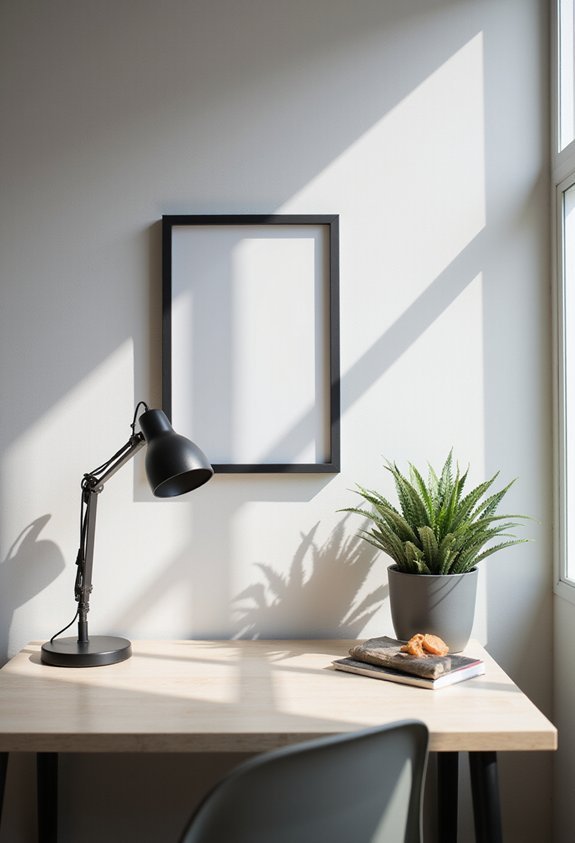
Though personal touches matter, I’ve learned that less is often more in a cubicle setting. You don’t need countless items cluttering your desk to create an inspiring workspace. Instead, I’d recommend selecting a few meaningful pieces that genuinely resonate with you—perhaps one photograph, a small plant, or an object that motivates you.
This minimal approach reduces visual noise and actually enhances your focus. When you’re surrounded by fewer distractions, your mind stays sharper and more productive. Quality trumps quantity every time.
I’ve found that strategically placing one or two carefully chosen décor elements creates more impact than a crowded desk ever could. This intentional simplicity makes your space feel purposeful and calming, transforming your cubicle into an environment where you’re genuinely excited to work.
Frequently Asked Questions
How Can I Soundproof My Cubicle to Minimize Distractions From Coworkers?
I’d recommend adding acoustic panels to your cubicle walls, which’ll absorb sound effectively. You can also use a white noise machine or wear noise-canceling headphones. Heavier curtains and foam desk dividers work great too—they’ll minimize distractions so you can focus better.
What Budget Should I Allocate for Decorating a Small Cubicle Space?
I’d recommend allocating $50–$150 for decorating your small cubicle. You’ll find affordable options like plants, artwork, and desk organizers that transform your space without breaking the bank. Start with essentials you’ll genuinely use daily.
Are There Company Policies I Should Consider Before Personalizing My Cubicle?
You should definitely check your company’s policies before personalizing your cubicle. I’d review guidelines about wall decorations, personal items, and acceptable displays. I recommend asking your manager or HR department directly—they’ll clarify what’s permitted in your workplace.
How Often Should I Refresh My Cubicle Décor to Maintain Inspiration?
I’d suggest invigorating your cubicle décor every three to six months to keep inspiration flowing. You’ll want to swap out artwork, plants, or desk accessories seasonally. This approach prevents your space from feeling stale while maintaining your professional environment.
What’s the Best Way to Arrange Furniture in an Awkwardly Shaped Cubicle?
I’d recommend starting by measuring your space carefully, then positioning your desk to maximize natural light and minimize awkward angles. I’ve found that floating furniture away from walls and using vertical storage helps me create better flow in challenging layouts.
Conclusion
You’ve now got the tools to transform your cramped cubicle into a workspace you’ll actually enjoy. By combining smart storage solutions, thoughtful lighting, and strategic organization, you’ll create an environment that boosts your productivity and mood. Remember, you don’t need much—just what matters to you. Start implementing these ideas today, and you’ll notice how a small space becomes your perfect sanctuary.