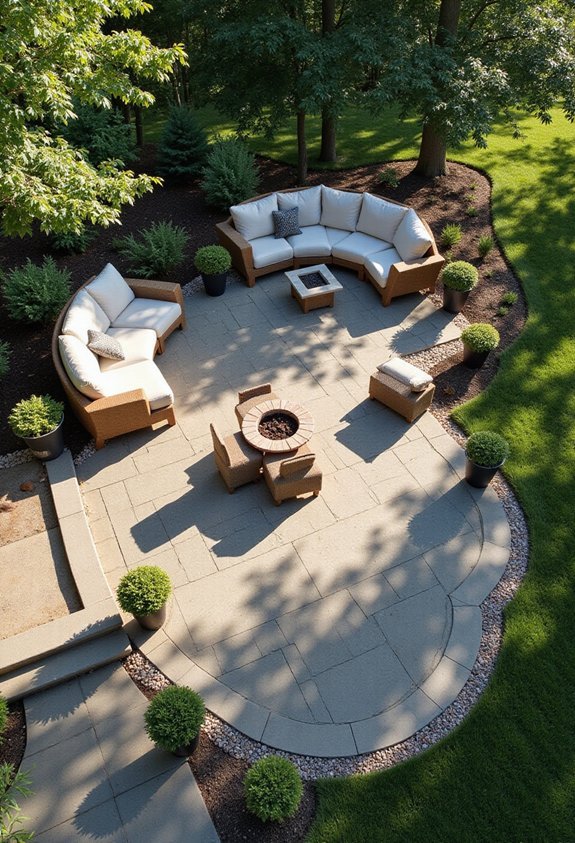
Moving furniture around on my patio felt pointless until I realized I was arranging it for how I thought the space should work, not how we actually used it. The grill sat too far from the seating. The table faced the wrong direction for conversations. We’d end up standing in the same corner every evening because that’s where the shade happened to be.
Backyard patio layout ideas finally made sense when I stopped thinking about balance and symmetry. Instead, I watched where my family naturally gathered. I noticed the afternoon shade pattern. I paid attention to sightlines from the kitchen. The layout changed completely once I let behavior guide placement instead of aesthetics.
Now the patio works without me thinking about it. People sit where they want to sit. Conversations happen naturally. That’s when you know the layout is right.
The Lounge-Style Patio
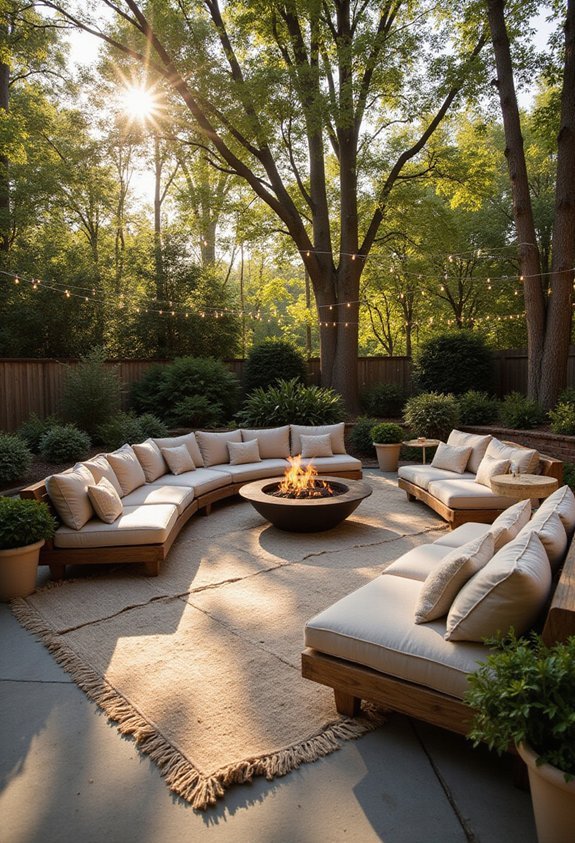
If you’re seeking a backyard space that prioritizes comfort and relaxation, a lounge-style patio‘s exactly what you need. I’d arrange plush seating like sectionals and lounge chairs around a central focal point—perhaps a fire pit or low table. This layout encourages conversation and creates an inviting atmosphere for lingering outdoors.
I’d incorporate soft lighting through string lights or lanterns to extend usability into evening hours. Adding a pergola or shade sail provides protection from sun and rain, making the space functional year-round.
I’d include side tables for drinks and accessories, keeping everything within arm’s reach. Layer in outdoor rugs and cushions for texture and coziness. The goal’s creating an outdoor living room where you’d naturally want to spend hours unwinding with family and friends.
Also read: 14 Front Yard Landscaping Ideas Using River Rock
The Dining-Focused Layout

When you’re ready to prioritize meals and gatherings around a table, I’d center your patio design on a sturdy dining setup. Position a quality table as your focal point, ensuring it’s sized appropriately for your space and guest capacity. I’d recommend leaving at least three feet of clearance around all sides for comfortable seating and movement.
Choose chairs that complement your table while offering genuine comfort for extended meals. Consider weather-resistant cushions to enhance usability during cooler months. I’d arrange your dining area in a relatively flat, level section of your yard to prevent wobbly furniture.
Add strategic shade—whether through an overhead pergola, umbrella, or nearby trees—to make midday dining enjoyable. Include outdoor lighting for evening entertaining. This layout transforms your patio into a dedicated gathering space for memorable meals.
The L-Shaped Conversation Arrangement

Beyond the formal structure of a dedicated dining table, you might prefer a layout that encourages casual conversation and flexibility. I’ve found the L-shaped arrangement works perfectly for this purpose.
Position two seating sections perpendicular to each other, creating an open corner that naturally draws people together. I typically place one sofa along the patio’s edge and angle a second sectional or bench seating to form that L. This configuration maximizes sightlines—everyone can see and hear each other without craning their necks.
The open corner becomes your gathering hub. Add a small side table for drinks and snacks. This layout adapts easily to your crowd size; you can remove individual chairs when you’re hosting larger groups, or add cushions for extra seating during intimate gatherings.
The Fire Pit Gathering Space
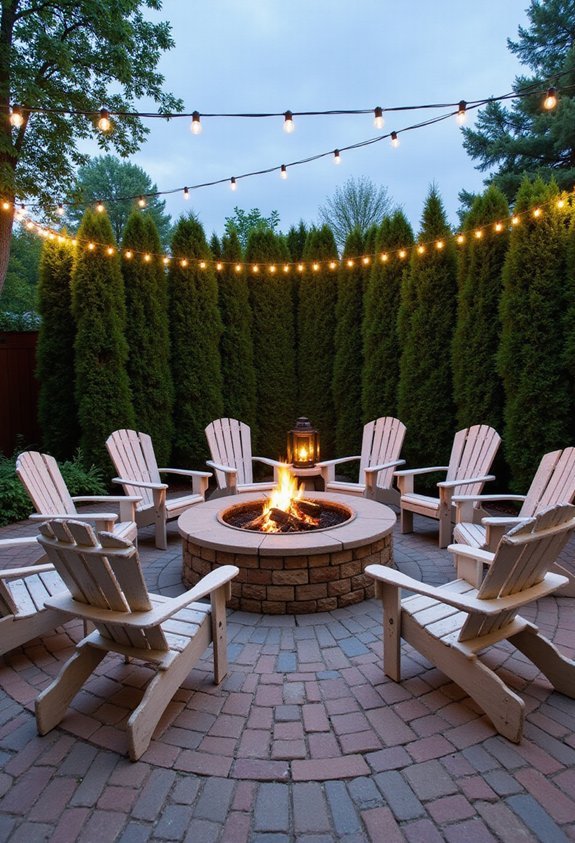
While conversation arrangements work well for smaller groups, a fire pit creates an entirely different kind of gathering space—one that naturally pulls people together and extends your patio’s usability into cooler months. I’ve found that positioning seating in a circular formation around the fire maximizes warmth and visibility for everyone. You’ll want to maintain safe distances from the flames—typically eight to ten feet—while keeping sightlines clear so guests can interact comfortably. Consider adding weatherproof ottomans or logs for flexible seating that accommodates larger crowds. The fire pit becomes your patio’s focal point, drawing people outdoors even when temperatures drop. This layout works particularly well for evening gatherings where ambient light and warmth create an inviting atmosphere that encourages lingering conversations and connection.
The Kitchen Extension Design
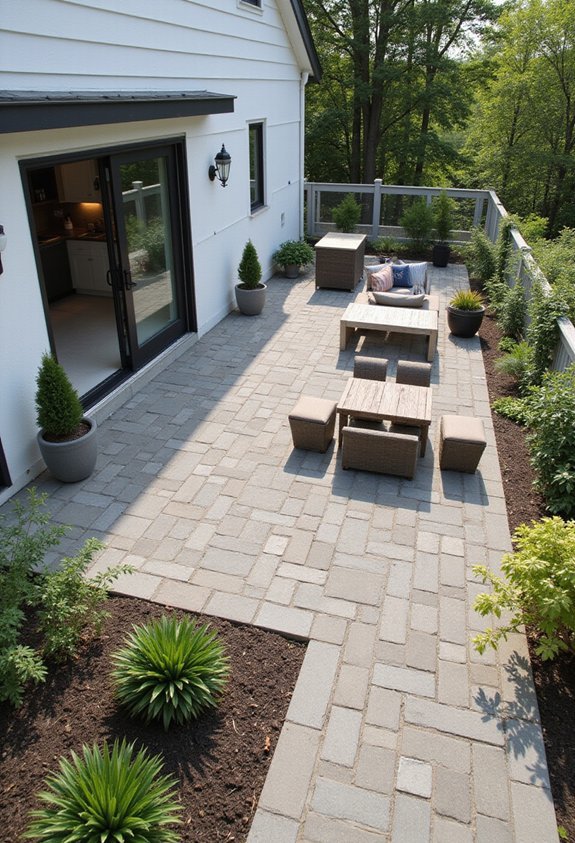
If your patio hosts regular gatherings beyond evening fires, you’ll want to incorporate a kitchen extension that brings food preparation and dining closer to your guests. I’ve found that installing a built-in grill, mini fridge, and counter space eliminates constant trips indoors. This setup lets you cook while remaining engaged with visitors.
Consider positioning your kitchen extension adjacent to your dining area for natural traffic flow. I recommend investing in weather-resistant cabinetry and durable countertops that withstand outdoor elements. A pergola overhead provides shade during meal prep, making the space more comfortable during hot days.
You’ll appreciate how an outdoor kitchen transforms entertaining. Guests can gather around while you prepare food, creating an interactive experience. This design truly maximizes your patio’s functionality for frequent hosting.
The Sectional Seating Configuration
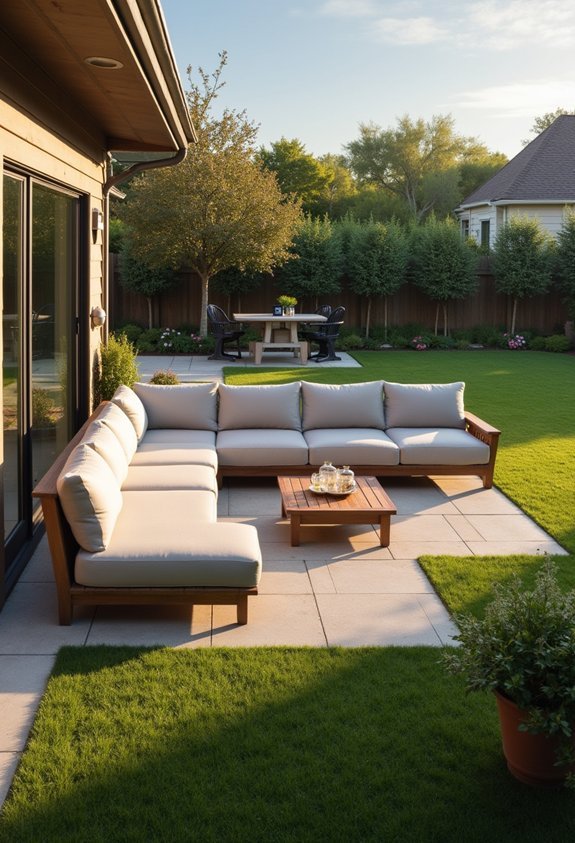
After you’ve established your outdoor kitchen, you’ll want seating that encourages conversation and comfort. I’ve found that sectional furniture transforms patios into social hubs. Unlike traditional chairs, sectionals wrap around your space, creating an intimate gathering spot where everyone faces each other naturally.
I’d recommend L-shaped or U-shaped configurations depending on your patio size. These arrangements maximize seating while maintaining sightlines to your kitchen and landscape. Choose weather-resistant fabrics and cushions that withstand sun exposure and moisture.
Position your sectional to take advantage of shade from trees or pergolas, protecting guests from harsh afternoon rays. Add a fire table nearby for evening warmth and ambiance. This layout encourages lingering conversations while keeping your kitchen accessible for refreshments.
The Multi-Zone Outdoor Living Area
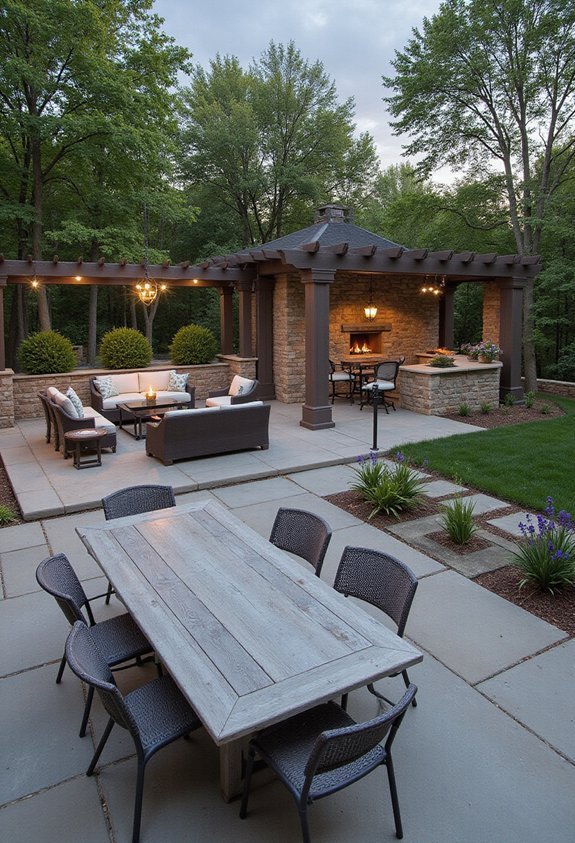
To truly maximize your patio’s potential, you’ll want to break it down into distinct functional zones rather than treating it as one monolithic space. I’ve found that creating separate areas for dining, lounging, and entertaining transforms how I use my outdoor space.
I designate one zone with a dining table for meals, another with comfortable seating for relaxation, and a third for cooking or socializing. You can define these zones using different flooring materials, planters, or strategic furniture placement. This approach prevents overcrowding and allows multiple activities simultaneously.
When you design with intention like this, your patio becomes more versatile and inviting. Each zone serves a specific purpose, making your outdoor living area feel intentional and well-organized rather than haphazard.
The Compact Corner Patio
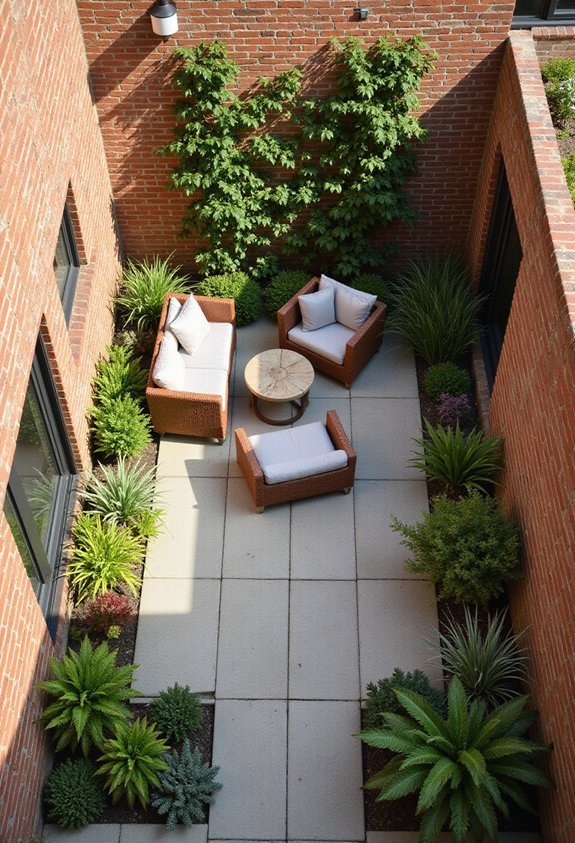
Space constraints don’t have to limit your patio’s functionality. I’ve found that corner patios work brilliantly for small yards because they maximize existing boundaries. By positioning your seating against two walls, you’ll create a cozy, intimate gathering spot while freeing up yard space.
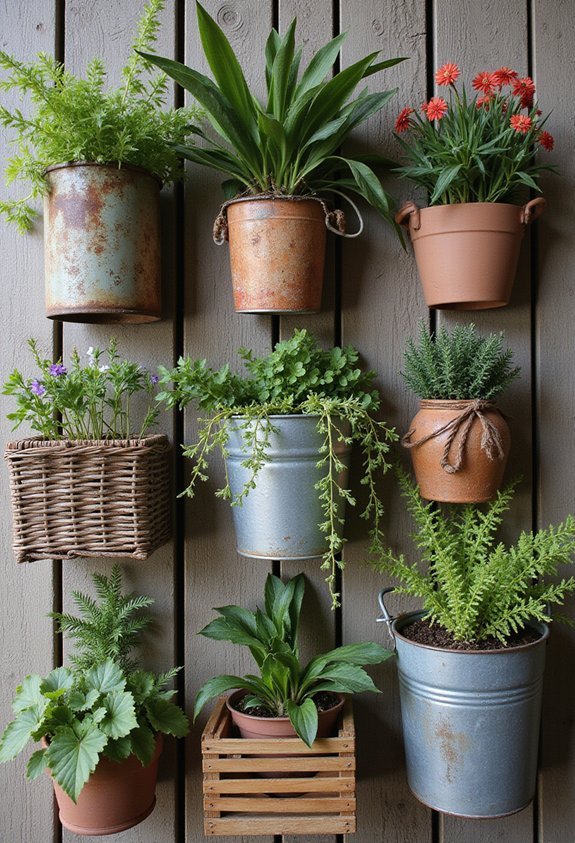
I recommend installing a built-in bench along one wall—it’s practical and saves room compared to freestanding furniture. Add a small bistro table or side table for drinks and snacks. Vertical elements like trellises or wall-mounted planters draw the eye upward, making the space feel larger than it actually is.
Lighting is essential here. String lights or wall sconces add ambiance without consuming valuable floor space. A compact corner patio proves you don’t need acreage to create an inviting outdoor retreat.
The Linear Pathway Layout
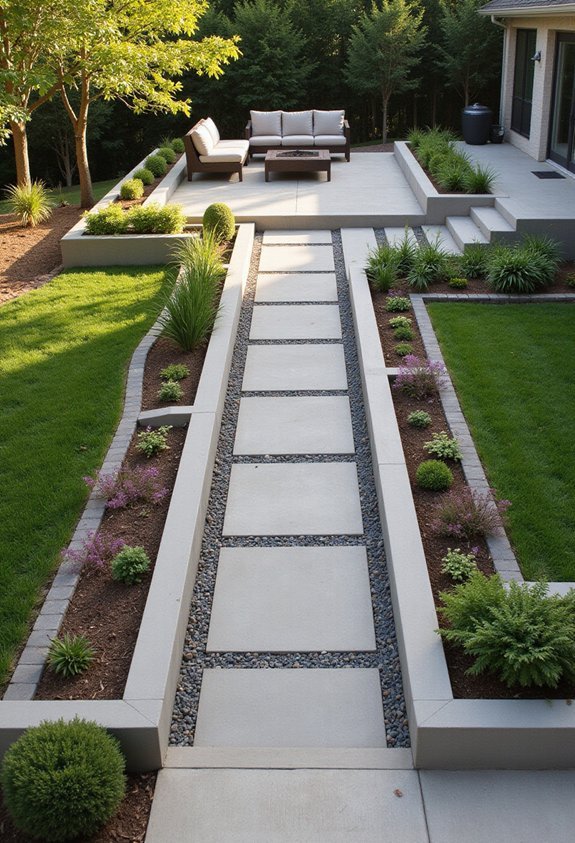
If your yard stretches long and narrow, you’ll want to orient your patio along its length rather than against it. This linear approach maximizes your usable space and creates a natural flow from your house to the yard’s far end.
I’d recommend placing seating areas at intervals along the pathway, creating distinct zones for dining, lounging, and entertaining. You can use pavers or decking to define the route, then flank it with plantings or low fencing to frame the space.
This layout works particularly well for entertaining because guests naturally move through the patio, discovering different areas as they walk. It also makes your narrow yard feel longer and more intentional. The linear design transforms a challenging space into an organized, functional outdoor living area.
The Curved Seating Nook
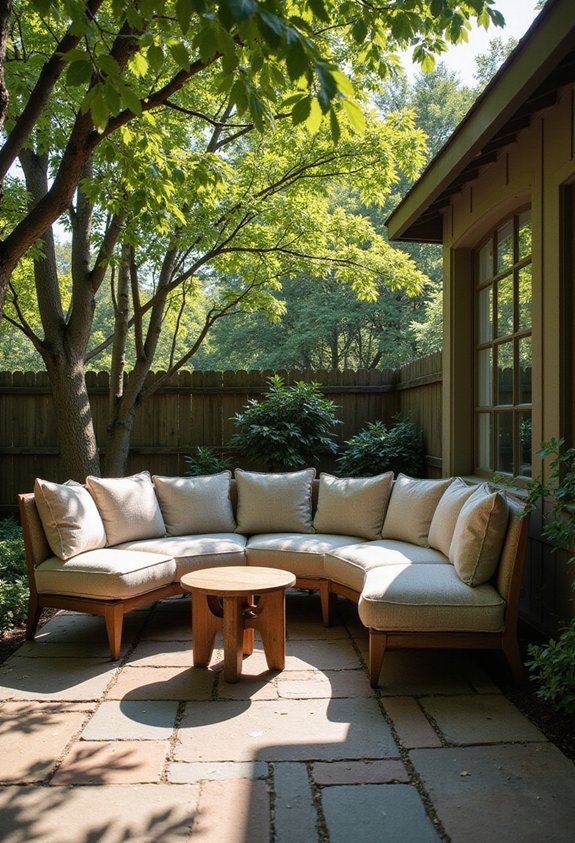
While linear layouts excel at stretching narrow yards, curved seating nooks create intimate gathering spaces that feel both cozy and sophisticated. I’ve found that semi-circular or crescent-shaped arrangements naturally encourage conversation since everyone faces inward. You’ll want to position your curved seating around a focal point—a fire pit, water feature, or garden bed works wonderfully.
The beauty of this layout is its versatility. I can easily customize the curve’s radius to fit my space, whether I’m working with a compact corner or expansive backyard. Curved benches or strategically placed chairs with rounded edges soften the overall design aesthetic. Adding layered lighting and surrounding plantings enhances the nook’s intimate ambiance. This approach transforms even small patios into inviting retreats where guests naturally gravitate toward connection and comfort.
The Pergola-Centered Design
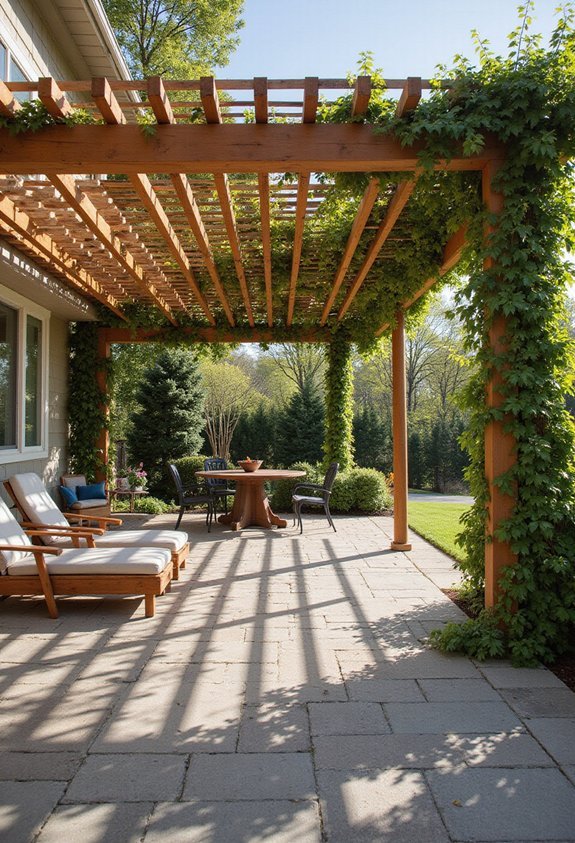
A pergola serves as an excellent structural anchor for organizing your entire patio layout. I’ve found that positioning seating and dining areas directly beneath it creates natural gathering zones while providing dappled shade on sunny days.
You can arrange furniture in a semicircle or square configuration around the pergola’s base to maximize conversation and sightlines. The overhead structure naturally frames your outdoor space, making it feel intentional and defined.
Consider adding climbing vines like clematis or jasmine to increase privacy and cooling. String lights overhead enhance the ambiance during evening hours.
I’d recommend placing a dining table on one side and lounge chairs on another. This dual-purpose approach lets you entertain guests during the day and enjoy quiet evenings. The pergola fundamentally becomes your patio’s focal point, organizing flow and function effortlessly.
The Sunken Seating Pit
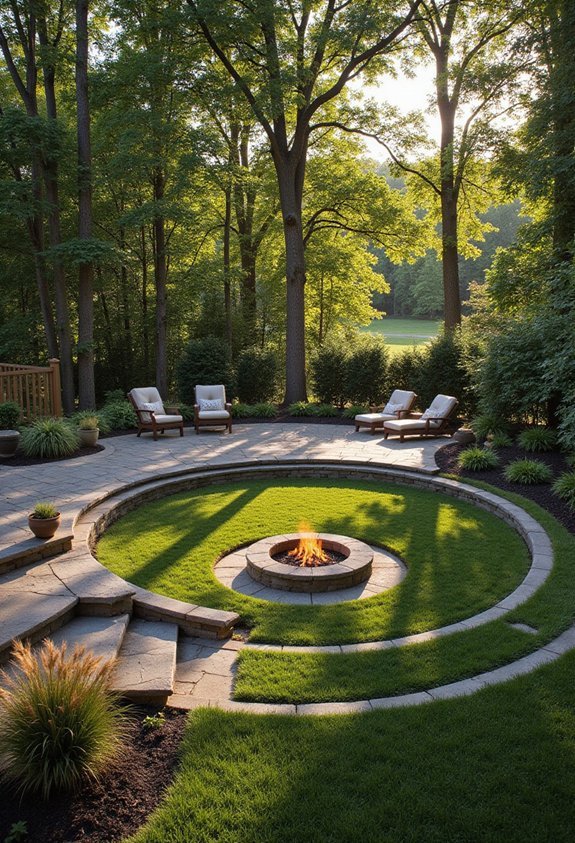
Because sunken seating pits create an intimate gathering space that naturally draws people together, I’ve found they’re one of the most engaging patio features you can install. The sunken design keeps conversations close and comfortable, whether you’re hosting friends or enjoying quiet evenings with family.
I’d recommend building your pit about 18 inches below ground level—deep enough to feel cozy but not so deep that climbing out becomes awkward. Add built-in benches around the perimeter for permanent seating, or leave it open for flexible furniture arrangements. A fire pit in the center transforms the space into a year-round gathering spot.
Incorporate drainage to prevent water pooling, and consider a removable cover for safety and weather protection.
The Modular Furniture Approach
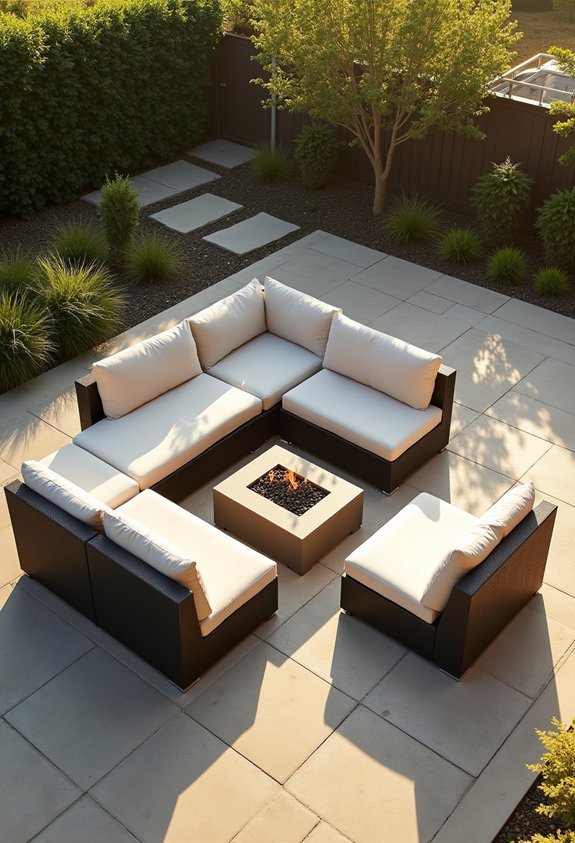
If you’re looking for flexibility without sacrificing style, modular furniture gives you exactly that. I’ve discovered that pieces like sectional sofas, ottomans, and side tables let me reconfigure my patio whenever I want. Need an intimate conversation area? I rearrange them close together. Hosting a larger gathering? I spread them out to create distinct zones.
What I appreciate most is how modular pieces adapt to my space’s shape and size. They’re perfect if you’re uncertain about your layout’s final form. Plus, individual components are easier to move than one large sofa, and if something wears out, I replace just that piece rather than the entire set.
This approach transforms my patio into a genuinely personalized outdoor room.
The Two-Tier Elevation Layout
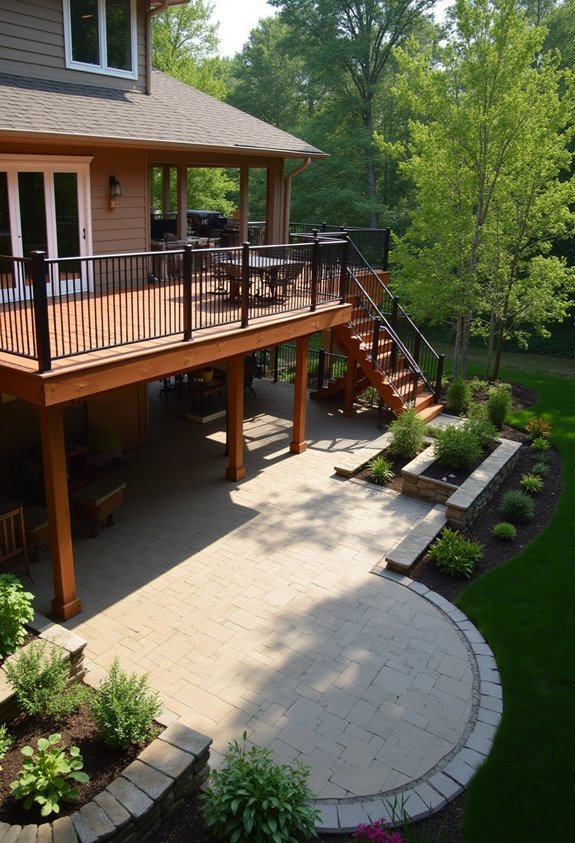
Two levels on your patio create visual interest and functional zones that a flat surface simply can’t match. I’ve found that raising one section just a few steps transforms how I use the space. You can position your dining area on the upper tier, keeping it distinct from a lower lounge zone where guests naturally congregate.
This elevation difference also improves drainage and sight lines. I strategically place planters and lighting along the step edge to define each level without overwhelming the design. The height variation makes smaller patios feel more expansive and sophisticated.
When planning your two-tier layout, consider traffic flow between levels and guarantee stairs are wide enough for comfortable movement. This approach gives you flexibility to accommodate different activities simultaneously while maintaining visual cohesion.
The Minimalist Functional Space
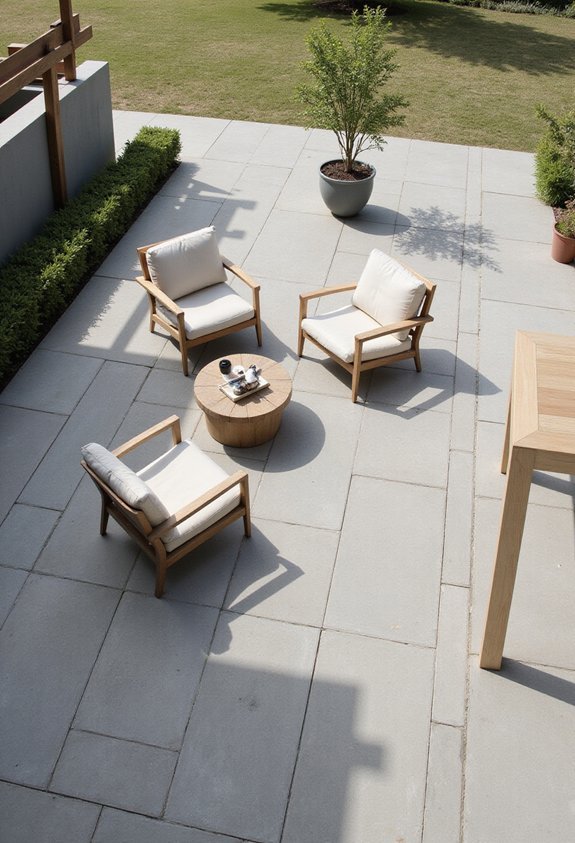
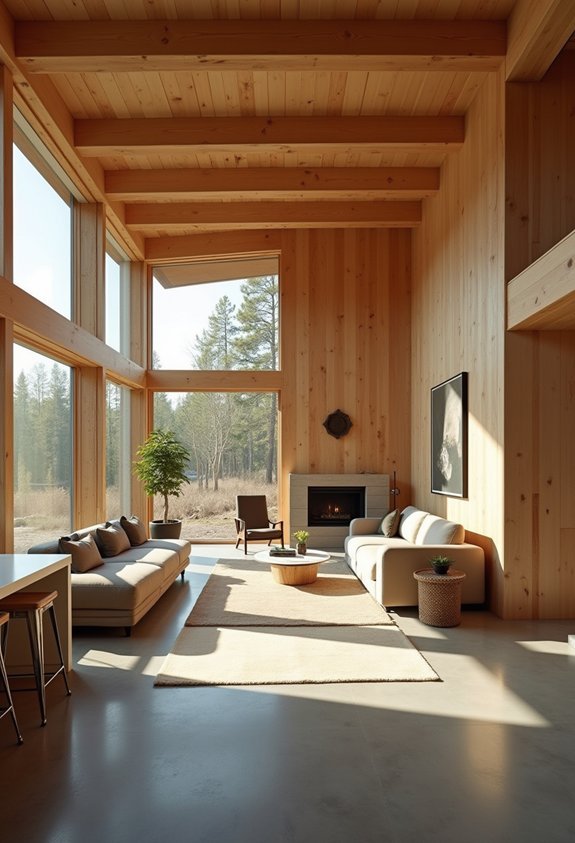
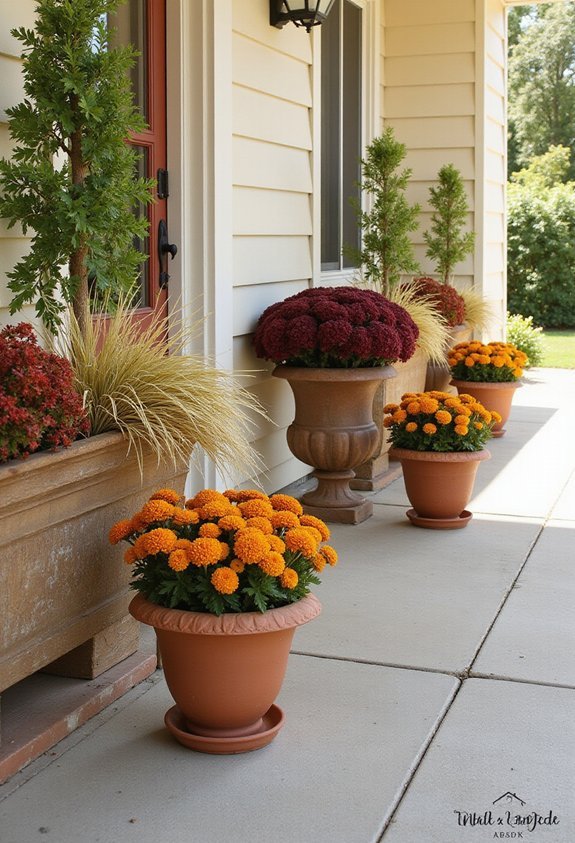
While layered elevation adds sophistication, sometimes what your backyard needs is stripped-down simplicity. I’ve found that minimalist patios work best when you prioritize function over decoration. Start by identifying what you’ll actually use: a dining table, lounge chairs, or a fire pit. Keep your layout open with plenty of negative space—this prevents cramping and creates visual calm. Choose one durable material, like concrete or composite decking, to unify the space. Add minimal furnishings in neutral colors. A few potted plants offer organic texture without clutter. This approach proves ideal if you have a smaller yard or prefer low-maintenance designs. You’ll discover that less truly becomes more when every element serves a purpose.
Frequently Asked Questions
What Budget Should I Allocate for a Complete Backyard Patio Renovation Project?
I’d recommend allocating $3,000 to $15,000 for your complete backyard patio renovation, depending on size and materials. You’ll want to budget for pavers, labor, drainage, and furnishings. I suggest getting multiple quotes to match your specific needs and vision.
How Do I Choose Between Pavers, Concrete, or Natural Stone for Patio Flooring?
I’d recommend considering your budget, climate, and maintenance tolerance. Pavers offer flexibility and easy repairs, concrete provides affordability and durability, while natural stone delivers elegance but requires more upkeep. I’d weigh your priorities before deciding.
What Permits or Homeowner Association Approvals Are Required Before Building a Patio?
I’d recommend checking with your local building department first—they’ll tell you what permits you need. Then I’ll contact your HOA if you’ve got one. Most patios require permits for electrical work or if they’re over a certain size, so I’d verify those details early.
How Can I Protect My Patio Furniture From Weather Damage During Winter Months?
I’d recommend you cover your furniture with weather-resistant tarps, move pieces under a covered structure, or store them in a garage during winter. You can also apply protective sealants to wood and use furniture covers designed for seasonal protection.
Which Plants or Landscaping Elements Work Best Alongside Different Patio Layout Designs?
I’d recommend pairing modern patios with ornamental grasses and clean-lined shrubs, while traditional designs benefit from classic roses and boxwood hedges. Mediterranean layouts thrive with lavender and olive trees. I’ve found that matching plants to your patio’s style creates a cohesive, inviting outdoor space.
Conclusion
You’ve got nine versatile patio designs to transform your outdoor space into the perfect everyday retreat. Whether you’re drawn to cozy lounges, intimate conversations, or flexible modular setups, there’s a layout that matches your lifestyle. Pick the design that resonates with how you actually use your backyard, then customize it with lighting, furniture, and focal points that speak to you. Your ideal patio’s waiting.