The deck outside my kitchen door gets chosen or ignored based on what it’s made of. Some mornings the boards are too hot to walk on barefoot. Other times they splinter if you’re not careful. Last year I watched the finish start peeling in patches, and I realized the material underneath determines everything about how I actually use the space. Not how it looks in my head, but whether my family will actually step outside and stay there.
Standing there with my coffee, I notice which surfaces wear faster. The shaded corner stays smooth while the sunny side gets rough. Wood that looked perfect in spring starts checking by late summer. Composite stays cold underfoot year-round, which sounds fine until you want to walk barefoot on a warm afternoon. Stone heats up but holds that warmth longer than anything else. These aren’t design choices. They’re physical facts that shape whether the deck becomes part of daily life or another project waiting to be fixed.
Modern Minimalist Composite Decks
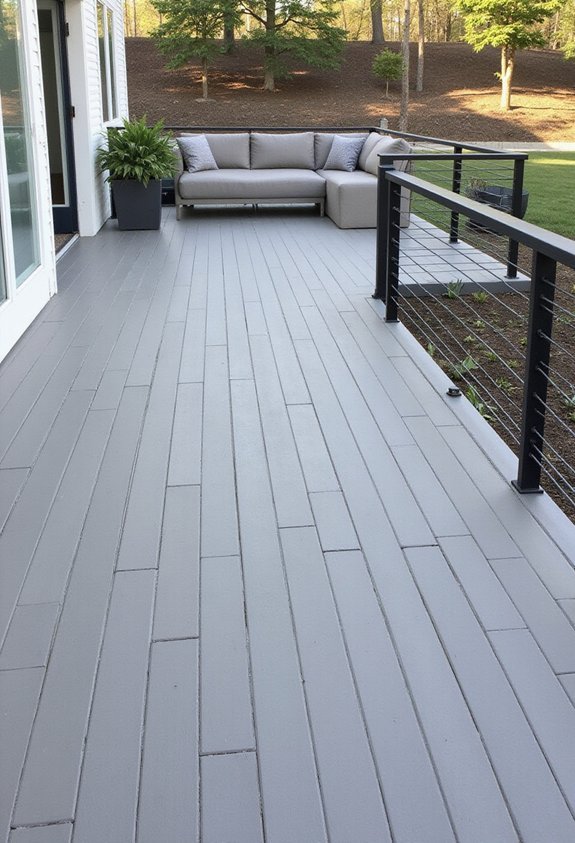
If you’re drawn to clean lines and low-maintenance outdoor spaces, composite decking offers the ideal foundation for contemporary patio design. You’ll appreciate composite’s durability—it resists rot, splintering, and fading without annual staining or sealing. The material comes in neutral tones like gray, charcoal, and taupe, perfectly complementing minimalist aesthetics.
You can customize your deck with hidden fastening systems that eliminate visible screws, creating seamless surfaces that define the modern look. Composite decking also reduces maintenance demands, freeing your time for actually enjoying your outdoor space rather than upkeeping it.
Installation requires professional expertise to guarantee proper ventilation and longevity. While composite costs more upfront than wood, you’ll save substantially on maintenance over fifteen to twenty years. For minimalist outdoor living, composite delivers both style and practicality.
3. Classic Hardwood Timber Designs
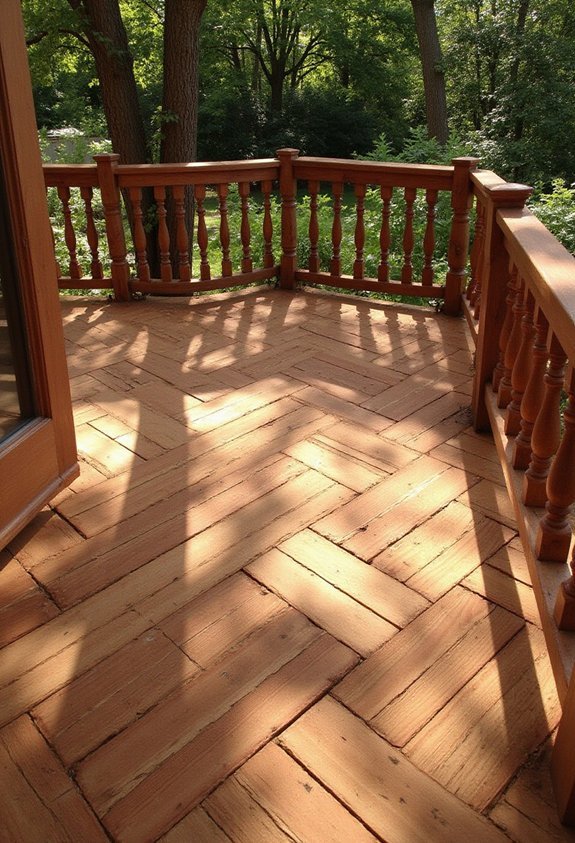
There’s timeless appeal in a hardwood deck that composite simply can’t replicate. When you choose classic hardwood timber, you’re investing in natural beauty and durability that ages gracefully. Premium options like ipe, cumaru, and teak resist rot and insect damage while developing rich patinas over time.
You’ll appreciate how hardwood’s grain patterns create visual warmth that enhances outdoor spaces. Installation requires precision—proper spacing allows wood movement with seasonal changes. Regular maintenance keeps your deck protected; you’ll need to seal or stain annually to combat weather exposure.
Hardwood decks cost more upfront than composites, but their longevity justifies the investment. You’re creating an enduring foundation for memorable gatherings. These decks become character-filled focal points that reflect your home’s personality while providing authentic outdoor living spaces.
4. Multi-Level Elevated Platforms

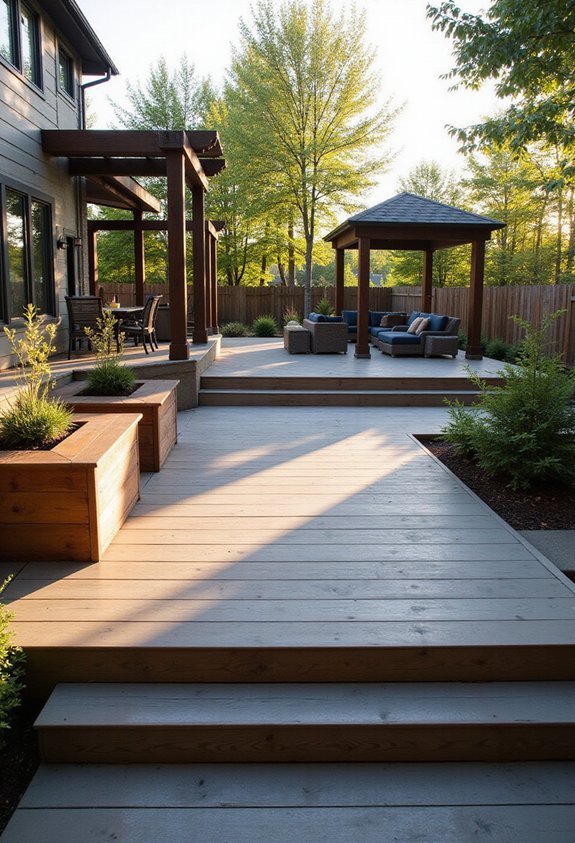
Multi-level decks transform your outdoor space by creating distinct zones for different activities and adding architectural interest to your landscape. You’ll find that elevated platforms provide practical solutions for sloped yards while maximizing usable square footage.
When you design multi-level decks, you can dedicate each platform to specific purposes—dining on one level, lounging on another, and entertaining guests on a third. This separation enhances functionality and flow throughout your outdoor living area.
You’ll also gain visual appeal through varied heights and dimension. Incorporate stairs or ramps between levels for easy navigation. Consider adding built-in seating, planters, or shade structures to each platform.
Multi-level designs require careful planning and structural support, so you should consult professionals regarding proper foundation and safety requirements. The investment pays dividends in both beauty and functionality.
5. Low-Maintenance Hybrid Material Solutions
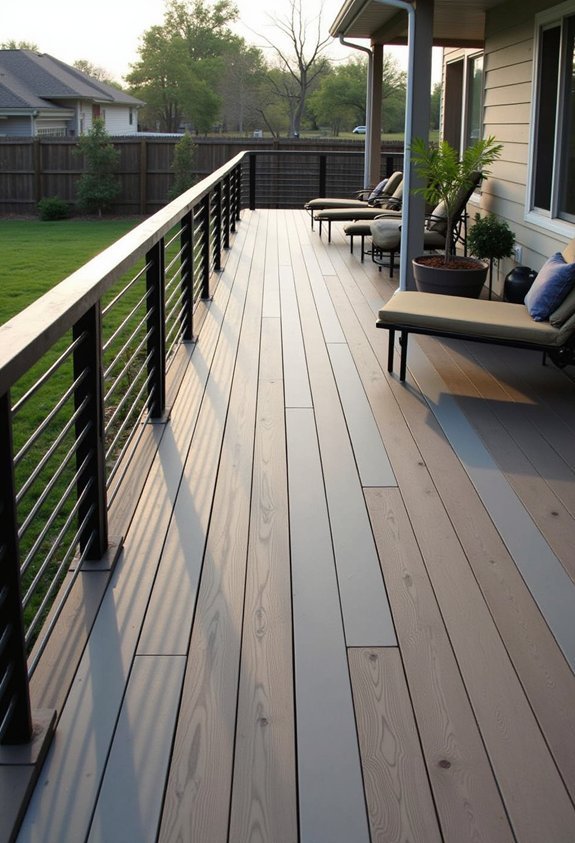
Composite and hybrid deck materials combine the aesthetic appeal of traditional wood with the durability of modern synthetics, allowing you to enjoy a beautiful outdoor space without constant maintenance. These innovative materials resist fading, staining, and rot, eliminating the need for regular sealing or staining. You’ll appreciate their resistance to moisture, insects, and UV damage, which extends your deck’s lifespan considerably.
Hybrid solutions often feature a wood-plastic composite core wrapped in a protective polymer shell, offering peak performance. Installation remains straightforward, using standard deck-building techniques. While initial costs exceed pressure-treated wood, you’ll save substantially on maintenance expenses over time. Your deck requires only occasional cleaning with soap and water. These materials also provide excellent slip resistance, making them ideal for families with children or pets.
6. Rustic Stone and Wood Combinations

While hybrid materials offer modern durability, you might crave the timeless character that only natural stone and wood can deliver. Rustic combinations create stunning visual depth by pairing weathered wood planks with natural stone accents. You can lay flagstone or slate around the perimeter, then use reclaimed wood for the main deck surface. This approach gives you authentic charm without sacrificing functionality. Stone provides exceptional durability in high-traffic areas, while wood adds warmth and comfort underfoot. You’ll appreciate how these materials age gracefully together, developing richer patinas over time. The contrast between cool stone and warm wood tones creates visual interest that elevates your outdoor space. Regular sealing protects both materials while maintaining their natural appearance.
7. Tropical Paradise Retreat Layouts
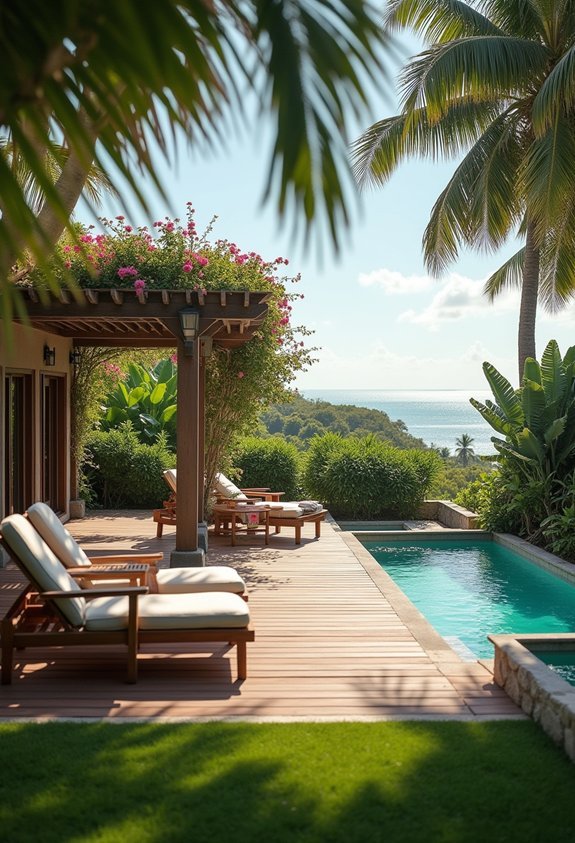
Transform your patio into an island escape by organizing zones that encourage relaxation and social connection. Start by creating a comfortable seating area with lounge chairs and shade structures like pergolas or umbrellas. Install a water feature—a fountain or small pond—to add ambient sound and visual interest.
Position your dining area near the house for convenience while keeping it separate from lounging spaces. Incorporate lush tropical plants, including palms, ferns, and flowering shrubs, to establish privacy and atmosphere. Use natural materials like stone pathways and wooden decking to enhance the organic feel.
Add warm lighting with string lights or lanterns for evening ambiance. Include a beverage station or small bar cart for easy access to refreshments. This thoughtful layout transforms your patio into a cohesive retreat that feels genuinely tropical.
8. Contemporary Steel and Glass Features
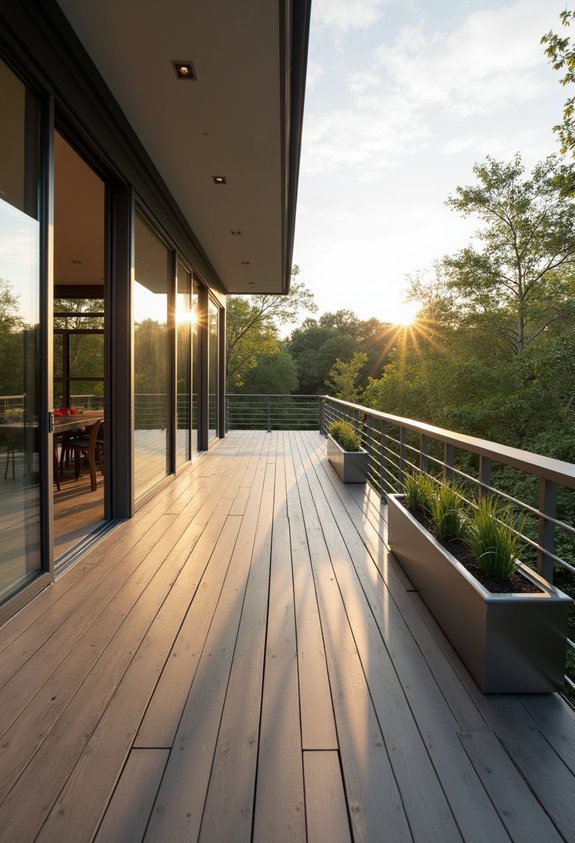
Modern patios thrive when you integrate sleek steel and glass elements that create visual lightness while maintaining structural sophistication. You’ll find that steel frames offer clean lines and durability, resisting rust and weathering for years. Glass panels allow you to maintain sightlines across your outdoor space while providing wind protection and privacy screens.
Consider pairing steel pergolas with tempered glass panels to define seating areas without blocking natural light. You can install frameless glass railings that maximize views while meeting safety codes. Steel-framed shade structures offer flexibility—adjust glass panels seasonally to control sun exposure and temperature.
These contemporary materials complement minimalist landscaping and modern furnishings. They’re low-maintenance, require minimal upkeep, and age beautifully. Your steel and glass patio becomes an extension of your home’s architecture while establishing a sophisticated outdoor sanctuary.
9. Cozy Cottage-Style Wooden Decks
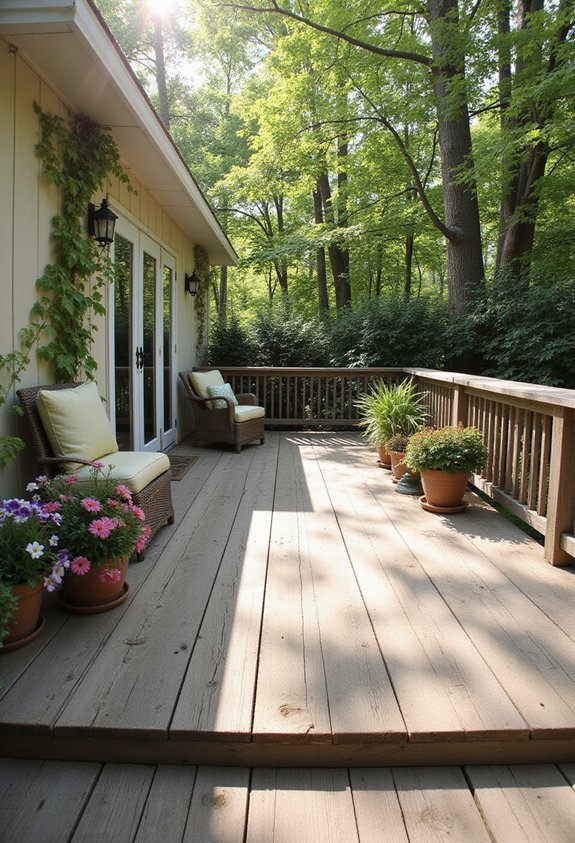
If you’re drawn to warmth and charm over sleek minimalism, wooden decks deliver the rustic appeal that makes outdoor spaces feel like home. You’ll appreciate how natural wood grain and weathered finishes create an inviting atmosphere that contemporary materials can’t replicate.
Consider softwood options like cedar or redwood, which age beautifully and resist decay naturally. You can customize your deck with curved edges, built-in benches, and planters that enhance the cottage aesthetic. Decorative railings with turned balusters add traditional character.
To maintain your deck’s charm, you’ll want to seal it regularly and address any weather damage promptly. Vintage-inspired lighting, climbing vines, and layered furnishings complete the cozy cottage vibe. This style transforms your patio into a welcoming retreat where you’ll genuinely enjoy spending time outdoors.
10. Sustainable Eco-Friendly Options
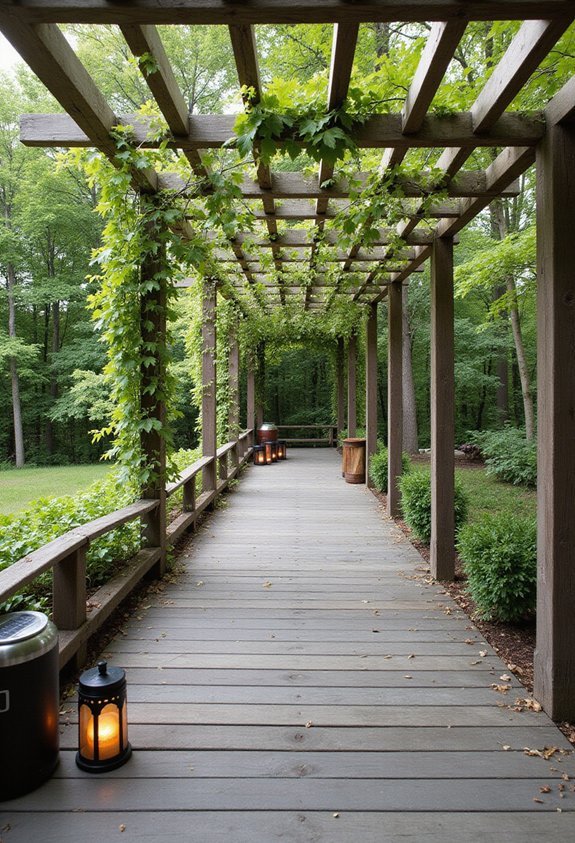
While traditional wooden decks offer undeniable charm, environmentally conscious homeowners are increasingly turning to sustainable materials that deliver durability without compromising the planet. You’ll find composite decking made from recycled plastic and wood fibers offers excellent longevity while reducing landfill waste. Bamboo presents another compelling option—it’s rapidly renewable, stronger than many hardwoods, and naturally resistant to insects.
If you prefer authentic wood, consider FSC-certified lumber from responsibly managed forests. Reclaimed wood salvaged from old buildings adds character while preventing unnecessary tree harvesting. Cork and recycled rubber also work well for accent areas and pathways.
You’ll appreciate that eco-friendly decks require minimal maintenance, lowering your long-term environmental impact. These sustainable choices perform reliably in various climates while letting you enjoy outdoor spaces guilt-free. Your investment supports conservation efforts and creates a genuinely responsible outdoor living area.
11. Sunken Entertainment Spaces
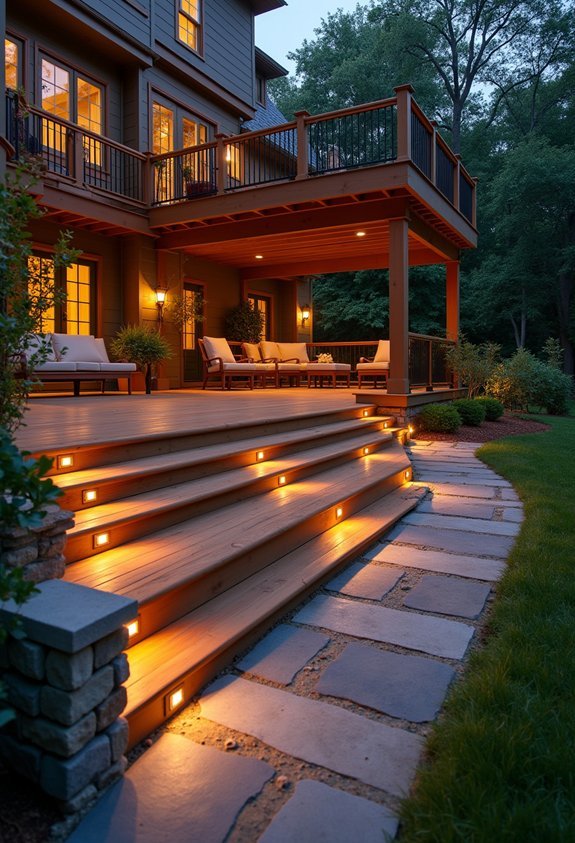
Creating a sunken patio transforms your outdoor area into an intimate gathering space that naturally draws people together. You’ll find that lowering your entertainment zone below ground level creates a cozy, sheltered environment perfect for hosting friends and family.
When you design a sunken space, you’re establishing natural windbreaks and improving acoustics, which keeps conversations private and comfortable. You can incorporate built-in seating around the perimeter, reducing furniture clutter while maximizing usable area. Strategic lighting and weather-resistant features guarantee your entertainment zone functions year-round.
Sunken patios work particularly well in sloped yards where you can take advantage of existing grade changes. You’ll want to include proper drainage to prevent water pooling. Adding a fire pit or outdoor heater makes your space inviting during cooler months, extending your entertaining season considerably.
12. Curved and Organic Shaped Designs
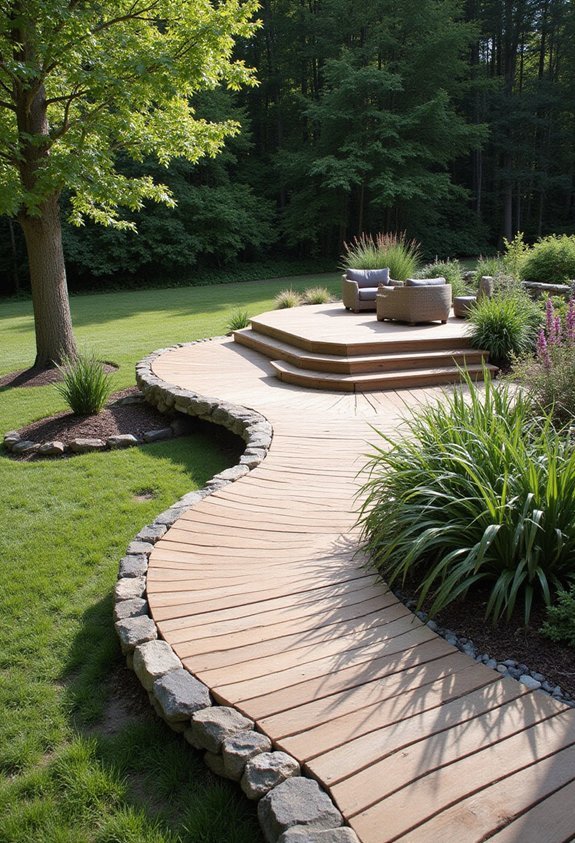
Curved and organic shapes often feel more natural and inviting than rigid geometric designs, drawing your eye seamlessly across the outdoor space. You’ll find that flowing lines create visual interest while making your patio feel larger and more dynamic.
Consider incorporating curved decking boards, circular seating areas, or wavy edges along your deck’s perimeter. These designs work exceptionally well with landscaping features like rounded planting beds and stone pathways that mirror the deck’s contours.
You can also blend multiple curves at different radii to add complexity and sophistication. Organic shapes encourage movement and conversation, naturally guiding guests around your outdoor living area. This approach blends the division between your deck and garden, creating a cohesive landscape that feels intentionally designed rather than haphazardly arranged.
13. Compact Urban Balcony Solutions
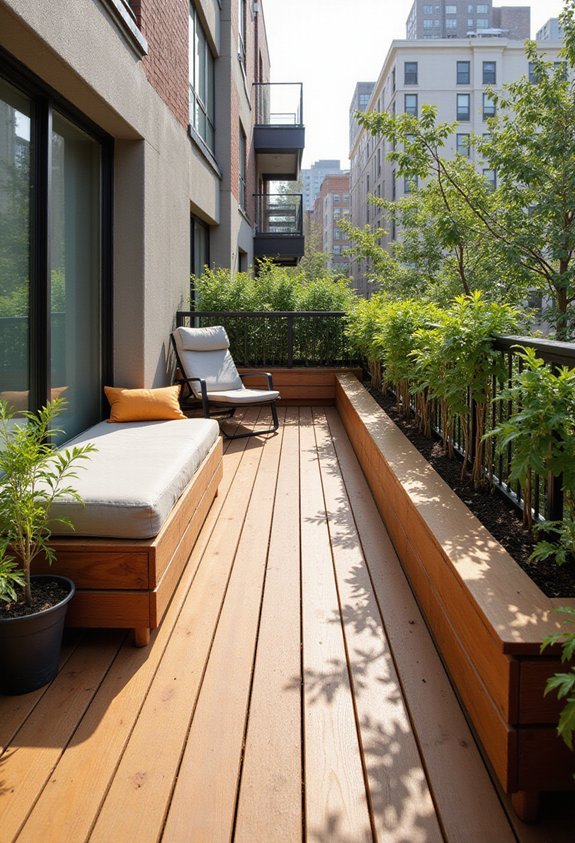
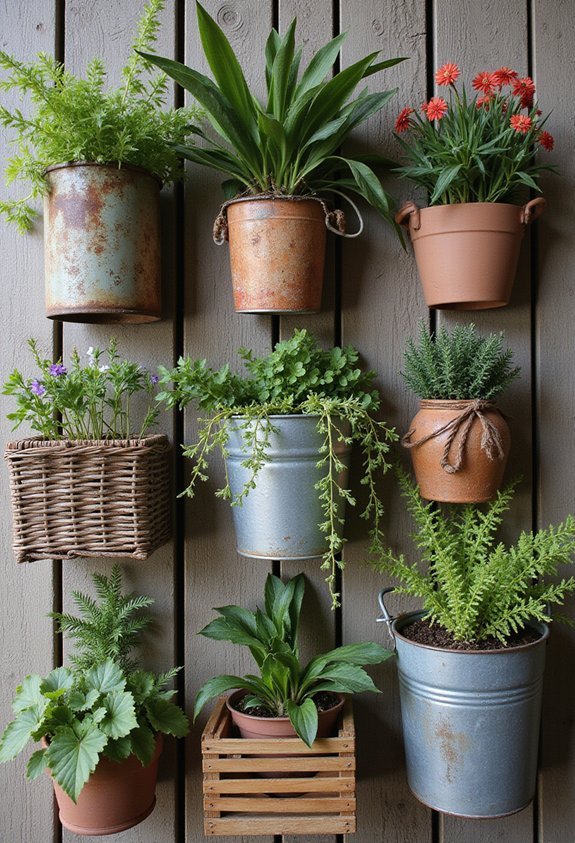
Urban balconies demand smart, space-conscious design strategies that maximize functionality without overwhelming cramped quarters. You’ll want to prioritize vertical elements like wall-mounted planters and trellises that draw the eye upward while conserving floor space. Consider multipurpose furniture—ottomans with storage, folding tables, and built-in benches—that adapts to your needs throughout the day.
Choose a cohesive color palette to create visual continuity and avoid cluttering your view. Lightweight materials like composite decking and aluminum railings won’t strain your structure. You can incorporate strategic lighting through string lights or solar-powered fixtures that enhance ambiance without consuming valuable real estate.
Minimize accessories and keep pathways clear for safe movement. These thoughtful choices transform your compact balcony into an inviting, functional outdoor retreat that maximizes every square inch.
14. Integrated Kitchen and Dining Areas
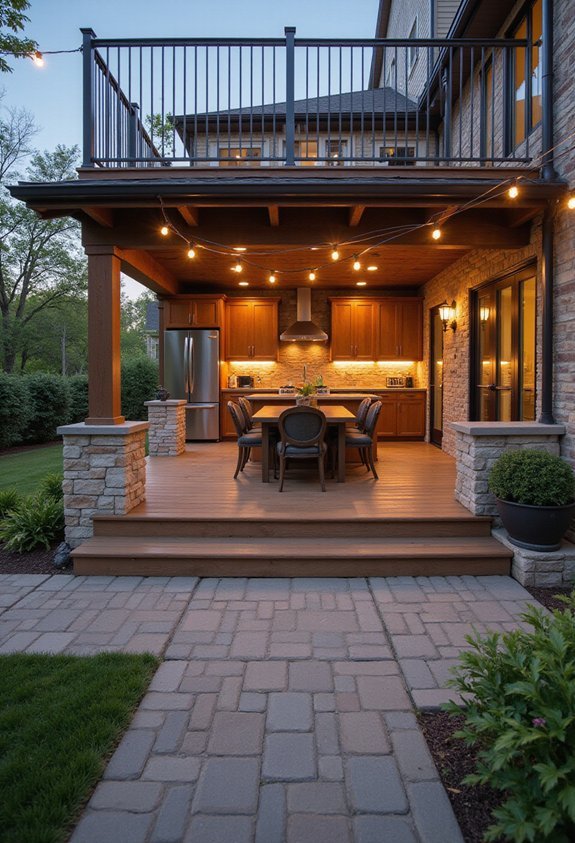
Once you’ve optimized your compact outdoor space, you’ll want to expand its functionality by incorporating food preparation and dining zones that work seamlessly together. You can install a built-in grill adjacent to a weatherproof countertop, creating an efficient workflow that keeps you from constantly running inside. Position your dining table nearby so guests can interact while you’re cooking. Consider a mobile cart for additional prep space—you’ll appreciate the flexibility when entertaining. Install overhead shade structures to protect both your cooking area and dining zone from sun and rain. Built-in storage keeps grilling tools and table settings organized and accessible. This integrated approach maximizes your outdoor entertaining potential without overwhelming your layout.
Conclusion
You’ve got plenty of options to transform your outdoor space into exactly what you’re dreaming of. Whether you’re drawn to sleek minimalist composites, classic hardwood, or dramatic multi-level platforms, there’s a design that’ll match your style and lifestyle. You can mix materials, add curves, or go rustic—the choice is yours. Now it’s time to pick your favorite and start planning that perfect patio deck you’ve been wanting.