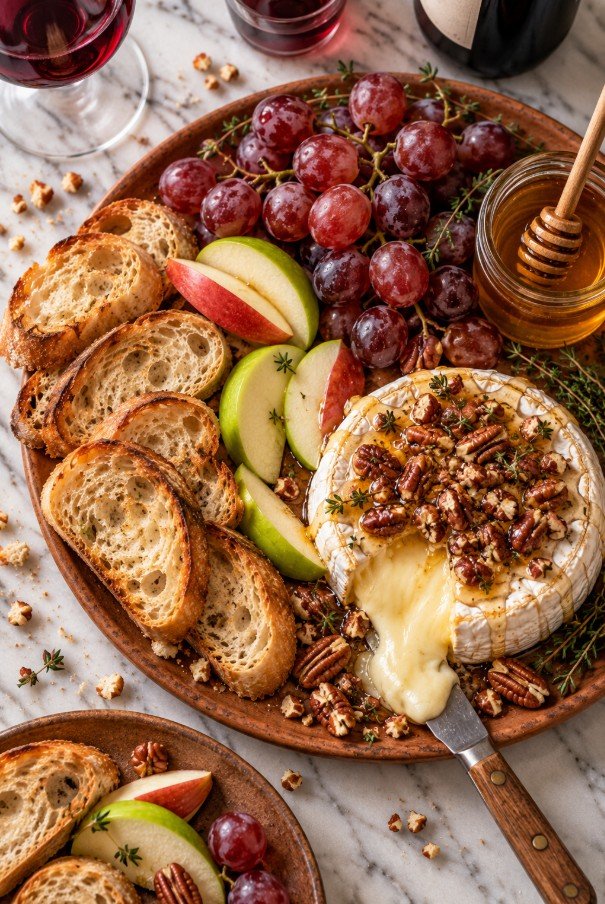
Some evenings call for a snack that feels like an occasion without turning into a project. This baked brie fits that space. A small, chilled round of cheese goes into a 350°F oven until the center turns soft and spoonable, then gets finished with honey, toasted pecans and a pinch of flaky salt.
The flavor is buttery and mild, with a top that’s sweet, salty and crunchy all at once. The recipe is scaled for two, using a petite round instead of a party-size wheel, so you get two generous portions and no leftover block of cheese. Serve it as a date-night appetizer, alongside a glass of wine or as a light supper with fruit and bread.
What You Need for Small-Batch Baked Brie
Three things decide how this turns out: the size and temperature of the brie, a good mild honey and pecans that are properly toasted. Here’s the job each ingredient does.
- Small round brie, chilled: A whole 4-ounce round, kept cold until it goes in the oven, lets the rind act as a casing while the center melts.
- Honey: A mild clover or wildflower honey adds sweetness and a glossy coat without drowning out brie’s gentle, mushroomy flavor.
- Chopped toasted pecans: Toasting brings out their oils and keeps them crisp against the soft cheese, so warm whole pecans in a dry skillet over medium-low heat, stirring, until fragrant and a shade darker, then cool and chop.
- Flaky sea salt (optional): A few crystals sharpen the honey and add small bursts of crunch.
- Rosemary or thyme sprigs: A sprig laid on the warm cheese releases a woody, piney aroma.
- Baguette, crostini or crackers: Pick something sturdy, because warm brie is heavy enough to snap thin crackers.
- Apple slices and grapes: Crisp, juicy fruit cuts through the richness between bites.
The brie is the one ingredient worth shopping carefully for. Look for rounds labeled mini or petite in the specialty cheese case. Double-cream brie is the classic choice. Triple-cream versions turn even more liquid in the oven, which makes the rind work harder to hold everything in.
The original recipe uses an 8-ounce round to serve six. For two, a 4-ounce round is the practical choice, because a smaller portion would mean cutting a wedge, and cut cheese runs freely in the oven. That gives you two generous servings, and a small baking sheet or quarter sheet pan is all the pan you need.
How to Make Baked Brie for Two
The method is short, but timing and handling decide whether you get a neat, wobbly round or a puddle. Here’s how each step should look and feel.
Preheat the Oven to 350°F and Line the Pan
Heat the oven to 350°F and line a small baking sheet with parchment paper. This moderate temperature warms the cheese gently from the outside in, so the center softens before the rind gets stressed. A hotter oven heats the surface faster than the middle, which is how rinds split. The parchment matters more than it looks. If the rind does give way, cheese sticks hard to bare metal, and the paper also gives you something to lift by later.
Set the Chilled Brie on the Parchment
Take the brie straight from the fridge, unwrap it and set it in the center of the lined sheet. Leave the rind on and the round whole. That bloomy white rind is edible, and it’s the only thing keeping the melted center in place. Starting cold is the quiet trick here. A chilled round gives you a margin of time, so the inside can turn molten before the outside has been under pressure for long. A round that has sat on the counter tends to slump and leak sooner.
Bake Until the Center Turns Soft (8 to 10 Minutes)
Bake the brie for 8 to 10 minutes, until it’s soft in the middle. Because a 4-ounce round is smaller than the original wheel, start checking before the 8-minute mark. Press the center gently with a fingertip or the back of a spoon. It should give easily, like a water balloon, and the sides may look slightly puffed. If the middle still feels firm, give it another minute and check again. Beads of fat on the surface or a small crack in the rind mean it’s reached its limit, so take it out right away.
Small-Batch Tip
Bake the round on the middle rack. A small cheese placed low in the oven picks up extra heat from below, and the base of the rind is where blowouts usually start.
Move the Brie to a Serving Dish
Remove the pan from the oven and carefully transfer the brie to a serving dish. At this point the cheese is fragile, with a liquid center held in by a thin skin. Slide a wide spatula fully underneath, or lift the parchment by its corners, and move it in one smooth motion. Avoid tilting or nudging the round, since any pressure on the sides can tear the rind. A small plate or shallow dish just wider than the cheese keeps things tidy if a little escapes.
Drizzle With Honey and Add the Pecans
While the brie is still hot, drizzle it generously with honey. The warmth thins the honey so it runs down the sides and pools around the base. Scatter the chopped pecans over the top right after, so they stick to the honey instead of rolling off. Finish with a pinch of flaky sea salt if you’re using it, sprinkled from a little height so it lands evenly. The order matters: honey first works like glue for everything else.
Garnish and Serve Right Away
Lay a sprig of rosemary or thyme on top or beside the cheese, then arrange the baguette slices, apple slices and grapes around it. Serve immediately. Brie firms up steadily as it cools, and the best moment is when the first cut sends the warm center flowing onto the plate. Scoop it straight onto bread or fruit with a small knife or cheese spreader.
The Mistake That Turns Baked Brie Into a Puddle
The most common problem is overbaking. As the inside heats, it expands, and eventually the rind gives way at its weakest point, usually the base or a side. A small round reaches that point faster than a big wheel, which is why the early check matters more here than in a party-size version.
The other cause is the cheese itself. Very ripe brie, the kind that already feels soft when cold or smells sharply of ammonia, has a thinner rind and less structure. A round that feels firm and springy straight from the fridge holds up much better in the oven.
If yours does split, it isn’t ruined. Spoon the escaped cheese back toward the round or into a small dish, add the toppings and serve it anyway. The flavor is exactly the same.
Good to Know
When you buy the brie, check the date and give the round a gentle press through the wrapper. A slightly firm cheese with a fresh, milky smell bakes into a neater round than one at the edge of ripeness.
Building a Small Board Around One Warm Round
With only two people sharing, keep the spread simple so the cheese stays the focus. A few baguette slices or crostini each, a handful of grapes and one sliced apple cover it. Tart, crisp apples such as Granny Smith or Honeycrisp balance the honey better than soft, very sweet varieties.
For drinks, dry sparkling wine is a classic match because the bubbles cut through the richness. A crisp Sauvignon Blanc or lightly oaked Chardonnay works too, and sparkling apple cider is a good alcohol-free option that echoes the fruit on the board.
Serving Tip
Run your serving plate under hot water and dry it while the brie bakes. A cold ceramic plate pulls heat from the bottom of a small round, so a warm one keeps the center soft noticeably longer.
Baked Brie Questions
These are the questions that come up most often when people make a small round at home.
Do you eat the rind on baked brie?
Yes. The rind is edible, with a mild, earthy flavor, and it softens as it warms. It’s also what holds the cheese together, so leave it on through baking and serving.
Can I bake a wedge instead of a whole round?
A whole round is strongly preferable. A wedge has cut sides with no rind, so the cheese spreads across the pan as it melts. If a wedge is all you can find, expect a looser result, and the parchment will keep it contained enough to scoop up.
What should I do with leftovers?
Let any leftover cheese cool, then cover it and refrigerate it promptly. It firms up as it chills. Warm it gently in the oven until soft again rather than serving it cold, since the texture is at its best warm.
Warm, Simple and Sized Right
A small round, a moderate oven and an early check are all it takes to get baked brie with a molten center and an intact rind. Finish it while it’s hot and get it to the table quickly. You’ll find the exact amounts and printable steps in the recipe card below.